Spotlight on Africa: 10 Powerful West African Kingdoms and Empires History Remembers - Part One
From Mali and Songhai to Benin and Oyo, these 10 powerful West African empires shaped trade, warfare, politics, scholarship, and culture long before colonial rule.
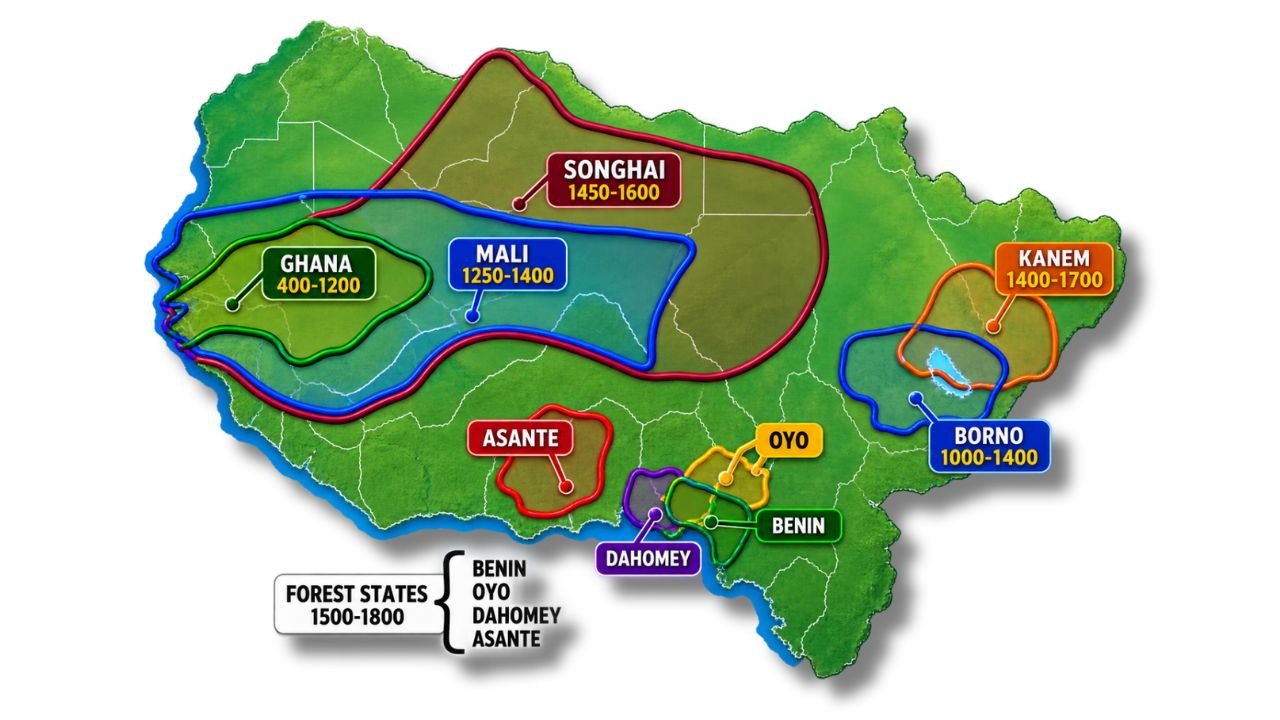
When people think about West African history, colonialism can sometimes dominate the conversation. But centuries before European powers divided the region into modern countries, West Africa was already home to powerful empires, kingdoms and city-states that controlled trade, built armies, developed political systems and produced centres of learning.
Their power did not always come from the same place. Some became wealthy through gold and salt, others through agriculture and manufacturing, while others built formidable military systems or became important centres of scholarship and regional commerce. Here are 10 West African powers that show just how much was already happening in the region before colonial rule.
1. Ghana Empire — The Power Behind the Gold Trade
The Ghana Empire, also known as Wagadou, flourished roughly between the sixth and 13th centuries and became one of the earliest major powers in West Africa. Its wealth was closely connected to its position along trans-Saharan trade routes, particularly the trade in gold and salt.
Despite its name, the empire was not located in the territory of modern Ghana. The modern country later adopted the name in tribute to the historic empire.
2. Mali Empire — The Empire of Gold and Scholarship
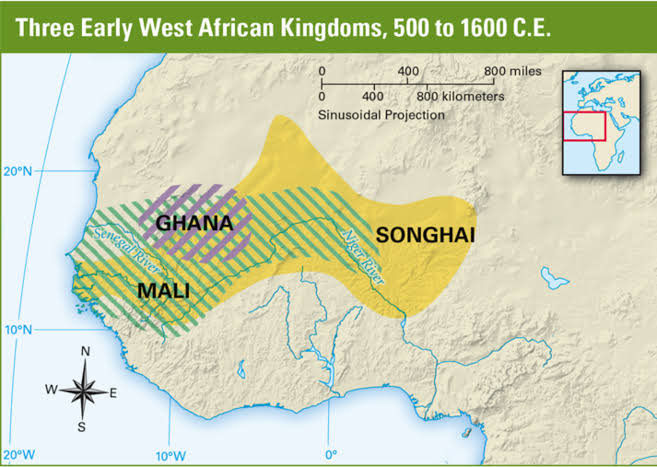
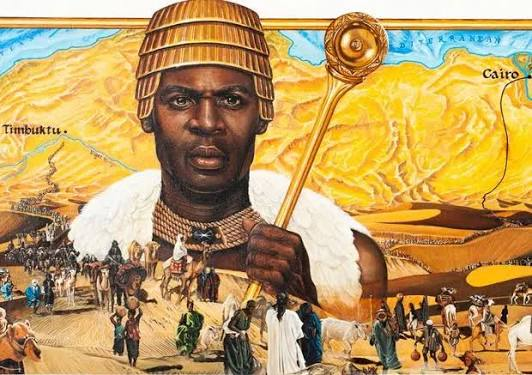
The Mali Empire rose to prominence in the 13th century and eventually became one of the most influential states in medieval West Africa. Under rulers such as Mansa Musa, Mali controlled major gold-producing regions and important trading centres.
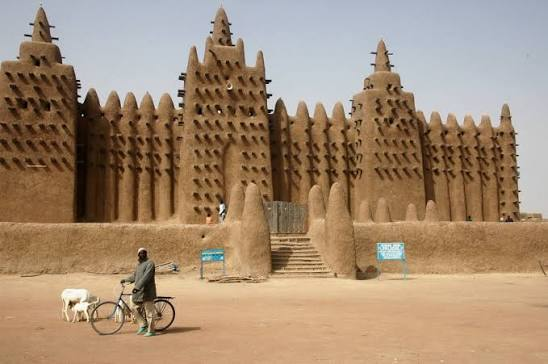
Its influence extended beyond wealth. Timbuktu became an important centre of trade, Islamic scholarship, and education, connecting West Africa to wider intellectual networks across North Africa and the Islamic world.
3. Songhai Empire — The Giant of West Africa
The Songhai Empire succeeded Mali as the dominant power across much of the region and reached its height during the 15th and 16th centuries. Based around cities including Gao and Timbuktu, it controlled extensive territory and important commercial routes.
Its strength came from a combination of military power, administration, and control of trade. Timbuktu also remained a major centre of Islamic learning during the Songhai period.
4. Kanem-Bornu — A State That Refused to Disappear
Around Lake Chad, the Kanem-Bornu Empire developed into one of Africa's longest-lasting political states. Its history stretches across many centuries, with the state surviving in different forms for close to a thousand years.
Its longevity is part of what made it powerful. Successive rulers adapted to changing political conditions, maintained regional trade networks, and developed systems of administration that allowed the state to survive long after many other medieval powers had disappeared.
History
Rewind the Stories that Made Africa, Africa
A Journey Through Time, Narrated with Insight.
5. Hausa City-States — The Commercial Powerhouses
The Hausa city-states, including Kano and Katsina, demonstrate that political power in West Africa was not always concentrated in one enormous empire. These independent states became important centres of trade, agriculture, crafts and manufacturing across what is now northern Nigeria.
Their cities were connected to wider regional and trans-Saharan commercial networks, helping goods, ideas and people move across West Africa.
6. Oyo Empire — The Yoruba Military Power
The Oyo Empire became a major Yoruba power between the 17th and early 19th centuries, extending its influence across parts of present-day southwestern Nigeria and Benin.

Oyo was particularly notable for its political organisation and military strength. Its cavalry gave the empire a significant advantage in the savannah regions, while its political institutions helped it govern an extensive territory.
7. Benin Empire — Where Art Became Power
The Benin Empire, centred in present-day southern Nigeria, developed into a sophisticated and influential kingdom. Its capital, Benin City, was known for its impressive urban organisation, extensive earthworks and highly developed artistic traditions.
The famous Benin bronzes and other brass works demonstrate the technical and artistic achievements of its craftsmen. The empire remained a major regional power until the British invasion and destruction of Benin City in 1897.
8. Sokoto Caliphate — One of Africa's Largest 19th-Century States
The Sokoto Caliphate emerged from the 1804 jihad led by Usman dan Fodio and became one of the largest political entities in 19th-century Africa.
Its influence extended across much of present-day northern Nigeria and neighbouring territories. Beyond its political reach, the caliphate developed networks of Islamic education, scholarship, administration and commerce.
9. Ashanti Empire — Gold, Trade and Resistance
The Ashanti Empire emerged as a major power in present-day Ghana from the 17th century. Its wealth was closely connected to gold, trade and control of important economic networks.
But wealth was not its only source of influence. The Ashanti developed a strong political structure and a powerful military, resisting British expansion through a series of conflicts that became known as the Anglo-Ashanti Wars.
History
Rewind the Stories that Made Africa, Africa
A Journey Through Time, Narrated with Insight.
10. Dahomey and the Agojie — A Highly Organised Military State
The Kingdom of Dahomey, centred in present-day Benin, became known for its centralised political structure and military organisation. One of its most distinctive features was the Agojie, an all-female military regiment that served the kingdom.
Their reputation has extended into modern popular culture, although the historical Agojie were considerably more complex than their fictional representations. Dahomey's military organisation and centralised government helped it become a significant regional power.
A History Bigger Than Colonial Borders
Looking at these empires together changes the way West African history can be understood. Their power came from different sources—gold, salt, agriculture, manufacturing, military organisation, political institutions, trade routes and scholarship—but none existed in isolation.
They traded with neighbouring societies, fought wars, built cities, developed political systems and participated in intellectual and religious networks that stretched far beyond their immediate territories.
Their histories also crossed the borders of countries that exist today, because modern Nigeria, Ghana, Benin, Senegal and other West African states were created long after many of these powers had already risen and fallen.
West Africa, therefore, did not begin its history with colonialism. Long before European powers imposed new borders and political systems, the region already had powerful states competing, trading, governing, and shaping the world around them.