Silo Star Ashley Zukerman Announces 'End of an Era' Post-Landmark Sci-Fi Episode
Silo Season 3, Episode 8, marks a significant turning point for Daniel Keene, who confronts the dark truth behind the silo project and nanotechnology. Despite the compelling logic presented by billionaire Per Stensen, Daniel makes a profound choice, prioritizing his love for Helen Drew and his personal desires over a lifetime of duty. This episode explores Daniel's deep internal conflict and pivotal evolution within the series' overarching narrative.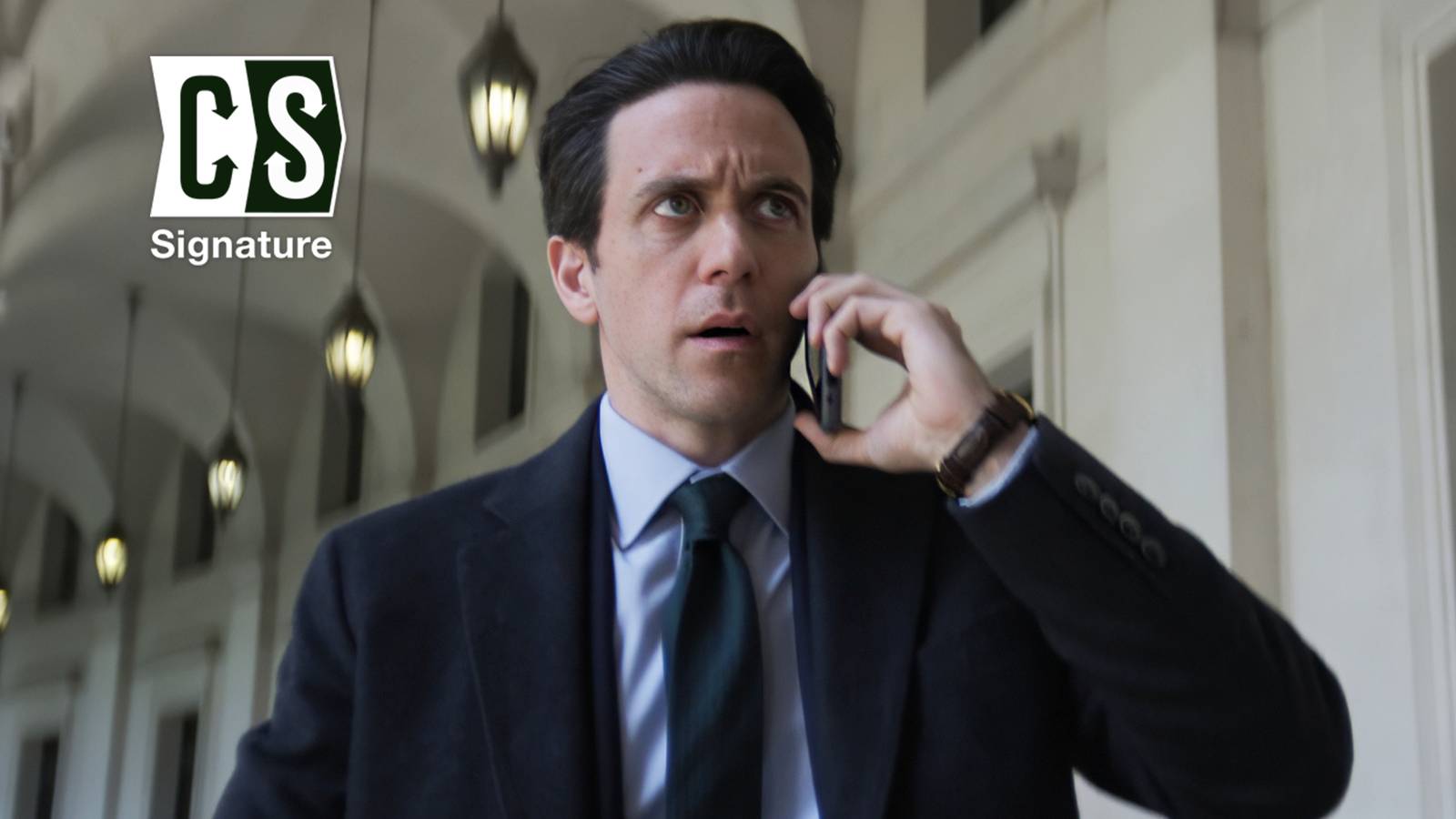
Silo Season 3, Episode 8, titled “Gray Goo,” marks a profound turning point for Congressman Daniel Keene, portrayed by Ashley Zukerman, as the elaborate conspiracy he has pursued across eight episodes finally crystallizes into a much darker reality than he had anticipated. Faced with billionaire Per Stensen’s (Colin Hanks) explanation regarding the silo project and the looming threat of nanotechnology, Daniel finds himself at a critical crossroads, torn between a future dictated by duty and survival, and one shaped by his personal relationships, most notably with intrepid reporter Helen Drew (Jessica Henwick) and his sister Charlotte (Jessica Brown Findlay).
Ashley Zukerman reveals that Per’s argument is “very compelling” to Daniel, suggesting that had this invitation come ten episodes prior, Daniel might have joined the project. However, the experiences Daniel has accumulated through Helen and Charlotte have profoundly altered his perspective, leading him to make “a different decision there.” This internal conflict forms the emotional core of Episode 8, as Daniel grapples with the fundamental shift in his understanding of the world. After a lifetime dedicated to serving others, the episode uniquely positions Daniel to ask what he truly desires for the first time, leading him to declare, “‘I want Helen. I want this life. I want this experience.’”
The revelation in Episode 8 challenges viewers' previous assumptions about the silos, moving beyond debates of control or survival to a deeper, more existential threat. Zukerman acknowledges the compelling nature of Per's logic—that humanity must prepare for an imminent, world-ending nanotech threat. However, Daniel, while unable to fault the logic of preparation, fundamentally disagrees with the proposed solution. Zukerman explains Daniel’s perspective: he believes that rather than a technological “brute-force” answer, humanity’s solutions lie in changing its own behavior and choices, which are readily available if people choose to act differently.
Daniel’s decision to choose Helen over the project is deeply rooted in his personal history. Zukerman draws a direct parallel between this choice and Daniel’s upbringing. Orphaned young, he assumed a carer role for Charlotte, never ceasing to prioritize her needs. This ingrained sense of service extended to his military career and even his reluctant tenure in Congress. However, Charlotte’s injury, despite its tragic nature, becomes a catalyst for Daniel’s personal growth. In Episode 8, a newfound respect develops between them, as Daniel finally allows Charlotte to be her own person, making her own choices. This separation inadvertently allows Daniel to consider his own desires for the first time, culminating in his choice for Helen.
The actors and creators behind “Silo” highlight how the series, initially perceived as a political thriller, evolves into a profound love story at its heart. Zukerman admits surprise, having initially expected Daniel and Helen to be directly involved in the silo’s construction. Instead, he realized that the origin story is presented through the “prism” of these two individuals, who are merely “sucked into this vortex of this project and then spat out.” This approach, he explains, offers a powerful parallel to the individuals trapped within the silo system itself, focusing on the human choices made within larger systems.
Daniel’s character arc is far from stagnant; he evolves consistently throughout the season. Zukerman pinpoints Episode 4 as a key moment when Daniel stops fighting himself and becomes outwardly free to express his true self, inspired by Helen’s honesty. By Episode 8, Daniel has undergone a remarkable transformation, shedding his innocence and gaining a profound understanding of the world. Zukerman explains that because all ten episodes were shot at once, carefully plotting Daniel's growth over the in-universe span of approximately four days was crucial. He focused on tracking how the mounting tension revealed Daniel’s true self, ensuring that the character learned and grew under pressure rather than being crushed by it. This includes Daniel’s internalized decision to move past his lifelong role of serving his sister, demonstrating incredible personal growth.
The show's writing receives significant praise for its subtle effectiveness. Zukerman describes it as “surprisingly subtle in how effective it is,” effectively burying the story and characters’ emotional journeys while inviting viewers to “just live it.” Unlike many genre shows that prioritize exposition, “Silo,” under the guidance of Graham Yost and his team, consistently keeps the focus on “people within a system,” thereby burying the genre elements. The effortless and genuine chemistry between Zukerman and Jessica Henwick, which some writers even used for inspiration, further grounds the narrative. They both actively challenged each other, collaborating to ensure the authenticity of their characters’ dynamic amidst the complex storyline.
Reflecting on his diverse career, Zukerman notes that “Silo” Season 3, Episode 8, uniquely demands him to embody elements of science fiction, fantasy, and political drama simultaneously. His biggest challenge and interest lay in grounding Daniel emotionally, especially while the show redefined its own mythology. He sought to bring “all of himself” to Daniel, connecting deeply to the character’s nuances and discovering an innate sadness he hadn't initially perceived in the script. While teasing future episodes, Zukerman hints that Daniel’s work with the silo project is far from over, and a deeply buried aspect of his character will prove key to understanding what truly went wrong.