Sierra Leone's Communications Regulator Turns 20. What Should Every African Internet User Know?
Sierra Leone's telecom regulator turns 20, revealing lessons on coverage, affordability and consumer protection for internet users across Africa.
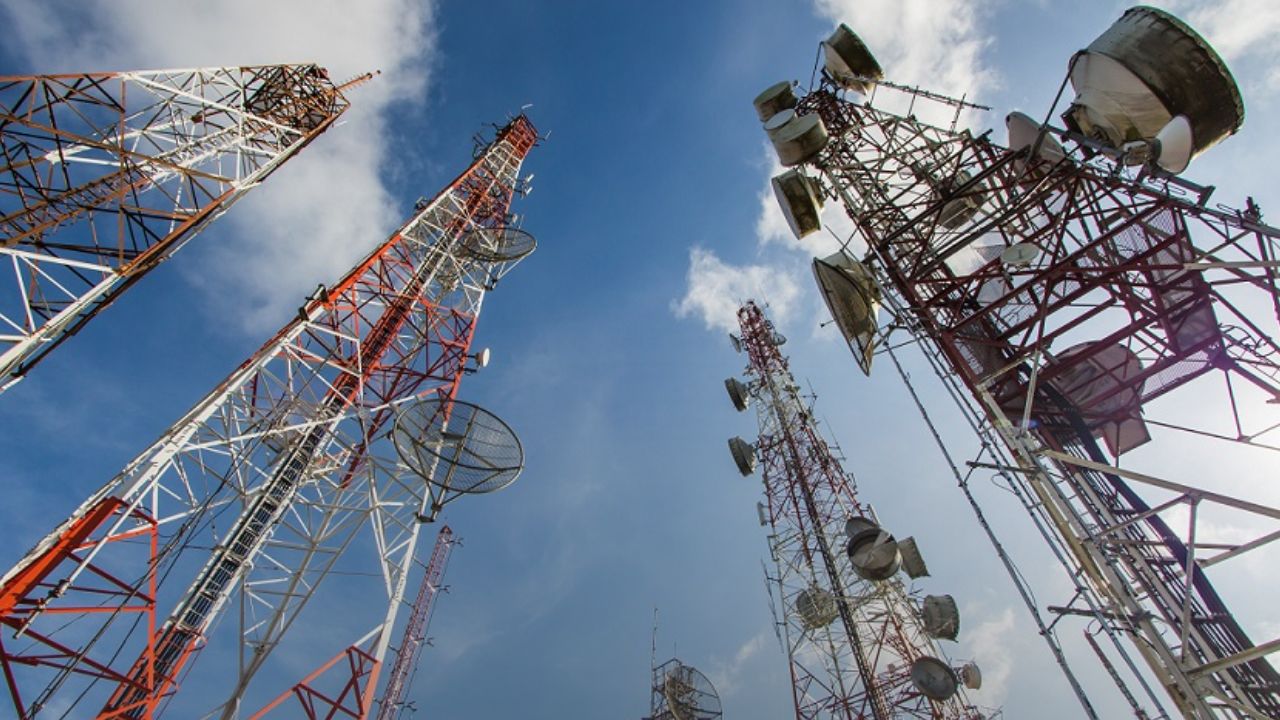
Sierra Leone's National Communications Authority (NatCA) has spent two decades deciding who gets to build networks, how much they can charge, and whether ordinary citizens have any protection when things go wrong.

Image credit: Sierra Leone Ministry of Communication, Technology & Innovation
The regulator's 20th anniversary, marked recently in Freetown with government officials and telecom operators in attendance, can be easily dismissed as a small country's internal milestone and it shouldn't be.
NatCA's trajectory is a compressed version of a story playing out across the continent, and the lessons embedded in it apply well beyond Sierra Leone's borders.

What NatCA Actually Achieved in 20 Years
Mobile network coverage in Sierra Leone now reaches more than 90% of the population with the national fibre backbone extending to 14 of the country's 16 districts. Satellite operators have also entered the market and Mobile Virtual Network Operators have emerged as a competitive layer on top of existing infrastructure.
Communications Minister Salima Bah referred to these gains as the product of deliberate policy choices pointing to regulation, sustained collaboration between government and industry and continuity of institutional purpose across changes in leadership.
Coverage statistics are common in African telecom announcements and many of them are hollow and barely measure signal availability. What distinguishes Sierra Leone's case is the explicit acknowledgment, from the minister herself, that infrastructure build-out was only phase one.
Phase two, she said, has to focus on affordability, quality of service, digital literacy and making sure connectivity actually translates into benefits for citizens.
Why Regulators Are the Invisible Hand Behind Your Internet Bill
Every African internet user interacts with a communications regulator without ever knowing it. The price of a gigabyte of data, the speed of the network at your location, whether your provider is legally obligated to compensate you for prolonged outages, and whether new entrants can compete with the dominant telecom operator are all decisions shaped by regulatory bodies like NatCA, Nigeria's NCC, Kenya's CA or Ghana's NCA.
These institutions set spectrum allocation rules, license new operators, arbitrate disputes, and increasingly police data protection and consumer rights in digital markets.
When a regulator functions well, its work is invisible. Prices stay competitive, networks expand, and disputes get resolved quietly.
When a regulator is weak, underfunded or politically captured, the effects show up directly in consumers' pockets and experience.
Sierra Leone's anniversary is a useful case study precisely because it offers a rare public acknowledgment of both the successes and the unfinished business of building this kind of institution from the ground up.
The Affordability Gap Nigeria, Kenya and the Rest of Africa Still Face
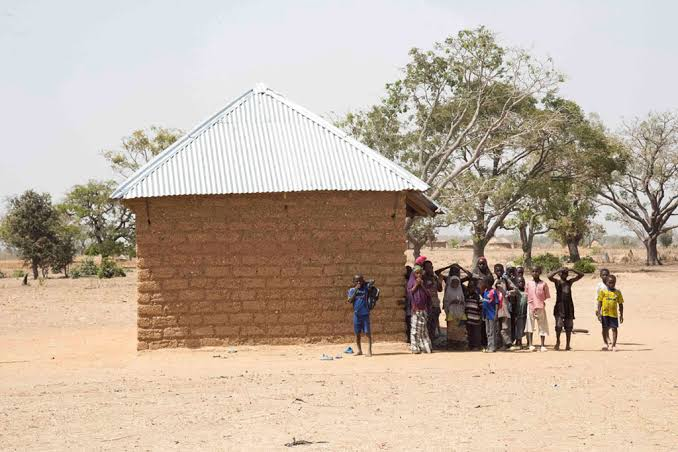
Minister Bah's admission that the next phase must focus on internet adoption and affordability, not just coverage, mirrors a challenge that dominates telecom policy debates.
According to data regularly cited by bodies like the ITU and the Alliance for Affordable Internet, large parts of Sub-Saharan Africa still fall short of the benchmark that a gigabyte of mobile data should cost no more than 2% of average monthly income.
In several African markets, that threshold is routinely breached, particularly in rural areas where competition is thin and infrastructure costs are passed directly onto consumers.
Being within reach of a mobile signal is not the same as being able to afford using it consistently. Sierra Leone's fibre backbone now touches 14 of 16 districts, which is a genuine achievement, but infrastructure alone does not put a smartphone in someone's hand or data in their wallet.
The same tension defines telecom policy debates in Nigeria, where naira devaluation has repeatedly pushed data and device costs beyond reach for large segments of the population, and in East Africa, where mobile money infrastructure has outpaced the affordability of the data plans needed to access it.
What This Means for Digital Rights and Consumer Protection
The quieter but arguably more consequential part of NatCA's mandate, and every telecom regulator's mandate, is consumer protection. As digital services expand into banking, health records, and government services, the regulator's role shifts from simply licensing networks to safeguarding how citizens' data moves through those networks.

Sierra Leone's own minister linked digital transformation explicitly to institutions, arguing that lasting progress depends on people and shared purpose.
That is a governance argument as much as a technology one, and it applies directly to ongoing debates in Nigeria, Kenya and South Africa over data protection enforcement, SIM registration policy and platform accountability.
For the average internet user, this translates into a simple but important question: does your national regulator have the independence and capacity to act when a telecom operator overcharges, underdelivers or mishandles personal data?
In many African markets, the honest answer is that enforcement remains weak relative to the rules on paper. NatCA's 20-year retrospective is instructive here because it treats regulation as an ongoing institutional project rather than a settled achievement.
A Continental Lesson Disguised as a National Anniversary
Sierra Leone is a small market by African standards, but its regulator's anniversary offers a template that deserves study. Two decades of infrastructure investment produced real and measurable gains in coverage.
What NatCA's leadership acknowledged, unusually openly, is that infrastructure was never going to be enough on its own. The next chapter, focused on affordability, digital literacy, and meaningful access, is the same chapter every major African telecom market is still writing.
For internet users across the continent, the lesson is less about Sierra Leone specifically and more about what to watch for in their own countries: whether regulators are being honest about the gap between coverage and access, whether affordability is treated as a policy priority rather than a market outcome to be left alone, and whether institutions built to protect consumers are actually resourced to do so.
Sierra Leone just spent 20 years answering the first half of that question. The rest of Africa is still working through the second.