Should Grades Define Employment in the Workplace?
Should grades define employment in the workplace? Let's explore how academic classifications influence hiring, why grades don’t fully measure competence, and why skills and ability matter beyond certificates.

Should figures on a paper determine who gets a seat at the corporate table?
Should figures on a paper determine if an individual gets access into a corporate room or affects their chances of being employed?
It is a question that quietly follows many graduates long after they have left the university gates.
Oftentimes, when you're a young graduate scouting for jobs, you must come across a role or opportunity that clearly stated “first class only” and if you're not on first class do not apply.
And you're there clutching to your second class lower degree, sweating profusely thinking when it all ends.
Because someone that never knew you personally graded you in an institution and gave you a score they deemed fit and now someone else who still doesn't know you is asking for something you do not have the power to change.
Why is the world so wicked, because tell me if that is not wickedness?
This is the reality of thousands of graduates navigating the modern job market.
A single classification, first class, second class upper, second class lower, or third class, becomes a permanent label for your academic identity.
It follows CVs into inboxes. It silently determines who gets invited and who gets ignored.
But the question here still remains: should grades define employment in the workplace?
Grades were originally designed as academic feedback tools.
They were meant to measure performance within a specific curriculum, during a specific period, under specific conditions.
They were never designed to serve as lifelong indicators of competence, adaptability, creativity, emotional intelligence, or workplace efficiency.
Yet, somewhere along the line, the certificate became more than proof of education. It has now become gatekeepers.
And perhaps that is where the problem begins.
When Numbers Become The Definition Of Intelligence And Knowledge

Because grades are affected by different factors, personal life experiences during school, possible issues with lecturers of a particular course.
Also the case of disinterest in course of study maybe that was not what you initially applied for, your school changed your course, more like what I applied for and what I got

And maybe you were forced or pressured to study a particular course.
It could even be that you read for a course seriously and the part you focused on did not come out in the exam you wrote, no judging here, it has happened to me too.
These realities rarely appear on transcripts and recommendation letters.
The certificate shows the outcome, but it never tells the story behind it.
University grading systems operate within rigid frameworks.
They measure performance primarily through timed examinations, coursework, and theoretical assessments.
While these systems provide structure, they often reduce complex human intelligence into simplified numerical representations.
This and many more are a lot of factors that are never considered when hiring candidates because they are not written on the 1 paged certificate that seems to determine your intellectual strength.
It raises an uncomfortable truth: have we slowly allowed numbers to define knowledge?
Globally, employers have long relied on university rankings and grade classifications as signals of competence.
A first class degree is often perceived as excellence, a second class lower may be seen as average. But intelligence itself is multidimensional.

Psychologists and cognitive scientists have long argued that intelligence includes analytical reasoning, creativity, emotional regulation, adaptability, and problem-solving ability — many of which are difficult to measure through traditional examinations.
Also, not saying I have proof, but there is the possibility of cheating through exams and saying someone is intelligent.
This introduces another layer of uncertainty. Exams test performance under pressure, but they do not always verify genuine understanding.
Someone with strong cramming and memory power would be assumed to be intelligent and intelligence is not about memory power but problem solving skills.
Memory can reproduce information, intelligence transforms it and brings practical understanding. Yet grading systems often reward recall more than application.
This does not make grades or grading systems useless. It simply makes them incomplete and in some cases biased.
The Workplace Is Beginning To Value Competence Beyond Certificates

The workplace operates on a fundamentally different logic from the classroom.
Academic environments reward compliance with curriculum structures. Work environments reward outcomes, innovation, consistency, collaboration, and adaptability.
Most at times, practical skills are merely graded on paper or fully assessed by theoretical exams.
This is not to dispute that theoretical exams are not a true test of knowledge, that is quite subjective in conversations, but to a large extent it does not fully assess everyone properly.
Because the workplace is not theoretical. It is dynamic and unpredictable.
It requires decision-making under uncertainty, communication with diverse personalities, problem-solving under pressure, and continuous learning beyond textbooks.
Increasingly, some of the world’s most influential companies are recognizing this.
Companies like Google, Apple, IBM, and Tesla have publicly shifted toward skills-based hiring in many roles.
They focus more on demonstrated competence, project portfolios, technical assessments, and problem-solving ability rather than strictly on degree classifications.
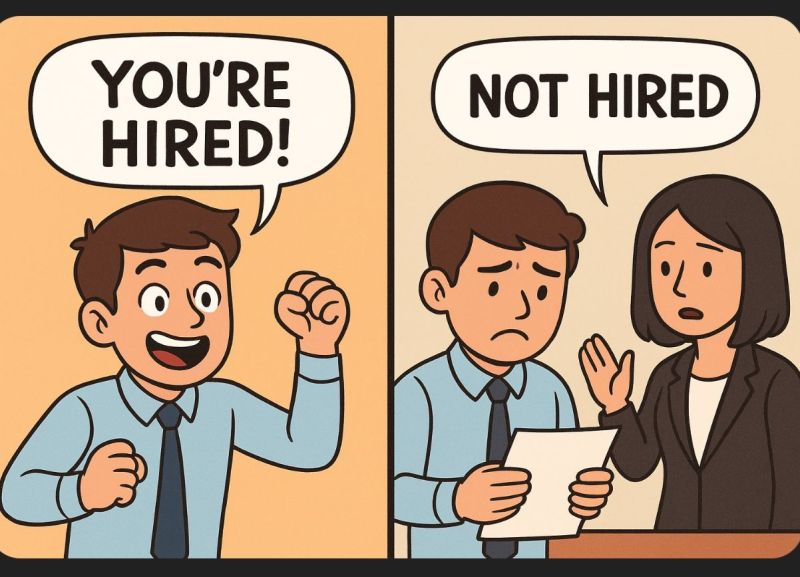
This shift reflects a growing recognition that competence cannot always be predicted by grades alone.
A graduate with a second class lower degree may possess exceptional creativity, leadership ability, and resilience.
Another with a first class degree may excel academically but struggle in real-world application.
Grades reflect academic performance. Work reflects applied performance. They are related, but they are not identical.
There are countless stories of individuals who were not top of their class but went on to build companies, lead organizations, and transform industries.
Their competence was revealed not through transcripts, but through action.
This is not an argument against education. It is an argument from a clear perspective. Education builds foundation, but it is competence that builds real impact.
There Is More Beyond Grades, But Excellence Must Still Matter

This conversation is not about dismissing grades entirely.
Academic excellence deserves recognition. Discipline, dedication, and intellectual rigor are valuable traits, and strong academic performance often reflects those qualities.
But grades should be seen as indicators, not absolute verdicts.
A first class degree may suggest consistency and academic strength.
A second class lower degree does not suggest incompetence.
A third class degree does not erase potential.
Human capability cannot be fully captured by classification and grading systems.
Companies should still hire the best and not settle for mediocrity.
Competence, discipline, and capability must remain the standard.
But competence should be measured holistically, through skills, critical thinking, adaptability, emotional intelligence, and proven ability to solve problems.
Not solely through figures on paper because the workplace is not an exam hall.
It is a performance environment and performance is revealed over time.
The danger of over-reliance on grades is not just individual exclusion, it is organizational loss.
Companies risk overlooking individuals who may bring innovation, resilience, and unconventional thinking simply because their certificates do not fit predefined expectations.
There is more beyond grades, grades tell a story, but they do not tell the whole story.
Competence lives beyond transcripts. It reveals itself in execution, consistency, learning ability, and real-world impact.
Perhaps the future of hiring lies not in abandoning grades, but in seeing them for what they truly are, one part of a much larger picture.
Because at the end of the day, it is not the classification on paper that builds organizations. It is the competence of the people inside them.