Your Brain Deletes Memories on Purpose. Here’s Why Forgetting Is Necessary
Your brain deliberately deletes memories to improve focus, learning, and emotional survival. Forgetting is not weakness, it is essential for intelligence and adaptation.
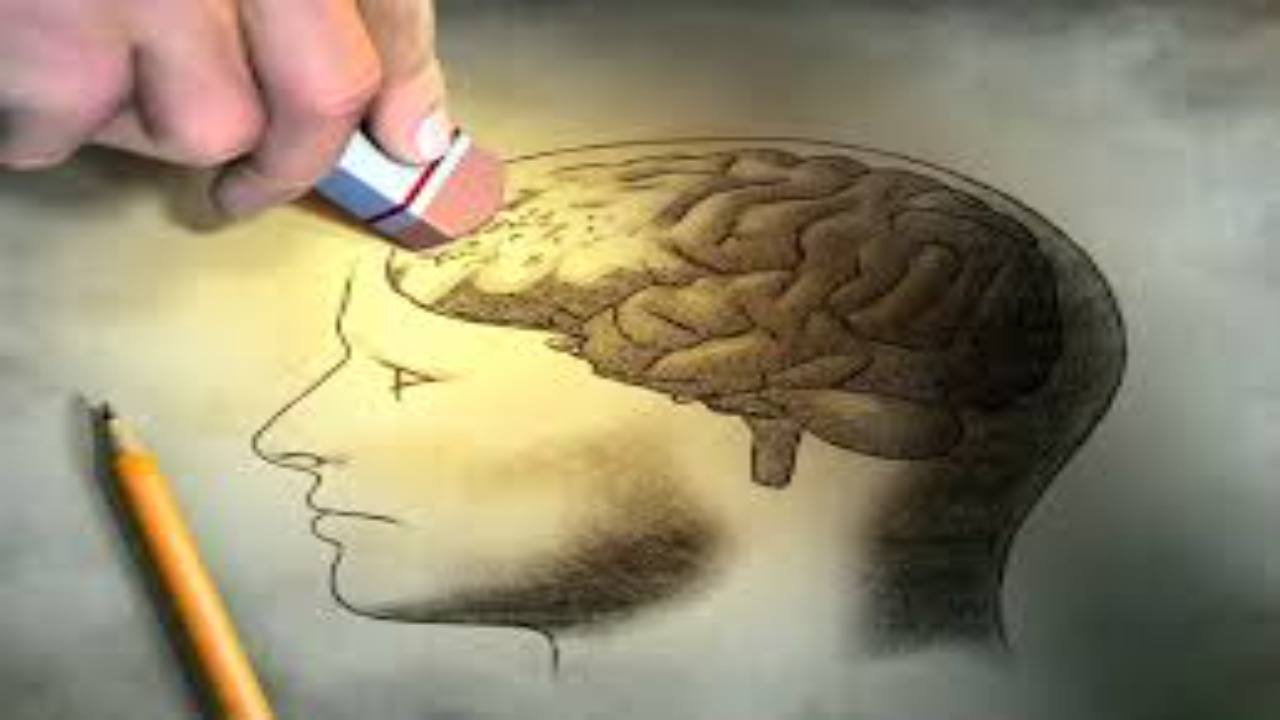
Before reading, I'm quite sure that you probably trust your memory, because why not, you don't forget things easily.
You trust it to hold onto the important thing, names, faces, lessons, pain, love, warnings no matter how long it has been.
And you have assumed that your brain is a loyal archivist, carefully preserving every experience that has shaped you over the years.
Well, my dear opponent, sorry my dear reader! It is not, you have been deceived.
Your brain is, in fact, a selective destroyer and flushes information at the slightest opportunity it has.
Right now, as you read this, your brain is already actively erasing information.
This is not because it is weak or because it is failing, but because forgetting is one of its most intelligent survival strategies.
This may sound unsettling and you might even doubt what I'm saying right now.
After all, memory defines identity. Who you are is deeply tied to what you remember.
Yet, paradoxically, your ability to forget is precisely what allows you to think clearly, adapt, and remain mentally functional.
Forgetting is not a flaw of the brain, it is a feature that we all possess for better cognitive functioning.
And without it, your mind would collapse under the unbearable weight of everything it has ever experienced.
Why your brain cannot afford to remember everything
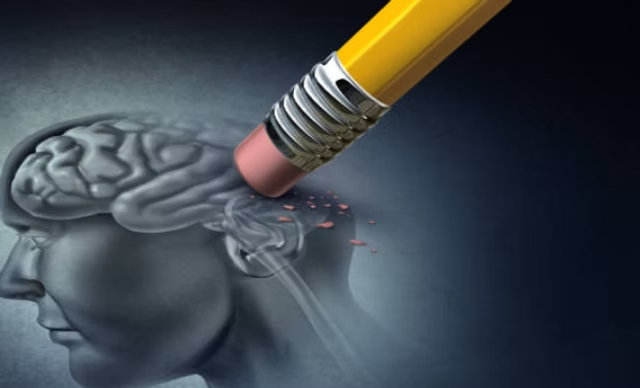
The human brain processes an overwhelming volume of information every second—sights, sounds, emotions, conversations, threats, patterns, and sensory details.
If it stored all of it permanently, your thoughts would become crowded, slow, and chaotic.
Imagine remembering every face you passed on the street. Every sentence you overheard and every irrelevant detail from every ordinary day.
Decision-making would actually become paralyzing and this is why the brain filters aggressively.
At the center of this process is the hippocampus, the region responsible for forming and organizing memories.

It acts less like a storage vault and more like a gatekeeper. It decides what stays and what fades.
Memories that are emotionally significant, repeatedly used, or tied to survival are strengthened. The rest are weakened and eventually discarded.
This process is called synaptic pruning — the deliberate weakening and elimination of neural connections that are no longer useful.
It is not loss or dementia, it is optimization.
By deleting unnecessary information, the brain frees up cognitive resources. It becomes faster. More efficient. More precise.
Forgetting allows you to focus on what matters, without forgetting, your brain would drown in noise.
Forgetting is what allows you to learn, adapt, and move forward
There is another reason your brain deletes memories and that is adaptability.
Your environment is constantly changing. Information that was useful yesterday may become irrelevant today.
If your brain held onto outdated patterns forever, it would trap you in the past and you would grow effectively mentally.
For example, when you learn a new skill, your brain must weaken old neural pathways to strengthen new ones.
Learning is not just about creating memories, it is about replacing them.

This is why children learn faster than adults. Their brains are more willing to discard outdated information.
Forgetting also protects your emotional stability, painful memories, if experienced with full intensity forever, would make emotional recovery impossible.
The brain softens them over time, reducing their emotional charge. The event remains, but its power fades.
This is not weakness or weak memory, it is actually protection. It allows you to heal and continue your life without deep pain.
Interestingly, studies show that people who forget irrelevant details more efficiently often perform better in problem-solving and decision-making tasks.
Their brains are better at extracting patterns and ignoring distractions.
Forgetting improves intelligence, it sharpens perception and makes room for growth.
Forgetting is not failure. It is survival.
You have probably blamed yourself for forgetting names, conversations, or moments you thought were important.
You may have interpreted it as carelessness or cognitive decline.
But the truth is far more profound than all those thoughts of yours.
Your brain is not trying to fail you, it is trying to protect you and I believe that awareness should change everything for you.
It is constantly editing your mental landscape, preserving what strengthens you and discarding what burdens you.
It is ensuring that your mind remains flexible enough to adapt, efficient enough to function, and resilient enough to survive.
Memory is not designed for perfection, it is designed for usefulness.
Forgetting is the price of clarity. It is the reason you can focus, learn, heal, and evolve.
In a strange and quiet way, the memories you lose are making space for the person you are becoming.
Also past events do also influence your actions even though you've forgotten them.
Your brain is not just remembering your life. It is rewriting it as each chapter unfolds.
But that does not mean you be forgetting things anyhow oo.
See you on the next one!