A South African Bank Is Quietly Buying Into Kenya’s Financial Market
Nedbank secures approval to acquire 66% of Kenya’s NCBA Group, signaling a strategic shift in Africa’s fintech and banking expansion through cross-border acquisitions.

There is a quiet transformation that is unfolding, driven not by new companies, but by established banks repositioning themselves within Africa’s financial architecture.
Across the continent, financial institutions are no longer confined by national borders. They are expanding deliberately, acquiring influence in markets where digital finance adoption is accelerating.
These moves are not always dramatic—they happen through regulatory approvals, share acquisitions, and structural adjustments that signal long-term intent rather than short-term disruption.
Kenya, long regarded as one of Africa’s most advanced fintech ecosystems, has become a focal point of this evolution.
Its financial system, shaped by mobile money adoption and strong regulatory oversight, offers both stability and growth potential.
It is within this context that Nedbank Group, South Africa’s fourth-largest bank, has taken a decisive step toward embedding itself in East Africa’s financial future.
Nedbank’s strategic acquisition of NCBA Group

Nedbank Group recently secured a crucial regulatory exemption from Kenya’s Capital Markets Authority (CMA), clearing the path for its planned acquisition of approximately 66% of NCBA Group, one of East Africa’s largest financial institutions.
Ordinarily, Kenyan regulations would have required Nedbank to make a mandatory offer for 100% ownership once it crossed certain shareholding thresholds.
Such a requirement would have significantly increased the financial and operational complexity of the transaction.
However, the CMA granted Nedbank a waiver on February 19, 2026, allowing the bank to proceed with a partial takeover instead of a full acquisition.
This exemption preserves Nedbank’s original strategy.
Rather than acquiring complete ownership, the South African lender plans to purchase shares proportionally from existing investors, securing a controlling stake while maintaining structural flexibility.
This approach reduces capital strain while still granting operational influence.
Investor response has already signaled confidence in the transaction.
Shareholders representing 77.54% of NCBA Group have agreed to accept the offer, an increase from 71.2% when the deal was first announced in January.
This level of participation significantly strengthens Nedbank’s position and reduces uncertainty surrounding the acquisition.

The transaction remains subject to additional regulatory and customary approvals. But the CMA exemption represents one of the most critical milestones.
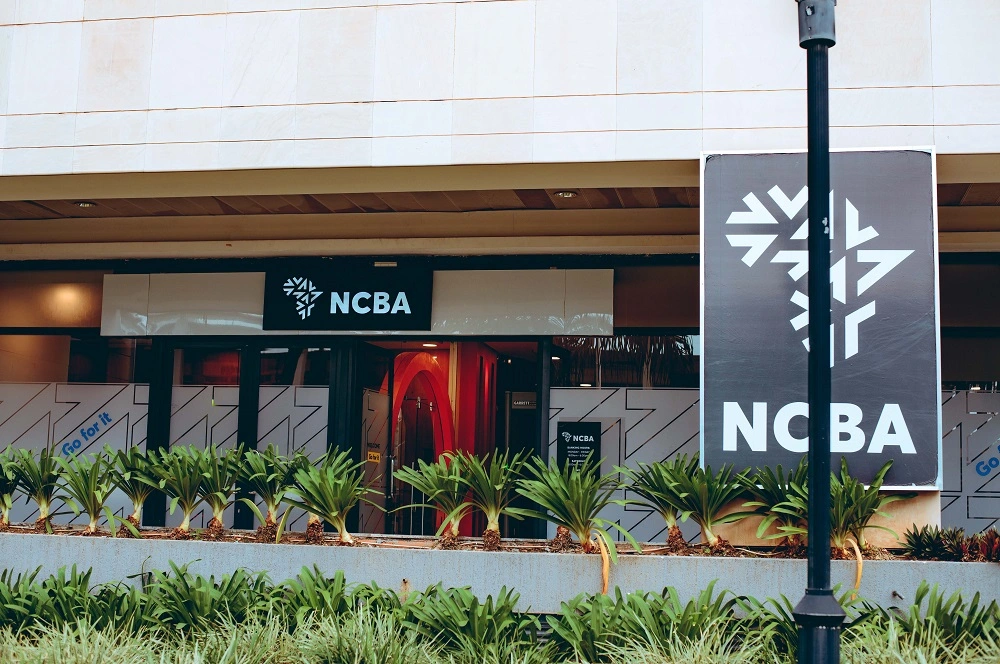
Beyond ownership, the acquisition reflects a broader strategy. NCBA Group operates within a financial ecosystem that blends traditional banking with digital innovation.
Kenya’s leadership in mobile payments and fintech infrastructure makes it an attractive expansion point for institutions seeking regional relevance.
For Nedbank, acquiring a controlling stake in NCBA is not merely about entering a new market.
It is about positioning itself within a financial system already aligned with the future of banking.
The future of African fintech may be shaped by consolidation

Fintech is often described as a story of disruption, but increasingly, it is also becoming a story of consolidation.
Large banks are not retreating in the face of digital innovation. They are integrating themselves into it, acquiring institutions that already operate within digitally mature ecosystems.
Nedbank’s planned acquisition of NCBA Group reflects this shift. It signals a future where financial expansion across Africa will be driven by strategic ownership, cross-border integration, and regulatory alignment.
These moves may reshape competition, strengthen regional financial networks, and accelerate the development of more interconnected banking systems.
For customers, this could translate into improved services, stronger infrastructure, and broader access to financial tools.
For institutions, it represents survival through adaptation and for Africa’s fintech ecosystem, it reinforces a quiet but important truth; The future of finance may not belong only to those who build new systems.
It may also belong to those who understand where to position themselves within systems that already exist.