SHE100: How Iman Turned a Modeling Career Into a Game-Changing Beauty Brand
In celebration of Women’s History Month, this SHE100 feature looks at the remarkable journey of Iman, who rose from Mogadishu, Somalia, to international prominence.
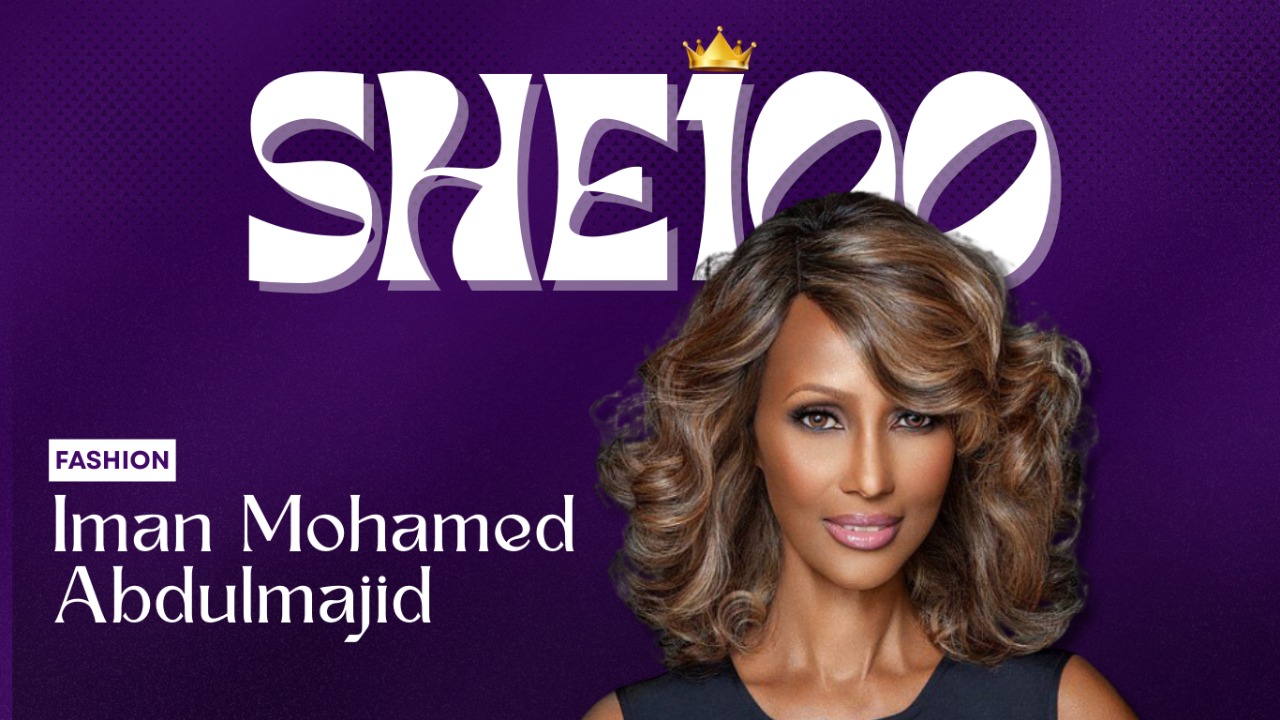
Before diversity became a conversation the fashion industry was forced to have, Iman was already standing at the center of it.
Discovered in the 1970s and quickly propelled onto the world’s biggest runways, the Somali-born model brought a presence the industry had rarely seen before: elegant, self-assured, and unmistakably global. At a time when fashion’s idea of beauty was narrow and tightly controlled, Iman’s rise quietly expanded it.
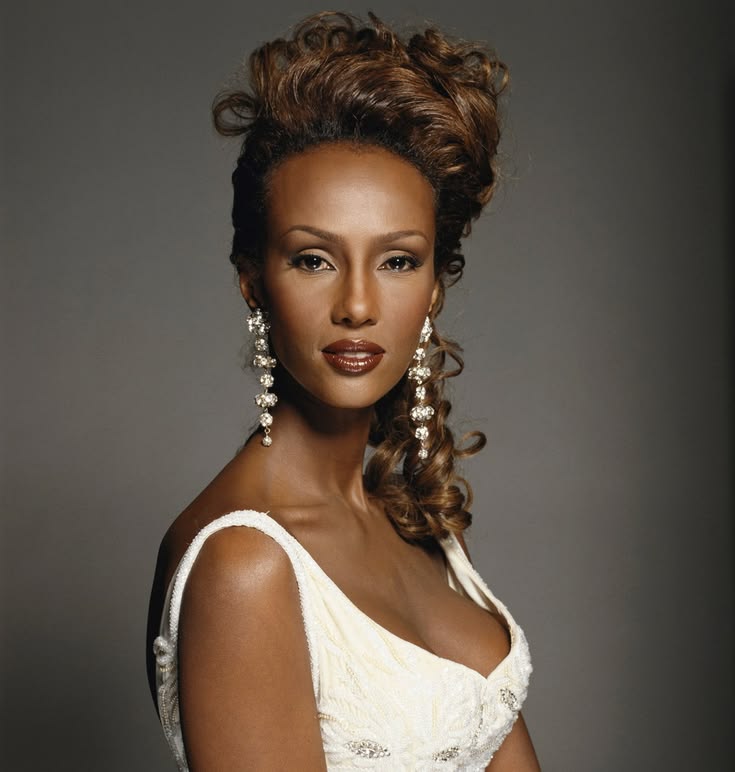
Born Iman Mohamed Abdulmajid in Mogadishu, Somalia, she did not grow up dreaming of runways or magazine covers. Her early life was shaped by education and travel across Africa, and it wasn’t until the 1970s that her life took an unexpected turn.
While studying in Nairobi, Kenya, she was discovered by photographer Peter Beard, who convinced her to move to New York City. What followed was not just a modeling career but the rise of a cultural icon whose influence would stretch far beyond the runway.

A Runway Presence That Changed the Industry
When Iman arrived in New York in 1976, the fashion industry was far less inclusive than it is today. Black models existed, but they were rarely placed at the center of campaigns or runways. Iman’s arrival disrupted that reality almost instantly.
Her striking features, regal posture, and unmistakable confidence made designers and photographers take notice. Soon she was walking for the biggest names in fashion and appearing in major magazines around the world.

Designers such as Yves Saint Laurent became particularly captivated by her elegance, even dedicating collections inspired by her presence.
But Iman’s rise was about more than beauty. She carried herself with an intelligence and composure that reframed how African models were perceived globally.
In an era when representation was scarce, she became a visible reminder that beauty was not confined to a single culture, color, or geography.
Building a Brand When the Industry Wouldn’t
Despite her success, Iman quickly recognized a problem within the beauty industry. Most cosmetic brands simply did not create products for darker skin tones. Women who looked like her often had to mix multiple foundations just to find a workable shade.
Instead of accepting that limitation, she built a solution.
In 1994, she launched IMAN Cosmetics, a beauty line designed specifically for women of color. At the time, this was not a trend or marketing strategy, it was a gap the industry had largely ignored.
The brand became a major success because it spoke directly to an underserved audience. More importantly, it proved that inclusive beauty was not just ethically important but commercially viable. Years later, as major brands began expanding shade ranges, many would recognize that Iman had already laid the groundwork.
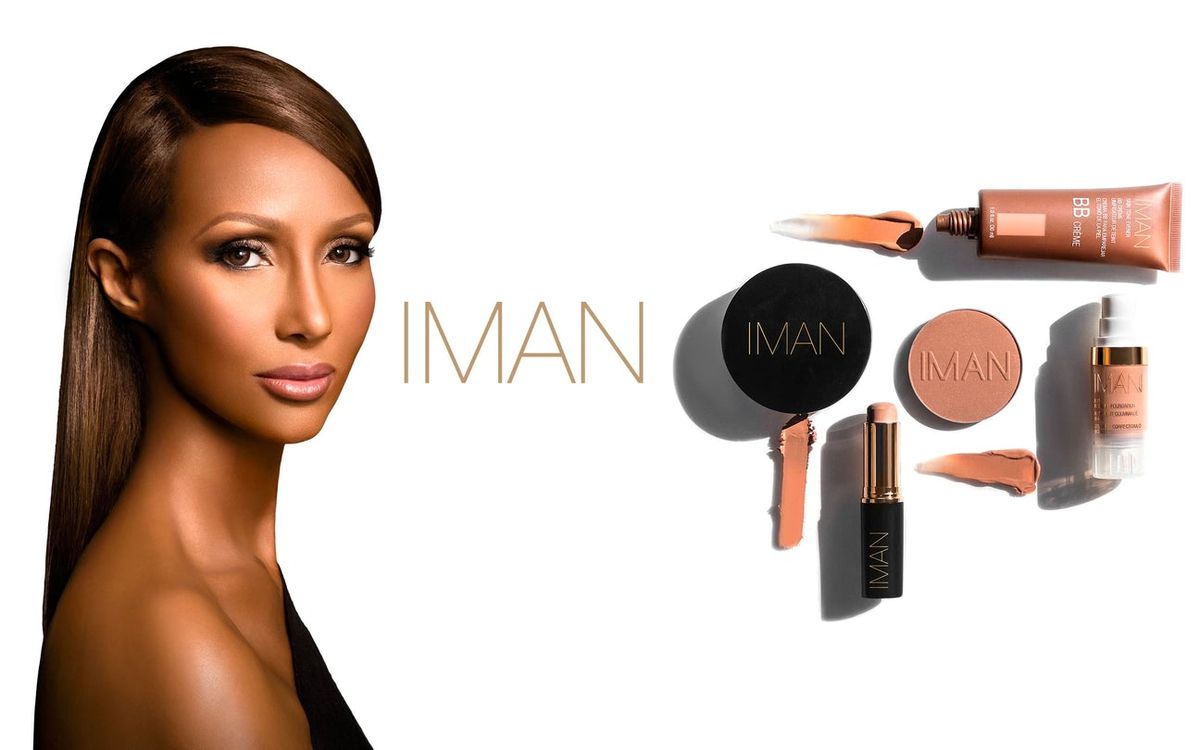
Her move from model to entrepreneur revealed something deeper about her career: she was never interested in simply being the face of beauty; she wanted to shape the business behind it.
A Cultural Icon Beyond Fashion
Iman’s influence has always extended beyond runways and cosmetics. Her marriage to legendary musician David Bowie made them one of the most iconic creative couples of their time, blending fashion, music, and art into a shared cultural presence.
But even outside that spotlight, Iman maintained a voice of her own. She has consistently advocated for humanitarian causes, particularly those connected to Africa, refugee support, and global education. Her public life reflects a balance between glamour and grounded purpose.

In many ways, she helped redefine what a supermodel could represent. The role expanded from walking runways to influencing conversations about identity, business, and representation.
The Legacy of Presence and Possibility
Today, when fashion houses talk about inclusivity and global beauty standards, it is easy to forget that those conversations were once far less common. Iman’s career sits at the foundation of that shift.
She proved that representation on the runway could ripple outward into business, culture, and opportunity for others who followed.

Models from across Africa and the diaspora now walk the world’s biggest runways with greater visibility partly because someone opened the door decades earlier.
Her story is not just about modeling success. It is about the quiet but powerful impact of visibility.
Sometimes change does not arrive with loud declarations. Sometimes it begins with a single figure walking confidently down a runway—and the world slowly realizing it will never see beauty the same way again.