Remember the New Tenancy Law in Lagos? Here’s What Is Really Changing
An in-depth look at Lagos State’s proposed 2025 Tenancy Law, what it changes, who it protects, and what it means for tenants, landlords, and agents

Not long ago, conversations around renting in Lagos were dominated by fear rather than contracts. Fear of sudden lockouts, fear of returning from work to find doors broken, fear of power supply cut as a pressure tactic, fear of agents demanding arbitrary fees without accountability. If you remember the previous debates around Lagos tenancy laws, this latest development feels less like a surprise and more like an overdue response to realities that renters have lived with for years.
The Lagos State House of Assembly has now introduced the Lagos State Tenancy and Recovery of Premises Bill 2025, a proposed update to the 2011 tenancy law. While it is still awaiting debate and passage, the draft alone has already shifted public conversation. It does not just tweak old clauses; it directly confronts practices that had quietly become normalized in Lagos’ housing market.
RECOMMENDED READ: A New Lagos Tenancy Law Is Here, But Will It Fix the City’s Housing Tension?
Ending the Era of “Self-Help” Evictions
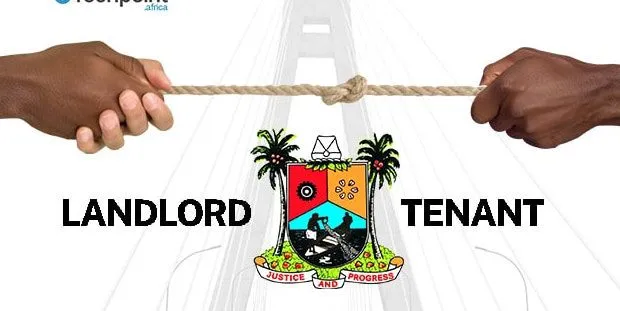
At the heart of the proposed bill is a clear message: eviction is a legal process, not a personal decision. For years, many landlords resorted to what is commonly called “self-help” eviction, locking tenants out, cutting electricity or water, removing doors or roofs, or deploying intimidation to force occupants out. The new bill explicitly criminalizes these actions.
Under Section 10, landlords are prohibited from disturbing a tenant’s quiet and peaceable enjoyment of a property. This includes interfering with essential utilities such as electricity and water, or tampering with the structure of the building. Section 43 goes further, stating that anyone who forcibly ejects a tenant, threatens or molests them, or deliberately damages property to enforce eviction without a court order commits an offence. The penalty is significant: a minimum fine of ₦1,000,000, up to six months’ imprisonment, or both.
This provision responds directly to widespread reports of unlawful evictions across Lagos. It signals that harassment is no longer a “civil misunderstanding” but a punishable offence. For tenants, this offers psychological relief as much as legal protection. For landlords, it establishes boundaries that many argue should have existed long ago.
Faster Courts, Clearer Rules, and Balanced Power
One of the long-standing criticisms of tenant protection laws is that they slow down legitimate eviction processes, especially when tenants refuse to pay rent. The 2025 bill attempts to address this concern by streamlining dispute resolution rather than ignoring it.
Sections 20 to 24 introduce procedural reforms aimed at speed. Cases can be filed through originating summons, hearings are expected to be scheduled within 14 days, and mediation is capped at 30 days. These timelines are designed to reduce prolonged disputes that leave landlords stuck with non-paying tenants while cases drag on indefinitely.
The bill also allows courts to assess whether rent increases are reasonable. Section 33 empowers judges to consider rent levels in similar locations, evidence from both landlord and tenant, and any special circumstances surrounding the property. Importantly, landlords are barred from evicting tenants while such disputes are still under review. This provision seeks balance: tenants are shielded from arbitrary hikes, while landlords retain a lawful path to resolution.
In addition, Section 12 requires landlords to provide accounts of service charges and security deposits every six months. This addresses a recurring grievance where tenants pay for services without transparency on how funds are used.
Social Insight
Navigate the Rhythms of African Communities
Bold Conversations. Real Impact. True Narratives.
What This Means for Tenants, Landlords, and Agents
For tenants, the proposed law affirms rights that often existed only in theory. These include the right to privacy, peaceful enjoyment of premises, access to common areas, and compensation for approved improvements made to a property. More importantly, it sends a signal that the state recognizes housing as a dignity issue, not merely a commercial transaction.
Landlords, however, are divided. While some welcome clearer legal pathways and faster courts, others worry that the law tilts too far in favor of tenants, especially in a city with an acute housing shortage. There is concern that emboldened tenants may exploit the protections to delay rent payments, knowing eviction is now more procedurally demanding.
Property agents are also directly affected. The bill proposes registration requirements and caps on agency fees, addressing long-standing complaints about excessive charges and unregulated practices. This could professionalize the sector, but it also threatens informal systems that have thrived in regulatory grey zones.

A Housing Conversation Lagos Can No Longer Avoid
Beyond its legal clauses, the 2025 tenancy bill reflects a deeper tension within Lagos’ housing ecosystem. The state faces rising population pressure, limited affordable housing, and widening inequality between property owners and renters. Laws alone cannot fix these structural issues, but they can define how power is exercised within them.
The bill is a response to years of public frustration, social media documentation of abuse, and calls for government intervention. Whether it eventually passes in its current form or undergoes amendments, it has already achieved something significant: it has forced Lagos to confront how normalized housing insecurity has become.
If the law succeeds, it may mark a shift from fear-based tenancy to rule-based tenancy. If it fails or is poorly enforced, it risks becoming another well-worded policy disconnected from lived experience. Either way, the conversation has changed. Lagos is no longer asking whether illegal evictions are a problem. It is deciding how firmly it wants to stop them.