Raheema Auwal-Panti: The 15-Year-Old Building a Future Where Period Poverty Doesn't Have to Exist
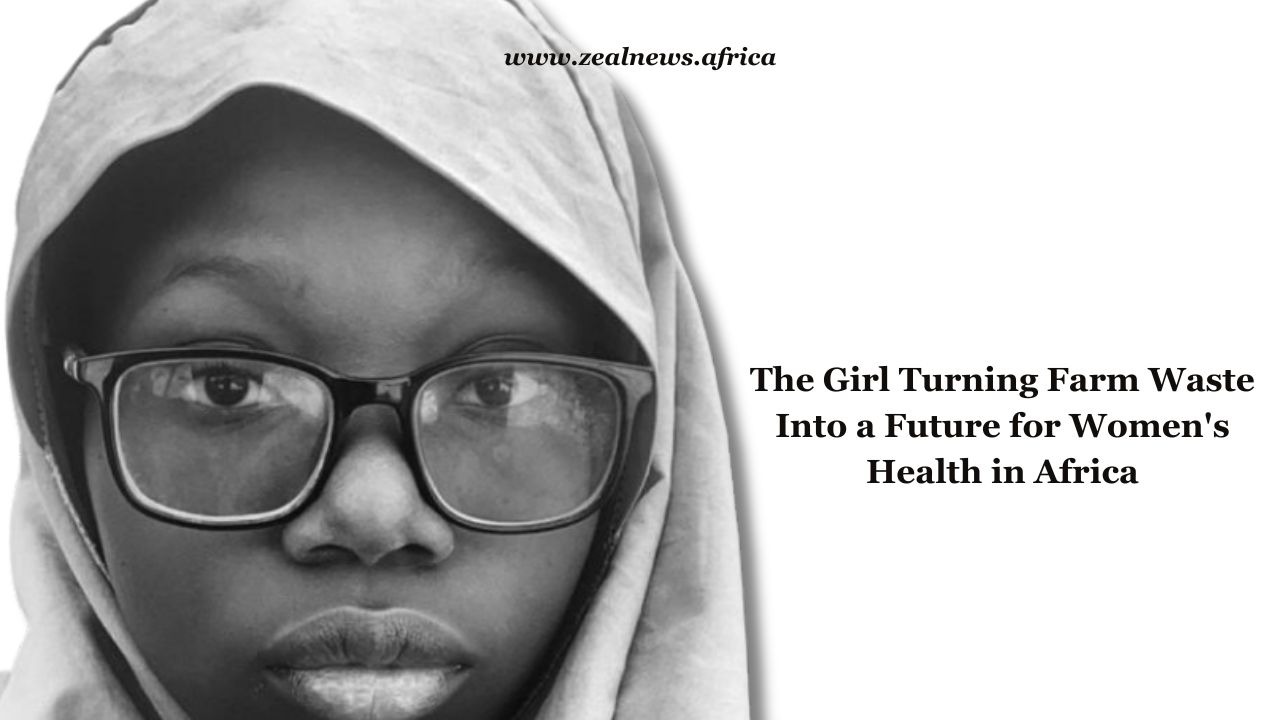
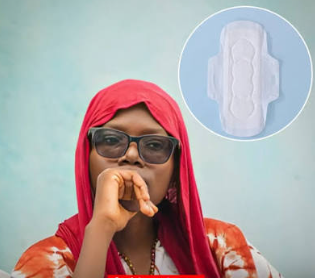
Fifteen-year-old Nigerian innovator Raheema Auwal-Panti is turning agricultural waste into biodegradable sanitary pads, tackling period poverty, plastic pollution, and women's health challenges while earning global recognition as a 2026 Earth Prize finalist.
Some inventions make life easier, and some inventions quietly ask why things were ever difficult in the first place.
At just 15 years old, Nigerian innovator Raheema Auwal-Panti is asking one such question: why should girls have to choose between their education, their dignity, and their periods?
For millions of girls across Africa, menstruation remains more than a biological reality. It is a financial burden, an educational barrier, and in many communities, a conversation still wrapped in silence.
Some miss school because sanitary products are too expensive, while others resort to unsafe alternatives because they have no other choice. Even when sanitary pads are available, they leave behind another problem: plastic pollution that can remain in the environment for centuries.
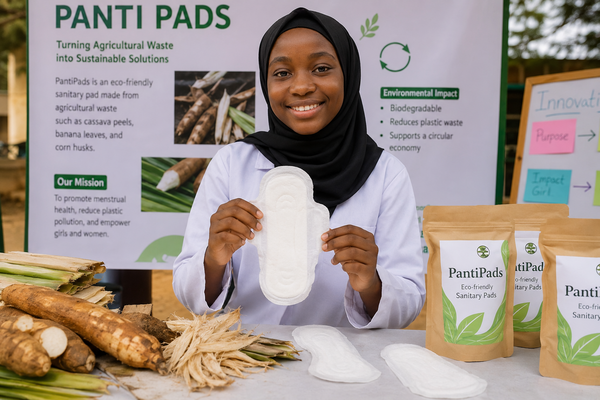
Raheema believes neither should be inevitable. The teenager from Minna, Niger State, has developed biodegradable sanitary pads made from agricultural waste through her initiative, PantiPads, tackling period poverty and plastic pollution with a single innovation.
This year, her work earned global recognition after being selected among just 35 teams worldwide as a finalist for The Earth Prize, one of the world's largest environmental competitions for young innovators aged 13 to 19.
What makes her story remarkable isn't simply that she is 15 years old. It is that she looked at three different problems affecting women and girls across Africa and realised they could perhaps share one solution. Turning Agricultural Waste Into Dignity.
Most conventional disposable sanitary pads contain significant amounts of plastic, with some estimates putting the figure as high as 90%. Depending on their composition, they can take hundreds of years to fully decompose, contributing significantly to environmental waste worldwide.
Raheema's answer was to look much closer to home. PantiPads is produced using low-grade agricultural waste materials, including cassava peelings, banana leaves, and corn husks, materials that are typically discarded during food processing across many African communities.
Instead of ending up as environmental waste, these materials are being reimagined as affordable and biodegradable sanitary products. It is perhaps fitting that an innovation designed to address period poverty is itself built on something people once considered worthless.
Northern Nigeria generates significant agricultural waste annually through cassava processing alone. Poor disposal practices can contribute to soil degradation and environmental pollution. By repurposing these materials, PantiPads addresses two conversations that are often treated separately: women's health and environmental sustainability.
More importantly, affordability remains central to the project's vision. This is not another luxury organic menstrual product designed exclusively for premium markets. The goal is accessibility.
Raheema has repeatedly spoken about creating sanitary products that girls in rural communities can afford and access safely without compromising their health or dignity.
The Cost of Period Poverty Is Bigger Than We Think
The conversation about menstrual health is often reduced to sanitary pads themselves. The reality is much broader than that.
When girls miss school because they cannot afford menstrual products, education suffers. When women resort to unsafe alternatives, public health suffers. When conversations around menstruation remain hidden behind cultural stigma, opportunities for intervention become equally difficult to discuss.
Period poverty is not simply about lacking products. It is about a lack of choices. Across Africa, organisations continue to highlight the relationship between menstrual health, educational outcomes, and economic participation for women and girls.
Something as simple as access to affordable sanitary products can determine whether a girl attends school consistently or remains at home for several days every month.
That is what gives innovations like PantiPads significance beyond environmental sustainability.
Raheema isn't simply building a product. She is contributing to a larger conversation about who gets to innovate for African problems and what those solutions should look like.

For decades, Africa's most pressing challenges have frequently been framed as problems waiting for imported solutions. Increasingly, however, young Africans are proving that local realities can produce globally relevant innovations.
A teenager in Niger State may not immediately seem like the face of global environmental innovation. Yet agricultural waste, menstrual health, and affordable healthcare are conversations shared by communities across continents.
Why the World Should Be Paying Attention
If innovations like PantiPads achieve commercial scale, their value extends far beyond Nigeria.
The global feminine hygiene products market is projected to grow significantly over the coming decade, driven by increasing awareness around menstrual health and sustainability.
Consumers worldwide are increasingly demanding environmentally friendly alternatives to conventional disposable products. Biodegradable menstrual products represent one of the fastest-growing segments within that transition.
Africa, meanwhile, possesses two things particularly relevant to that future: abundant agricultural resources and one of the world's youngest populations.
Imagine the possibilities if agricultural waste generated across African communities could simultaneously reduce environmental pollution, create manufacturing jobs, improve menstrual health outcomes, and contribute to a growing global market for sustainable products.
That possibility is larger than sanitary pads. It speaks to an innovation model Africa has often overlooked: building globally competitive solutions from deeply local problems.
Raheema's long-term ambition remains establishing local production capabilities while continuing to learn existing manufacturing systems and build strategic partnerships. It is a measured approach that recognises innovation is only the first step. Scaling it responsibly is equally important.
At 15 years old, she has already begun that journey. Perhaps the most remarkable thing about her story isn't that she invented biodegradable sanitary pads from agricultural waste. It is that she saw value where others saw waste, possibility where others saw limitations, and solutions where others saw separate problems.
The future of women's health in Africa will not be built by one invention or one innovator alone. But it may very well look like this.