Putin's Iron Grip: Russia's Only Anti-War Party Crushed as Support Surges
The Kremlin initially allowed the Yabloko party on the ballot, but its unexpected rise as a rallying point for an end to the war prompted a swift reversal. Surging support, both in polls and online, led to its removal, revealing the Kremlin's fear of dissent around this forbidden idea. This highlights an underestimation of public resentment beneath state censorship.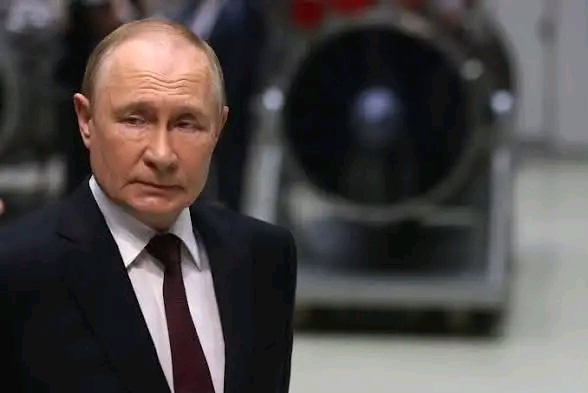
The Russian political landscape saw a revealing development when the Kremlin initially permitted the Yabloko party to appear on the ballot, deeming it an innocuous political entity. However, this perception rapidly shifted as Yabloko's campaign unexpectedly transformed into a powerful rallying point for a segment of the Russian populace that ardently sought a ceasefire, advocated for diplomacy, and demanded an end to the ongoing conflict. This unforeseen surge in public support fundamentally altered the Kremlin's initial calculation regarding the party's harmlessness.
Over a mere three-week period, Yabloko's reported support dramatically climbed from a modest 1% to a more substantial 4%. Confidential internal polling data further indicated that the party's national support could be as high as 5.5%, a crucial figure that would have allowed it to surpass the threshold required for parliamentary representation. In key urban centers such as Moscow and St. Petersburg, Yabloko's support was estimated to be even higher, reaching approximately 11%. This rapid ascent in public opinion clearly signaled a growing undercurrent of dissent and a desire for alternative political narratives.
Beyond traditional polling, Yabloko's digital footprint and online engagement presented an even more undeniable indicator of its burgeoning influence. The party reportedly amassed approximately 200,000 new subscribers on Telegram within a single month, with a significant portion of 50,000 subscribers joining on the very day of its removal from the ballot. The level of online interest in Yabloko briefly eclipsed that of United Russia, the dominant political force, and the party's various online publications collectively generated more than 11.5 million views. This digital momentum underscored the party's ability to mobilize and resonate with a substantial online audience.
The decision to exclude Yabloko from the ballot was not without its internal deliberations within the Kremlin. Reports from Der Spiegel indicate that Kremlin political chief Sergei Kiriyenko, in conjunction with the Federal Security Service (FSB), actively lobbied for Yabloko's removal. Ultimately, the final decision to exclude the party rested with President Vladimir Putin. Following this political directive, Russia’s Supreme Court formally removed Yabloko from the electoral process, acting upon a complaint lodged by Rodina, a pro-Kremlin nationalist party. This formal action cemented the political decision through judicial means.
It is crucial to note that Yabloko was never realistically positioned to seize power. However, the Kremlin's decisive and forceful reaction to its growing support is profoundly revealing. The fact that a party polling in the low single digits could instill such fear within the system highlights the immense sensitivity surrounding the single, forbidden idea that propelled its support: ending the war. This episode suggests that Putin may have significantly underestimated the deep-seated resentment accumulating beneath the surface of Russia's stringent censorship and carefully manufactured polling data. When even a meticulously controlled election begins to expose such underlying resentment, the Kremlin, true to its historical pattern, resorts to the familiar strategy of eliminating any perceived political choice that deviates from the sanctioned narrative.