Political Firestorm: NDC Rocked by Internal Crisis as Dickson, Yesufu Clash Over 2027 Election
Senator Seriake Dickson, NDC Leader, addressed irregularities in recent party primaries, blaming the Electoral Act and the party's newness. While he announced reconciliation efforts and future technology-driven primaries, activist Aisha Yesufu sharply criticized his leadership and approach, highlighting internal tensions within the party ahead of the 2027 elections.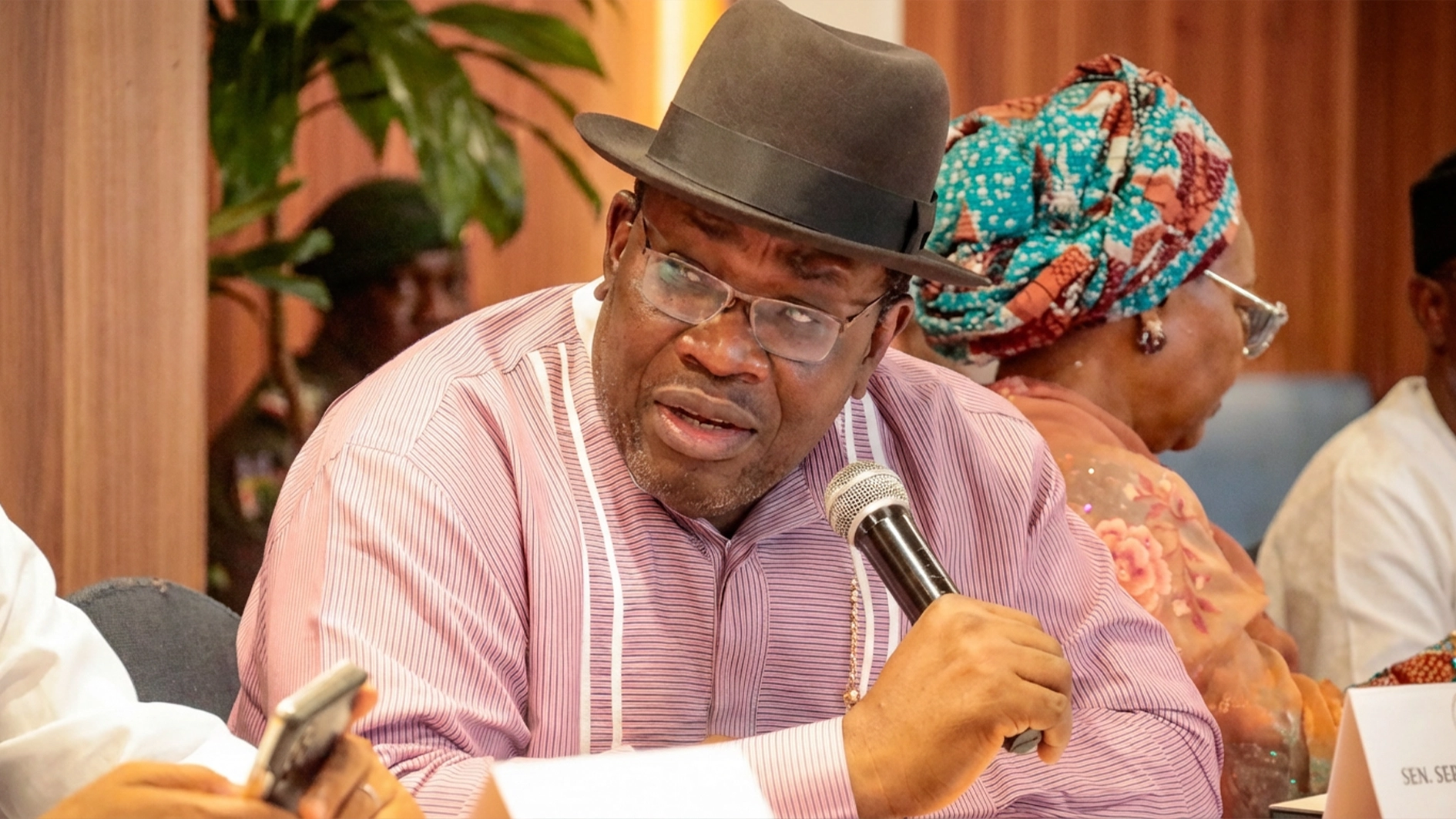
Senator Seriake Dickson, the founder and National Leader of the Nigerian Democratic Congress (NDC), has addressed the controversies and irregularities that plagued the party's recently concluded primary elections. Speaking on Arise Television and Arise News Night, Dickson sympathised with aggrieved party aspirants and members, acknowledging that the process was not perfect. He attributed many of these challenges to the Electoral Act's provision mandating direct primaries, which he argued has overstretched party structures and created internal tensions, particularly for new and rapidly expanding political parties like the NDC.
Dickson emphasized that the NDC, formed only four months prior, had to manage an extensive electoral timetable including membership registration, congresses, a national convention, primary elections, and appeal processes within a limited period leading up to the 2027 general elections. He contended that the challenges faced by the NDC were not unique, noting similar complaints from more established political parties with greater resources. While admitting the exercise was not without flaws, he urged understanding, stating that the party should be judged within the context of its relatively short existence and the enormous responsibilities undertaken.
Addressing allegations of ill-treatment and irregularities, Dickson questioned the specifics of such claims, asserting that the party remains open to all members, including prominent figures. He firmly refuted reports of ticket monetisation, insisting that nominations were based on party processes and merit, not financial transactions. He also dismissed unofficial results circulating on social media, clarifying that formal announcements of winners would only occur when the party officially submits its nominees to the Independent National Electoral Commission (INEC).
In response to the internal discord, the National Executive Committee (NEC) has approved the establishment of a Reconciliation Committee. This committee is tasked with working alongside state caucus leaders and stakeholders to address grievances and foster unity within the party. Looking ahead, Dickson assured members that future primary elections would be conducted using technology-driven systems to eliminate the issues experienced in the recent manual exercise. He stated, “This is the party’s first set of primaries, and it will also be the last to be conducted manually. The next primaries will be technologically driven and will have none of these issues.”
Despite Dickson's defense, his interview drew significant backlash, particularly from activist and senatorial aspirant for the FCT, Aisha Yesufu, and 'Obidient' supporters. Yesufu, in a lengthy post on her verified X handle, described Dickson’s interview as “painfully appalling.” She accused him of fighting a “war no one is waging,” antagonizing potential voters, and being self-focused and insecure about the party’s presidential candidates. Yesufu critiqued Dickson for treating the NDC as a “Special Purpose Vehicle” (SPV) whose aim was achieved merely by registration, rather than a political party genuinely focused on winning the 2027 general election. She urged him to pacify aggrieved members, accept responsibility for irregularities, and prioritize party unity for electoral success, rather than shifting blame.
Dickson, for his part, cautioned supporters against disparaging the NDC leadership or undermining its cohesion. He stressed that the NDC is the crucial “vehicle” through which its presidential and vice-presidential candidates, Peter Obi and Senator Rabiu Musa Kwankwaso, aim to secure victory in 2027. He confirmed that neither Obi nor Kwankwaso paid for their platform. The NDC leader urged members to avoid internal conflicts and focus on supporting the party’s candidates at all levels, emphasizing that weakening the party ultimately harms the prospects of its standard-bearers. He expressed confidence in the NDC’s chances for the 2027 election, asserting that widespread public discontent over insecurity, economic hardship, and national division has created a strong desire for change, positioning the next election as a contest between all Nigerians and the ruling APC.