Political Firestorm: Former Botswana President Khama Slams Hichilema as 'Africa's Newest Dictator'
Former Botswana President Ian Khama has renewed his attacks on Zambian President Hakainde Hichilema, leveling accusations of election manipulation, persecution of opposition, and human rights violations. Zambian officials, including former Vice-President Kavindele and various UPND leaders, have vehemently rejected these claims, defending Zambia's democratic progress and challenging Khama's own political record and moral authority.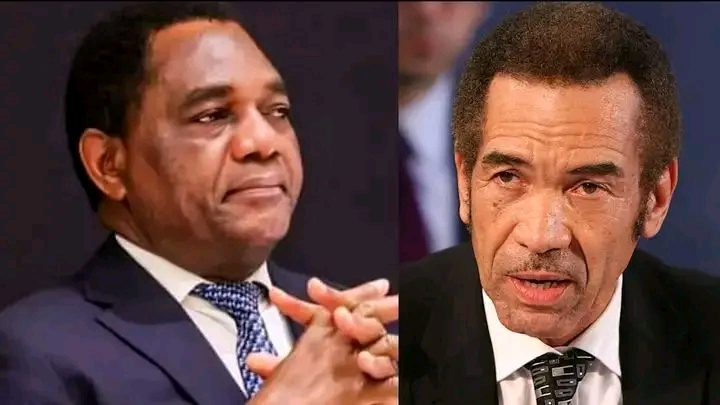
Former Botswana President Ian Khama has escalated his criticism against Zambian President Hakainde Hichilema, accusing the Zambian leader of extensive misconduct including manipulating elections, persecuting opposition figures, and presiding over alleged human rights violations. In an interview published by Swaziland News, Khama reiterated his characterization of Hichilema as a dictator. He alleged that Hichilema, driven by a desire for power, interfered with elections, arrested and detained opponents and members of the clergy, and fabricated charges against them. Khama further accused Hichilema’s administration of kidnapping and torturing political activists, although the Zambian government has not publicly addressed these specific claims.
These accusations by Khama emerge amidst ongoing political and legal controversies following Zambia’s general elections on August 13, which have seen the arrest and detention of several opposition figures. Notably, Lima Constituency MP Kelvin Kaunda of the opposition NRPUP was arrested on October 15 over an alleged assault during election campaigns; he was later granted bail and described his detention as politically motivated. The controversy has also brought Khama’s political relationships in Zambia into question, with figures associated with Zambia’s ruling United Party for National Development (UPND) suggesting his hostility towards Hichilema is linked to opposition political networks and commercial interests impacted by changes in Zambia’s leadership, though a direct financial motive has not been established.
Khama’s intervention has drawn sharp rebukes from Zambian officials. Former Zambian Vice-President Enock Kavindele urged Khama to respect Zambia’s sovereignty and substantiate any serious allegations against its elected leadership with credible evidence. Similarly, UPND Media Director Mark Simuuwe rejected Khama’s characterization of Hichilema, pointing to Zambia’s robust constitutional institutions, ongoing legislative reforms, and respected international standing.
Further condemning Khama’s remarks, UPND Lusaka Province Secretary James Sichomba dismissed them as misleading, hypocritical, and unbecoming of a former head of state. Mr. Sichomba highlighted Zambia’s recent democratic and human rights achievements under President Hichilema, including its election to the United Nations Human Rights Council for the 2027–2029 term, the abolition of the death penalty, expanded free education, and the introduction of school feeding programs. He challenged Khama’s own political integrity, alleging that Khama himself faced serious charges—including corruption, abuse of authority, and illegal possession of firearms—which were dropped under Botswana’s current administration, without judicial clearance. Sichomba explicitly stated, “If there is a person who was a dictator and corrupt, it is Ian Khama during his tenure in office,” questioning Khama’s moral authority to criticize Zambia’s leadership.
Honorable Obvious Mwaliteta, who serves as Lusaka Province Minister and UPND Lusaka Province Chairperson, also weighed in, stating that Khama’s remarks risk undermining mutual respect and constructive engagement crucial for relations among neighboring countries. Mr. Mwaliteta defended Zambia’s constitutional institutions and President Hichilema’s leadership, emphasizing that political differences should be addressed through responsible engagement. He underscored Zambia’s international recognition, particularly its election to the UN Human Rights Council with 177 votes, as a testament to confidence in Hichilema’s leadership. Mwaliteta urged SADC member states to uphold principles of sovereignty, non-interference, and mutual respect, especially when former Heads of State comment on other nations’ governance. He condemned Khama’s remarks, suggesting they betray a lack of understanding of democratic governance, and praised President Hichilema’s inclusive leadership and focus on national unity and development. Mwaliteta called for SADC to ensure that former leaders demonstrate the maturity, wisdom, and diplomatic responsibility expected of their past high offices, stressing that Zambia is a sovereign nation whose democratically elected leadership and development agenda deserve respect.