Political Bombshell: Atiku Confronts Demand to Reopen 20-Year-Old EFCC Case
A former lawmaker has petitioned the EFCC to reopen a 2006 financial crimes case against former Vice-President Atiku Abubakar, alleging corruption and money laundering. Atiku swiftly dismissed the claims as recycled political attacks from opponents struggling to address national hardship. The controversy highlights a debate over accountability, political motivations, and the role of anti-graft agencies.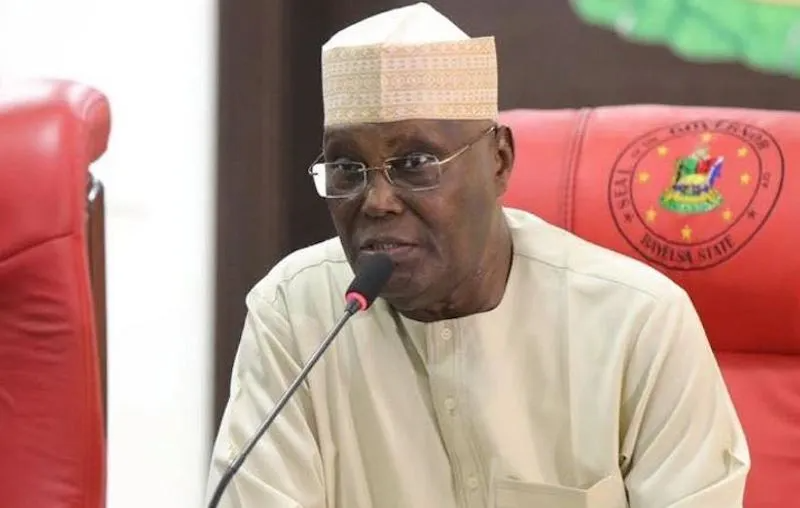
A former member of the House of Representatives, Hon. Ehiozuwa J. Agbonayinma, has formally requested the Economic and Financial Crimes Commission (EFCC) to reopen and prosecute a financial crimes case involving former Vice-President Atiku Abubakar. The petition, dated August 27, 2026, and filed by his legal representatives, Sagitarian Law Firm, was received by the EFCC chairman on September 1. It seeks a re-examination of serious allegations of corrupt practices, money laundering, and other financial crimes allegedly involving Atiku, as detailed in a September 2006 EFCC report titled “The EFCC Report on Vice-President Abubakar Atiku (Full Report)”. The firm argued that despite the severity of the allegations and an earlier commitment by the EFCC to prosecute Atiku post-office, no prosecution has occurred, attributing the delay to constitutional immunity which no longer applies since he left office. They described the continued non-prosecution as a “deliberate dereliction of duty” and a violation of the anti-graft agency's mandate, which, in their view, portrays the EFCC as unwilling to pursue cases involving high-profile individuals. The petition also referenced a February 4, 2010, report by the United States Senate Permanent Subcommittee on Investigations, which reportedly examined the same matter. Sagitarian Law Firm urged the EFCC to reactivate both the 2006 EFCC report and the cited US Senate report as the basis for immediate prosecution, giving the commission 14 days to act, failing which their client would initiate legal proceedings against the commission.
In a strong rebuttal, Atiku Abubakar, through his Senior Special Assistant on Public Communication, Phrank Shaibu, characterized the renewed allegations as a “convulsion” of political opponents who are cornered by their own failures and unable to defend the hardship Nigerians are enduring. He stated that opponents were desperately searching for an “Atiku controversy” because they could not survive scrutiny of their own economic record. Atiku described the sudden re-emergence of these decades-old allegations, rooted in the political battles of the Obasanjo era, not as a show of strength but as an admission that his opponents have run out of answers to the pressing issues of hunger, declining purchasing power, and the unbearable cost of living. He reminded critics that during the height of his political disagreement with the Obasanjo administration, these matters were extensively investigated by the EFCC, an administrative panel, the National Assembly, and the courts, yet no court ever convicted him. Atiku challenged anyone with credible evidence against him to bring it forth and test it before the law, emphasizing his openness to scrutiny. He contrasted this with President Bola Tinubu’s alleged action of intervening in a US court case to seek privacy for FBI and DEA records concerning him, arguing that “a man seeking protection for his own records has no business waving petitions at somebody else.” Atiku concluded by asserting that political exchanges would not solve the genuine problems faced by Nigerians and warned against using state institutions like the EFCC as emergency political weapons when those in power are losing the argument on governance. He stressed that Nigerians would judge candidates by their records in 2027.
When questioned about the timing and potential political motivation of his petition, Hon. Ehiozuwa J. Agbonayinma vehemently dismissed such suggestions, insisting that his move was solely aimed at ensuring accountability and had nothing to do with the 2027 general elections. He clarified that he was merely reminding the anti-graft agency of an investigation previously conducted by the EFCC, following a request from the United States to the administration of former President Olusegun Obasanjo, under the leadership of then-EFCC chairman Nuhu Ribadu. Agbonayinma argued that despite the investigation being concluded, prosecution could not proceed due to constitutional immunity, which is no longer a factor. He questioned why individuals linked to the alleged case in the United States had already faced prosecution, while those allegedly connected in Nigeria remained untouched. The former lawmaker rejected insinuations of acting on behalf of any political interest, stating that what matters are the facts and the investigations conducted by both the United States and the EFCC. He maintained that his intervention was driven by a need to strengthen the fight against corruption and that accountability should apply to everyone, irrespective of status or political ambition, stressing that justice should not be delayed because elections are approaching.