Ghana's SIGA Report Under Fire: Experts Challenge 'Massive Turnaround' Claims
A fierce debate has erupted over SIGA's 2025 State Ownership Report, with IMANI Africa's Bright Simons and Dennis Miracles Aboagye challenging its claims of a significant turnaround in state-owned enterprises' financial performance. They dispute the accuracy, methodology, and interpretation of the report's figures, while SIGA's Director-General, Prof. Michael Kpessa-Whyte, defends its integrity and findings.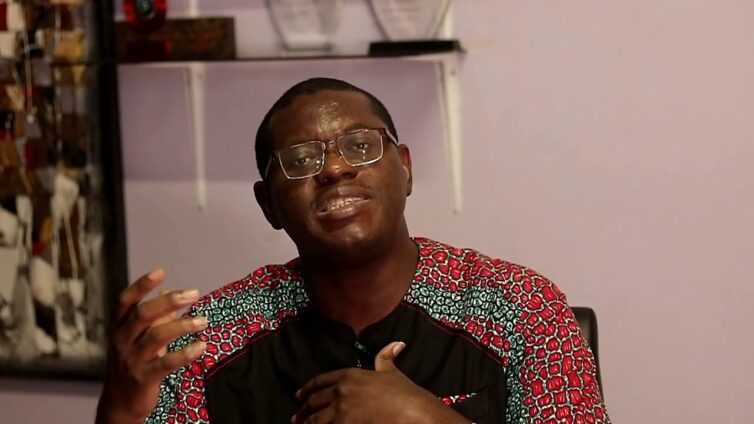
IMANI Africa Vice President Bright Simons and NPP Communications Director hopeful Dennis Miracles Aboagye have launched a strong critique against the State Interests and Governance Authority’s (SIGA) 2025 State Ownership Report, challenging its claims of a significant turnaround in the financial performance of state-owned enterprises (SOEs). Their criticisms focus on the accuracy of data presentation, the methodology used, and the interpretation of underlying financial results, sparking a debate with SIGA's Director-General, Prof. Michael Kpessa-Whyte, who has defended the report.
Bright Simons contended that SIGA’s claim of recording the highest proportion of audited financial statements from state-owned entities in its latest report is inaccurate. He pointed out that while SIGA reported approximately 66% of entities submitting audited accounts for the latest period, the proportion was actually higher at 68% in 2021. Simons also questioned the report's presentation of profitability, noting that the number of profitable entities declined from 35 in the previous year to 34 in the latest reporting period. He argued that aggregate figures obscure the performance of individual entities and that fewer SOEs made a profit in the latest period, a detail not highlighted in SIGA’s narrative.
Furthermore, Mr. Simons raised concerns about SIGA’s methodology for combining financial results, suggesting the report treats figures as group consolidation despite primarily being an aggregation exercise. He stressed that proper consolidation requires specific accounting rules, including clear disclosure of the basis of preparation and accounting policies, which he believes were not followed. This, he argued, undermines the validity of indicators such as group profit, group loss, and current ratio presented in the report. He also criticized SIGA’s selective reference to international accounting standards like IPSAS and IFRS without engaging in the required practices.
Simons emphasized that SIGA's report risks misleading the public by focusing on aggregate figures and including gains not directly attributable to operational performance. He cited foreign exchange movements and improvements in financing conditions as factors that could artificially inflate financial positions without reflecting better management. He argued that a general improvement in the broader economy should not be automatically attributed to individual SOE performance, stating that the focus should be on the operating performance driven by the entities' core business.
Dennis Miracles Aboagye echoed similar concerns, accusing the government of putting a “political spin” on the SIGA report to present the reported profits as a “dramatic turnaround.” He questioned the feasibility of institutions with longstanding structural issues achieving such a transformation within a single year. Aboagye also queried the source of profits, especially for entities like COCOBOD, and highlighted the treatment of surpluses from unspent public funds as “profit,” which he viewed as a misrepresentation of institutional efficiency. He asserted that profitability among SOEs is not a new phenomenon, noting that 35 SOEs were profitable in the report preceding the 2025 one.
Mr. Aboagye claimed to have identified 19 errors in the SIGA report, including inconsistencies in figures, numbers, tables, and misaligned columns, which he argued could significantly affect the conclusions drawn. He pointed to examples where figures for entities like YEA were quoted inconsistently across different sections, and similar discrepancies were found in profit figures for VRA. He stressed that while SIGA analyzes reports from SOEs, the Authority's presentation and analysis of these figures can still contain errors, leading to potentially false conclusions.
In response, Prof. Michael Kpessa-Whyte, Director-General of SIGA, staunchly defended the report, stating that the figures are not conjured but are drawn from audited accounts of the entities, with auditors appointed by the Auditor-General. He maintained that several concerns raised by critics were already acknowledged and addressed within the report itself. Prof. Kpessa-Whyte clarified that while foreign exchange movements played a significant role, operational efficiency also contributed to the reported improvements, and the report deliberately included caveats and contextual issues to situate the performance within the broader economy.
Prof. Kpessa-Whyte further argued that the performance of SOEs should be assessed against prevailing macroeconomic conditions, which he linked to sound government policies promoting exchange rate stability, lower inflation, and predictable interest rates. He challenged the perception that SOEs are inherently incapable of performing well, describing it as a