Paleontologists Unearth 'Infernogallus Jamesi': First-Ever Fruit-Eating Dinosaur Identified
A groundbreaking discovery unveils <i>Infernogallus jamesi</i>, or the "Hell Chicken," a turkey-sized dinosaur from 68 million years ago. This unique creature, related to <i>T. rex</i>, was the first known dinosaur to exclusively eat fruit, boasting specialized anatomy for its diet. Its well-preserved fossils offer unprecedented insights into dinosaur evolution and ancient ecosystems.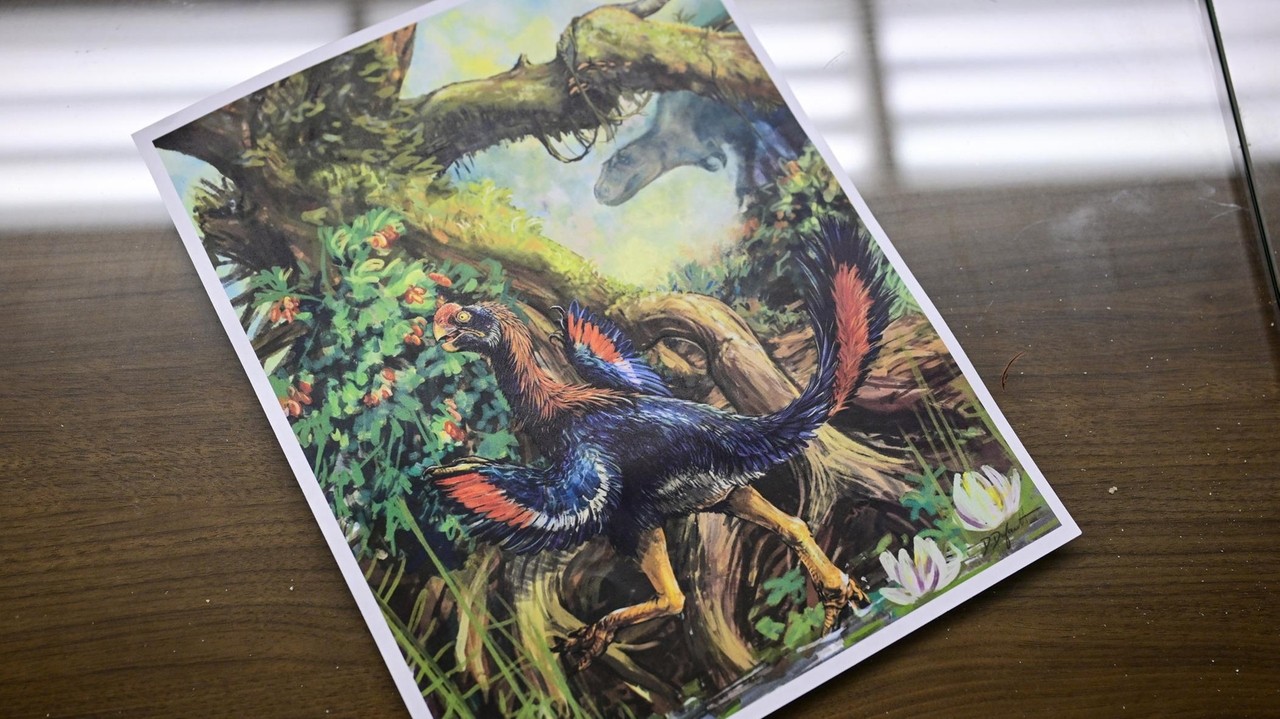
Paleontologists have recently unveiled a fascinating new dinosaur genus and species, Infernogallus jamesi, colloquially known as the "Hell Chicken." Discovered in the warm subtropical flood plains of what is now Montana and North Dakota, this turkey-sized creature roamed the Earth some 68 million years ago during the late Cretaceous period, alongside its more famous cousin, Tyrannosaurus rex. Its name derives from its discovery in the Hell Creek Formation of the American West and its birdlike appearance, not its temperament.
What sets I. jamesi apart is its highly specialized diet and anatomy. Researchers, including Stony Brook University paleontologist Gregory Funston, revealed that this dinosaur was the first known to have subsisted entirely on fruit. Its unique oral structure featured a ridged and grooved beak, with a top jaw operating much like a citrus juicer. Unlike carnivores that used vertical force to tear meat, or most herbivores that ground fibrous plant matter, I. jamesi mashed its fruity meals with a distinctive horizontal motion.
The identification of this new species was based on five fossil specimens, notably including the first intact skull for a dinosaur family of its kind. The findings were published online on October 10 in the journal Nature Communications. Gregory Funston, an assistant professor at Stony Brook University, led the research team, which also included paleontologists from the Royal Ontario Museum and the North Dakota Geological Survey.
Experts, such as Stuart S. Sumida, a biology professor at California State University San Bernardino and president of the Society of Vertebrate Paleontology, lauded the discovery's significance. Sumida highlighted the unusual nature of finding a plant-eating animal related to a group of carnivores like T. rex, illustrating the plasticity of evolution. He also emphasized the valuable evidence I. jamesi provides about ecosystem interaction and co-evolution during the Cretaceous Terrestrial Revolution, a period marked by an explosion in the diversity of fruit-bearing plants.
The fruit eater likely benefited from the abundance of varied and increasingly large fruits, while simultaneously aiding plant dispersal by consuming and scattering seeds. Thomas R. Holtz Jr., principal lecturer in vertebrate paleontology at the University of Maryland, noted the exceptional completeness of the oviraptor fossils, to which I. jamesi belongs. These well-preserved specimens establish a crucial "ground truth" for paleontologists, enabling more precise identification of future findings.
Funston described the dinosaur's skull as "bizarre," stating that nothing prepared him for its unusual appearance. Evolutionary changes had led to jaw muscles shrinking significantly, and palatal bones in the roof of its mouth dipped so low that they would have been felt under the chin when its mouth closed. This anatomy, with vaguely similar muscle mechanics, is only seen in creatures like the green sea turtle and the vulturine parrot, an example of independent evolution known as convergence.
Weighing approximately 25 pounds, I. jamesi was flightless and not a direct ancestor of modern birds, yet Funston remarked it would be hard to distinguish from a living bird due to its large eyes, short parrot-like face, long emu-like neck, and feather covering. The fruits it consumed were likely juicy and sugary, making I. jamesi a potential prey for larger carnivores like T. rex.
However, the specialized diet that allowed I. jamesi to thrive ultimately contributed to its demise. Its geological span, like that of T. rex, was fleeting. The city-sized asteroid impact 66 million years ago caused the extinction of three-fourths of all life, including most dinosaurs. While some birds survived due to flexible eating habits, the highly niche-adapted I. jamesi, relying on a complex ecosystem that no longer existed, had "no chance to respond," as Funston put it, when the rug was pulled out from under it.