Olawepo-Hashim Dares Foes: 'No Exclusion From 2027 Presidential Bid!'
Accord Party presidential candidate Dr. Gbenga Olawepo-Hashim has strongly challenged his exclusion from INEC's 2027 presidential candidate list, declaring his candidacy valid and the matter subject to judicial review. He asserts INEC lacks final authority in candidate disputes, with the Federal High Court currently deliberating his case. Olawepo-Hashim views his legal fight as a test of internal democracy and Nigerians' constitutional right to choose their leaders.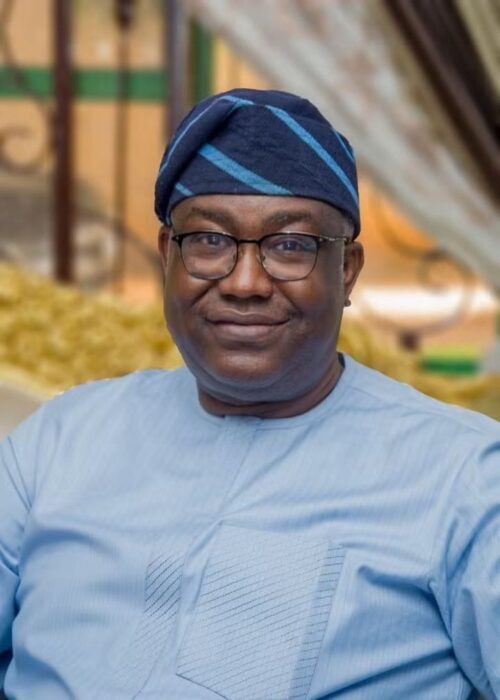
Dr. Gbenga Olawepo-Hashim, the presidential candidate for the Accord Party, has firmly asserted that no administrative decision by the Independent National Electoral Commission (INEC) holds the power to invalidate his candidacy for the forthcoming 2027 presidential election. His declaration comes in response to his exclusion from the final list of presidential candidates recently published by INEC. In a statement released from Abuja, Olawepo-Hashim characterized the situation as a matter pending judicial determination, reiterating his status as the legitimately nominated presidential candidate of the Accord Party.
Olawepo-Hashim emphasized that Nigeria's constitutional democracy does not grant INEC ultimate or "finality" authority over disagreements concerning the emergence of a political party's candidate. He argued that the judiciary's adjudicatory powers are specifically designed to ensure that administrative rulings do not become tools of impunity or mechanisms to unfairly obstruct legitimate political entitlements. He cited historical precedents, such as the last Osun governorship election, where courts intervened to reinstate candidates initially excluded by INEC, underscoring that an administrative publication is not the definitive word when a matter is sub judice.
The presidential hopeful has already lodged an appeal with the Federal High Court in Abuja. Among other requests, his suit seeks a court order compelling the Accord Party to formally recognize him as its presidential candidate and to subsequently transmit his name to INEC. The court has already heard the arguments and reserved judgment on the case. Olawepo-Hashim's legal challenge is predicated on his claim that he emerged as the sole victor of the Accord Party's presidential primary, held on May 30, 2026. He states that he fulfilled all requirements, including paying the stipulated nomination fee, and that the primary election was duly monitored by officials from INEC.
Reaffirming his position, Olawepo-Hashim stated that the dispute over his candidacy cannot be conclusively settled by a mere administrative listing. He expressed strong confidence in the judicial process, believing the court will uphold the law, as his right to contest was lawfully acquired through due process. He maintained that neither an individual's action nor an administrative directive can revoke a legitimately obtained right, affirming his resolve to see the legal process through to its rightful conclusion as the Accord Party's presidential candidate.
Beyond his personal political aspirations, Olawepo-Hashim critically addressed what he described as political forces that prefer a presidential contest driven by division, sentiment, and weakened adversaries, rather than one focused on crucial national issues. He asserted that those who have benefited from Nigeria's systemic dysfunction, along with their enablers within various institutions, are apprehensive about his presence on the ballot. He perceives himself as a candidate who defies their traditional calculations, capable of garnering support across both North and South, and committed to addressing issues vital to ordinary Nigerians and the nation's future, thereby rejecting the politics of ethnicity, religion, and factionalism.
He contended that these forces might be comfortable competing against "wounded candidates" or within a political landscape forcing Nigerians to choose between personalities and factions. However, they are uneasy with a candidate who can engage Nigerians nationwide on the basis of ideas, competence, and the national interest. Despite the perceived sophistication of this "plot," Olawepo-Hashim declared its ultimate failure.
Hashim articulated that his legal battle is thus more than a personal ambition; it serves as a critical examination of the integrity of political party primaries, internal democracy, and the fundamental constitutional right of Nigerians to freely select their preferred presidential candidate. He raised pertinent questions: "If a political party can conduct a primary, produce a winner, and then prevent that winner from participating without judicial scrutiny, what then becomes of internal democracy? What happens to the rights of party members who participated? And ultimately, what about the right of Nigerians to choose who appears on the ballot?" He concluded that the case transcends his individual journey, fundamentally testing whether democratic rules apply equally to all, including those holding influential positions.
He urged his supporters and all Nigerians who champion democratic choice to maintain calm, assuring them of his continued pursuit of the matter through constitutional and legal avenues. He stated, "I am not asking anyone to break the law. I am asking that the law be allowed to work." He concluded with a resolute stance: "We will not be intimidated, we will not be distracted and we will not surrender a legitimate democratic right because somebody has published a list. The court will speak, and when it does, we will abide by the judgment."