Austria Ignites Fury with Under-14 Headscarf Ban: Religious Freedom Under Fire
Austria has introduced a new law prohibiting headscarves for female pupils under 14 in schools, effective September 2026. This ban, justified by the government as a measure to protect children's development and freedom from social pressure, has sparked controversy and a new constitutional challenge, raising questions about religious freedom and equality.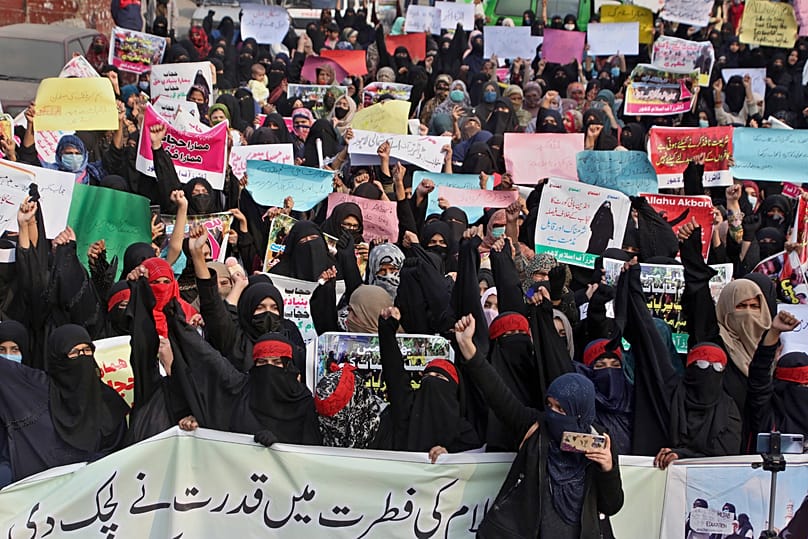
Since the beginning of the 2026/27 school year on 1 September, Austria has implemented a new law prohibiting female pupils under the age of 14 from wearing headscarves at school that align with Islamic traditions. This legislative change has been met with mixed reactions, with teachers' representatives reporting generally calm and respectful implementation, yet some schools have documented instances of conflict and aggressive responses from pupils or parents.
This is not Austria's first attempt at regulating head coverings in schools. In 2020, Austria's Constitutional Court (VfGH) overturned an earlier headscarf ban that applied to primary school pupils up to the age of 10. The VfGH concluded that the previous law violated the principle of equality and freedom of religion, arguing that, in practice, it predominantly targeted the "Islamic" headscarf. The new law, however, introduces a higher age limit, extending the prohibition to pupils under 14.
The Austrian government justifies the revised ban by asserting its main goal is to protect children's development and their individual freedom, aiming to shield girls from potential family or social pressure to wear a headscarf. However, the VfGH has yet to rule on whether this updated justification and the new design of the ban adequately address the constitutional concerns raised in its previous ruling.
Schools and teachers are currently responsible for enforcing the ban. If a teacher observes a pupil wearing a prohibited headscarf, the initial step is to request its removal. Should the pupil refuse, further discussions ensue, potentially involving the education authority. Administrative penalty proceedings and fines for parents or guardians, ranging from €150 to €800, can be initiated at later stages if the ban is repeatedly violated. The teachers' union has expressed criticism regarding the obligation placed on teachers to report breaches, warning that it might cast them in a monitoring role beyond their educational duties.
The debate surrounding the new law also encompasses reports of threats and refusal to attend school. Before the law's passage, the government, including Integration Minister Claudia Plakolm, cited cases where girls or women faced pressure both to wear and to remove a headscarf, including threats within families. While precise statistics are not yet available, there are indications of isolated cases where pupils have either not attended lessons or done so irregularly due to the headscarf ban, leading to conflicts.
Supporters of the new regulations argue that girls in this age group are particularly susceptible to family and social pressure, making state intervention necessary. Conversely, critics question whether a state-imposed ban genuinely strengthens the self-determination of the pupils involved, pointing out that a girl who wishes to wear a headscarf out of personal conviction can no longer do so at school. Education experts, such as psychologist Christiane Spiel, have voiced concerns about potential loyalty conflicts for children caught between parental expectations and school demands. A new constitutional challenge against the law has already been filed with the VfGH. This challenge is expected to once again scrutinize the balance between freedom of religion and the principle of equality, specifically examining whether protecting children from religious or family pressure justifies such an interference with freedom of religion, and if a general headscarf ban is both necessary and proportionate to achieve this stated aim.