Nigerians Built the Market. So Why Aren't PalmPay and OPay Listing Here Too?
Nigeria's fintech giants PalmPay and OPay are pursuing potential IPOs in Hong Kong and the United States. Their plans raise a bigger question: why are companies built around Nigerian users taking their public-market opportunities abroad?
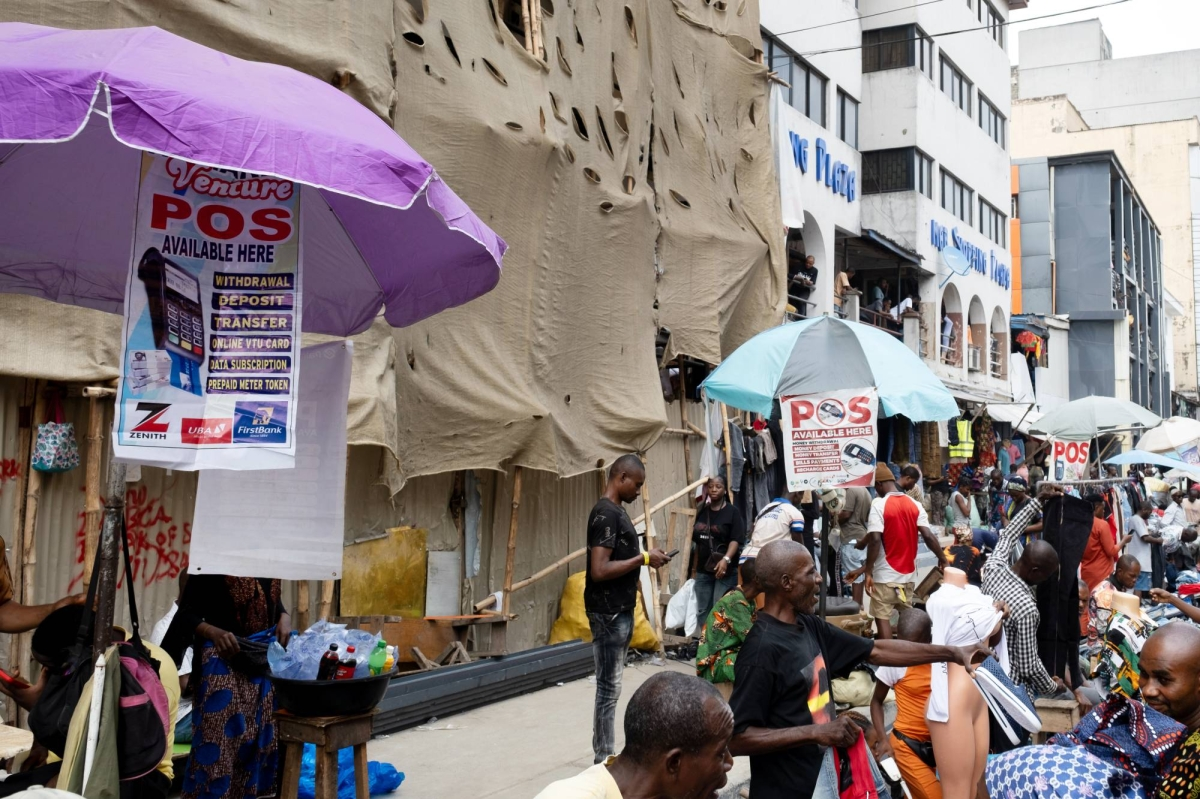
For millions of Nigerians, PalmPay and OPay are not abstract technology companies. They are the apps people reach for when a bank transfer fails, the platforms merchants use when customers pay by transfer, and the names behind thousands of agents scattered across Nigerian streets.
Their businesses were built in a market where digital payments moved from convenience to necessity. Now, both companies are looking beyond that market for the next stage of their growth.
PalmPay has reportedly been considering an initial public offering in Hong Kong, which could value the company at more than $1 billion. OPay, meanwhile, was reported in May 2026 to be preparing for a United States IPO targeting a valuation of about $4 billion, with Citigroup, Deutsche Bank, and JPMorgan involved in the process.
Neither listing has been completed, and both remain subject to market conditions, regulatory approvals, and the companies' final decisions.
That raises a question bigger than either company: if Nigeria helped build the market that made these fintechs valuable, why should Nigerians not also have the opportunity to own a piece of that growth through their own stock market?
It is worth stressing that this is just a question, not an argument that either company should be forced to list on the Nigerian market. PalmPay and OPay are foreign-owned businesses, and they have every right to decide where they raise capital.
But if they can access international markets, is there a reason they cannot also give the market where they built so much of their business a chance to participate?
The Companies Grew Here. The Capital Is Going Elsewhere
PalmPay launched in Nigeria in 2019 after raising $40 million in seed funding led by Transsion, the Chinese parent company of Tecno, Infinix and Itel. It has since grown into a much larger financial services business, with more than 35 million registered users and about one million small and medium-sized business clients, according to reporting in 2025. PalmPay has also expanded beyond Nigeria into other African and Asian markets.
OPay followed a similarly Nigerian trajectory. It grew from its early ambitions as a broader consumer platform into one of the country's biggest digital payments businesses, backed by investors including SoftBank. Its reported U.S. IPO could value the company at around $4 billion.
There is nothing inherently wrong with either company seeking foreign capital. Hong Kong could offer PalmPay access to a deep pool of Asian and international institutional investors, while a U.S. listing could give OPay access to larger pools of capital, greater analyst coverage and international visibility.
For companies with ambitions beyond Nigeria, those advantages are difficult to ignore. But there is another side to the argument.
That question, though, deserves a fair answer: OPay and PalmPay are no longer Nigeria-only platforms. Both have expanded into other African and international markets, but Nigeria remains the biggest market for both companies and the foundation of their growth story.
If they are looking for a stock exchange that understands the scale of what they have built, the Nigerian Exchange is not merely a courtesy option; it is the market where the largest part of their story still lives.
When the value created by millions of Nigerian users eventually becomes publicly tradable, where that trading happens determines who gets the easiest opportunity to participate in it.
And that does not necessarily mean choosing Nigeria instead of Hong Kong or the United States. A company can pursue the international capital it needs while still exploring a Nigerian listing or dual listing.
The question is whether the market that helped create the scale should have to watch from the sidelines when that value eventually becomes public.
So Why Not Nigeria?

This is where the conversation becomes uncomfortable. Nigeria has spent years trying to develop a capital market capable of funding its own technology companies. The Nigerian Exchange even created a Technology Board specifically to attract technology companies and deepen the market, with OPay, Flutterwave, Interswitch and other major firms identified as potential candidates.
The argument for a local listing is therefore not simply patriotic. A Nigerian listing could give pension funds, institutional investors and ordinary retail investors a direct route into companies whose products they already use every day.
It could deepen the local market, create more investable technology companies and give Nigerians a chance to participate in the wealth created by an industry built partly around their consumption.

This is not a theoretical conversation either. NGX has previously courted major African technology companies for local listings. In 2023, NGX leadership met with Flutterwave CEO Olugbenga Agboola and Communications and Digital Economy Minister Bosun Tijani in New York to discuss the possibility of a Nigerian listing, including a naira-denominated option. Flutterwave has since said a Nigerian IPO remains a future ambition while it continues to assess market conditions.
But the argument for foreign listings is equally practical. Nigeria's capital market is smaller and less liquid than New York or Hong Kong. Foreign investors bring deeper pools of capital, and international exchanges can offer companies greater visibility and potentially stronger valuations.
If a company wants to become a global financial technology business, it may reasonably conclude that its best route to that ambition is a global exchange.
But even that argument raises another question. The Nigerian Exchange has been one of the best-performing equity markets in 2026, so why shouldn't companies like PalmPay and OPay at least consider giving Nigerian investors a direct stake alongside their planned foreign listings?
Perhaps Nigeria does not have to compete with New York or Hong Kong for the entire IPO. Perhaps it only needs to compete for a piece of it.
The Bigger Problem Is Not PalmPay or OPay
It would be easy to blame fintech companies for looking elsewhere. But companies do not owe a stock exchange a listing simply because they built a successful business in the country.
An IPO is a capital-raising decision, and companies will naturally choose the market that offers the best combination of valuation, liquidity, investors and regulatory certainty.
The more important question is what happens to the market around them. If OPay lists in the United States and PalmPay lists in Hong Kong, Nigerian investors could still potentially gain indirect exposure through global investment channels. But that is different from having a vibrant domestic market where Nigerians can directly buy shares in companies whose growth they helped create.
This is where a dual-listing argument becomes worth considering. Nigeria does not necessarily have to compete with New York or Hong Kong for the entire IPO. It could compete for a piece of it.
If the foreign market offers the depth of capital these companies need, a Nigerian listing could still provide local investors with a direct stake while keeping the companies connected to the market where they built much of their operating base.
That would also change what an IPO means for the Nigerian fintech ecosystem. It would not simply be an exit or fundraising event for foreign investors. It could become a mechanism through which Nigerian pension funds, institutions and retail investors participate in the next stage of companies they have helped make successful.
Nigeria has spent years celebrating its ability to produce fintech unicorns. Perhaps the next milestone should not simply be creating billion-dollar companies.
It should be creating a financial system capable of keeping more of the value they generate within the market that helped build them.
Because there is something uncomfortable about watching Nigerian consumers build the transaction volume, Nigerian agents build the distribution network, and Nigerian businesses provide the demand, only for the biggest financial reward of going public to happen somewhere else.
PalmPay may choose Hong Kong. OPay may choose the United States. They have every right to.
But Nigeria should be asking a different question: what would have to change for the next PalmPay or OPay to look at Lagos and see a stock market worth staying for, or at least one worth listing alongside? That may ultimately be the more important IPO Nigeria needs to prepare for.