Nigeria Just Produced Another $2.1 Billion Tech Company, And It Started by Helping Drivers Buy Cars
How did a Nigerian startup built around helping drivers buy cars end up powering global robotaxi fleets? Moove’s journey is bigger than vehicle financing.
Five years ago, Moove began by helping ride-hailing drivers access vehicles they could not afford to buy outright.
Now, the Nigerian-founded mobility company has reportedly crossed the $2 billion valuation mark, making it one of Africa’s newest unicorns.
Moove reportedly raised $250 million in a Series C funding round that valued the company at $2.1 billion. That would represent a sharp rise from the $750 million valuation it secured after raising $100 million in March 2024.
The latest funding has not yet appeared on Moove’s public announcements page, so the figures should remain attributed to the report carrying the deal until the company formally confirms them.
The valuation is significant, but the company’s starting point makes the story more interesting.
It Began With Drivers Banks Would Not Finance
Moove was founded in Lagos in 2020 by Ladi Delano and Jide Odunsi to address a problem affecting ride-hailing drivers.
Many drivers could earn a regular income through platforms such as Uber but could not qualify for traditional vehicle loans because they lacked formal credit histories, collateral or salaried employment.
Moove developed an alternative system that considered drivers’ earnings and activity data when assessing their ability to repay.

The company provided vehicles to ride-hailing, delivery and logistics workers, with repayments connected to a percentage of their weekly income.
This allowed drivers to access the vehicles required for their work without depending entirely on conventional bank financing.
The model also addressed one of the biggest problems in the gig economy: a worker may have access to customers and steady earnings but still lack the equipment needed to do the job.
Moove built its business around closing that gap.
A Nigerian Idea Became a Global Mobility Business
Moove’s financing model soon expanded beyond Nigeria.
By March 2024, the company had raised $250 million in equity and $210 million in debt financing. It also announced plans to introduce tens of thousands of vehicles and expand its financing operations into more international markets.
The company later acquired Brazilian mobility platform, Kovi and expanded its operations across Africa, Asia, Europe, North America, South America and the Middle East.
Moove now describes itself as operating across 19 cities on six continents, supported by partnerships with companies including Uber and Waymo.
Its partnership with Waymo moved the business into autonomous transportation.
Under the arrangement, Moove manages fleet operations, facilities and charging infrastructure for Waymo’s self-driving vehicles, while Waymo remains responsible for the autonomous driving technology.
That means Moove is no longer focused only on helping individual drivers finance cars.

It is also building the operational infrastructure required to keep large autonomous vehicle fleets charged, maintained and ready for deployment.
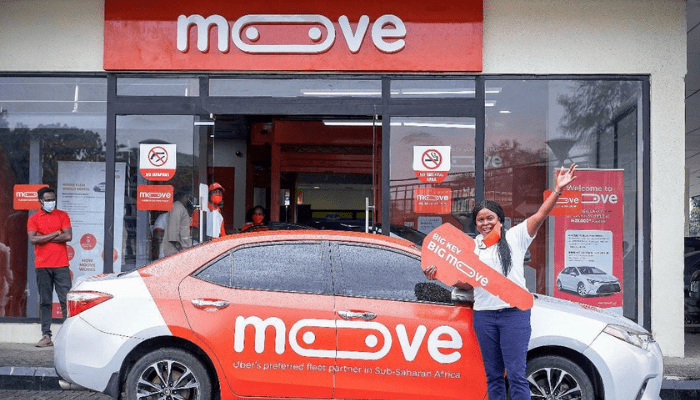
From Helping Drivers to Building a $2.1 Billion Company
Moove’s reported $2.1 billion valuation places it among a small group of African-founded technology companies valued above $1 billion.
But the company did not reach that level by beginning with an abstract or futuristic idea.
It started with a visible problem on Nigerian roads: drivers who could earn money but could not obtain the vehicles needed to work.
Moove created a financing model around their income, expanded it into other countries and gradually developed the capacity to operate much larger vehicle fleets.
Its move into autonomous transportation did not replace its original business. It grew from the experience the company had already gained in financing, managing and maintaining vehicles.
That is what makes the unicorn story important.
Moove’s rise shows how a company can begin by solving a local financial problem and build the systems, partnerships and operational experience needed to compete internationally.
The $2.1 billion valuation may be the headline.
But the business behind it began with something far less glamorous: helping drivers get the cars they needed to earn a living.