Nearly 1.8 Million Patients Face Diagnostic Test Delays as NHS Waiting Lists Grow
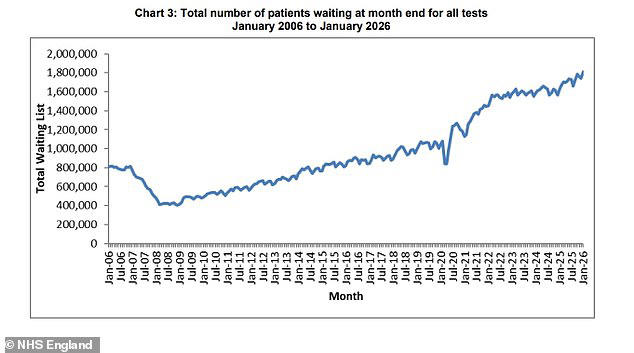
New data shows nearly 1.8 million patients are waiting for diagnostic tests in the National Health Service (NHS), raising concerns about delayed diagnoses for serious conditions such as cancer and heart disease.
The number of patients waiting for diagnostic tests in the National Health Service (NHS) has risen sharply over the past year, according to newly released figures.
By the end of January 2026, almost 1.8 million people were waiting for tests such as MRI scans, CT scans, ultrasounds, endoscopies, and heart investigations.
This represents an increase of about 190,000 patients compared with January 2025, highlighting growing pressure on diagnostic services across the UK.
Thousands Waiting Beyond Recommended Time
Under NHS guidelines, no more than 1 percent of patients should wait longer than six weeks for key diagnostic procedures.
However, the latest figures show that around 447,000 patients about a quarter of those waiting, have been waiting six weeks or more for one of the 15 major diagnostic tests.
This marks an increase of roughly 84,000 patients compared with the same period last year, raising concerns about delayed diagnoses for serious illnesses.
Delays Could Affect Treatment for Serious Conditions
Health experts warn that prolonged waiting times for diagnostic tests can delay the detection and treatment of conditions such as cancer and cardiovascular disease.
Early diagnosis is often critical for successful treatment outcomes, and long delays may reduce treatment effectiveness or increase patient anxiety.
These delays are particularly concerning as the NHS continues to struggle with meeting key cancer treatment targets.
Mental Health Demand Also Rising
The strain on diagnostic services comes as demand for mental health care continues to grow.
In January 2026, more than 2.2 million people were in contact with NHS mental health services, up from 2.04 million in January 2025 and 1.39 million in January 2020.
The figures highlight broader challenges facing the healthcare system as it manages rising demand across multiple services.
Overall Treatment Waiting List Shows Slight Improvement
Despite the surge in diagnostic delays, the NHS referral-to-treatment waiting list has fallen slightly.
The list dropped to 7.25 million patients, its lowest level in nearly three years.
According to NHS England, this reduction came despite the health service experiencing one of its busiest winters on record, including more than 9 million emergency department visits.
Experts Warn Progress Masks Deeper Problems
Healthcare analysts say the fall in the overall waiting list does not fully reflect the growing diagnostic backlog.
Brett Hill, Head of Health and Protection at Broadstone, said the figures reveal a troubling trend.
He noted that many patients are effectively “waiting to get onto the waiting list” as delays in diagnostic testing slow the path to treatment.
Hill also stressed the importance of early detection through preventive healthcare to stop conditions from worsening.
Cancer Targets Continue to Be Missed

The NHS has struggled for years to meet its key 62-day cancer treatment target, which requires that 85 percent of patients begin treatment within 62 days of referral.
Recent reports show some patients are waiting more than 104 days before starting treatment.
Nationally, the 85 percent target has not been consistently met since 2014, raising ongoing concerns about the system’s ability to manage growing patient demand.
NHS Leaders Acknowledge Ongoing Challenges
Professor Meghana Pandit, national medical director for NHS England, acknowledged the pressure on the health service but highlighted the progress made during the winter period.
She said NHS staff managed record demand while still reducing overall waiting lists and delivering the shortest winter waiting times in four years.
However, she emphasized that significant work remains to reduce waiting times and improve patient care across the health system.