MTN Nigeria's 95 Million Subscribers, Profit Boom: Is Market Undervaluing Tech Giant?
Despite its market leadership, strong financial rebound, and significant subscriber base, MTN Nigeria's share price continues to spark debate over whether it is undervalued by investors. The company's recent performance highlights a tension between short-term market reactions to milestones and long-term intrinsic value, influenced by both internal growth drivers and external economic challenges.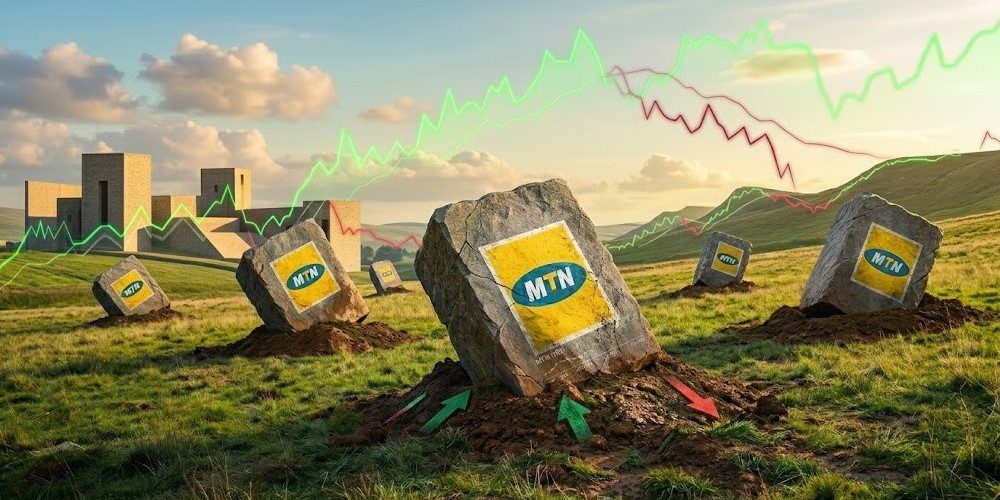
MTN Nigeria’s share price has recently shown significant volatility, reacting sharply to various company milestones and economic shifts. This behavior has ignited a prominent debate among experts and investors: is MTN Nigeria, a leader in the Nigerian telecoms industry, currently undervalued by the market despite its substantial worth and dominant position?
Over the past few months, the company's share price has responded positively to corporate achievements, suggesting a degree of investor confidence tied to short-term positives. However, a prevailing argument suggests that investors or share buyers predominantly focus on immediate factors such as current profits, recent acquisitions, and other immediate developments when making purchasing decisions, often overlooking the company's long-term potential. This perspective implies that trading decisions are primarily influenced by current market information rather than a forward-looking assessment.
MTN Nigeria presents a compelling case for potential undervaluation, given its immense scale and financial performance. After incurring a significant loss of ₦400.44 billion in 2024, the company demonstrated a remarkable rebound, achieving a profit after tax (PAT) of ₦1.11 trillion in 2025. This financial strength is complemented by an impressive subscriber base of over 95 million, which accounts for 51% of Nigeria's total telecom subscribers. Such market dominance signifies that MTN effectively controls a substantial portion of the nation’s digital economy, daily connectivity, and business activities. Furthermore, MTN invests more than any other operator in the country and generously distributed dividends of ₦419.91 billion at a rate of ₦20.00 per share in 2025. The positive trend continued into Q1 2026, where PAT more than doubled year-on-year to ₦355.5 billion, driven by robust data revenue and the strategic expansion of its fintech services. Despite these undeniable strengths, the argument persists that MTN's current valuation and share price do not adequately reflect its intrinsic value and market leadership.
The trajectory of MTN Nigeria's share price on the Nigerian Exchange (NGX) provides insight into these dynamics. Initially, the share price traded in the ₦200–₦300 range in 2024 and early 2025, largely due to broader foreign exchange (FX) and macroeconomic challenges. However, by late 2025 and early 2026, it ascended into the ₦700 and ₦800 range, coinciding with an ease in economic rigidities. This surge was further bolstered by improved earnings, particularly the impressive PAT figures, the expansion of its fintech arm, and the proposed acquisition of IHS Tower by the MTN Group. Following the announcement of the IHS deal in February 2026, the share price traded between ₦730 and ₦755, and later climbed to ₦780–₦790 after the historic disclosure of ₦1.11 trillion PAT in 2025. The company reached an all-time high of ₦915 in the first week of May 2026, spurred by strong Q1 earnings. These fluctuations underscore how investors often rely on short-term economic and company cycles to inform their trading decisions, a pattern that some experts argue is insufficient for valuing a company of MTN's stature.
While MTN Nigeria generates significant cash and offers attractive value, its stock price continues to trade at a valuation that many believe is below its true potential and long-term growth prospects. For investors, betting on MTN today could potentially yield substantial returns and dividend income if the market were to fully recognize its true value and shift its focus to long-term yields. However, this optimistic outlook is tempered by investor skepticism and several risk factors.
When the share price was below ₦200 in 2024 and early 2025, the weak financial position, marked by a ₦400.44 billion loss after tax, played a significant role alongside FX and market conditions. The subsequent 50% tariff adjustment proved to be a drastic financial boon for telcos, leading to the current improved situation. A key concern for investors is whether MTN's recent growth is primarily driven by these tariff hikes rather than intrinsic value. They question what the financial performance would have been without such adjustments. Furthermore, operating costs and capital expenditure are on the rise, attributed to issues like vandalism, theft, and general industry growth. Investors worry about the company's ability to keep costs from outpacing revenue, and what would happen if it faced similar problems as in 2024 without the aid of a tariff hike. These uncertainties contribute to a volatile market environment where investors trade cautiously.
Looking ahead, the future valuation of MTN Nigeria will likely be rigorously tested by the next major economic or industry shock. However, several positives suggest long-term growth potential. Increasing smartphone penetration and internet consumption among Nigerians guarantee continued growth in data revenue, while the rising demand for digital services promises to bolster its fintech business. MTN also demonstrates a strong competitive advantage, rising above competitors such as Airtel Nigeria, Globacom, and T2mobile. The acquisition of IHS, intended to buy back its own towers, will allow MTN to control the core infrastructure of its business. Yet, beyond these internal strengths, powerful market forces—including foreign exchange fluctuations, inflation, and interest rates—remain beyond MTN’s direct control. While MTN Nigeria undoubtedly holds a commanding position in terms of what it controls, investors are ultimately seeking guarantees of long-term stability, which the operator might find challenging to fully provide in a volatile market.