Marrify: Ghana Has Put Marriage and Divorce Records Online. What Could This Change?
Ghana's Marrify platform is bringing marriage and divorce records into searchable digital form, changing how people verify marital status and offering lessons for other African countries.
There was a time when, if someone wanted to know whether a man or woman was married, they probably didn't need a database. They usually asked around.
This was because a family member always knew; why not? A neighbour knew, an elder knew, or somebody who attended the ceremony could confirm it.
In many African communities, marriage was not simply an arrangement between two individuals; it was an event witnessed and recognised by families, communities and traditions.
As formal legal systems developed, marriage registration became another layer of that process. Different African countries eventually developed legal frameworks for ordinance, customary and Mohammedan marriages, with records handled through marriage registries, courts, assemblies and other institutions.
Public notices also became part of the process, allowing people who knew of a reason why a proposed marriage should not proceed to object.
But knowing that a marriage exists and being able to quickly verify that marriage are two different things. Records could exist, yet finding them might mean knowing which institution to approach, which registry holds them, or where the relevant notice or document sits.
Now Ghana is attempting to change that with Marrify, a searchable digital platform launched in Accra in partnership with the Ministry of Gender, Children and Social Protection.
From Family Knowledge to Formal Records
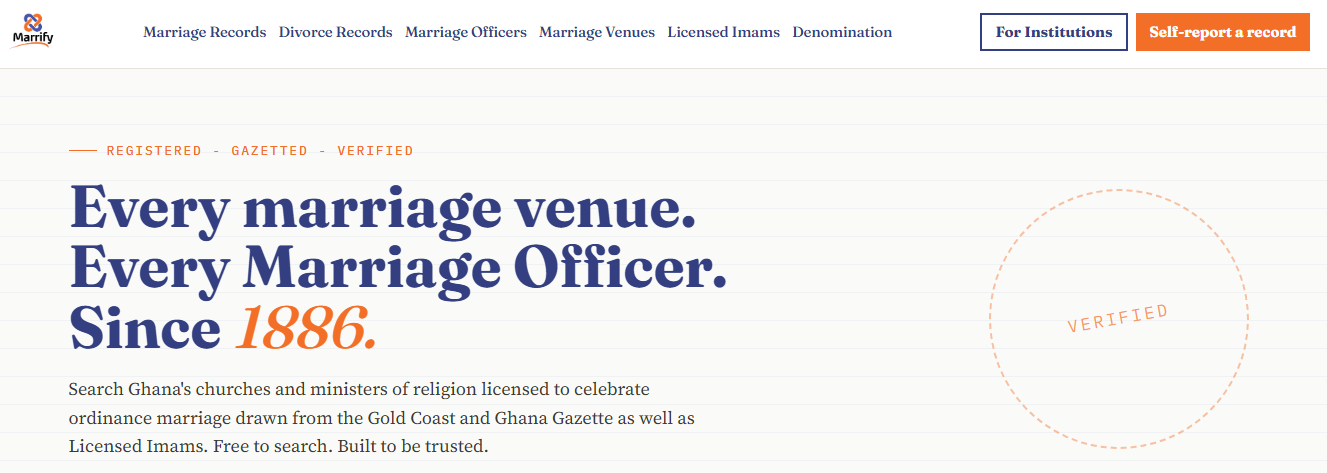
The interesting thing about Marrify is that it is not creating the idea of marriage records from nothing. It is bringing together a history that already exists.
Ghana's marriage administration has passed through different stages, from customary systems rooted in families and communities to laws and institutions that formally recognise different types of marriage.
The country's own records include Gazette publications stretching back to the nineteenth century, while customary marriage registration became formally addressed in legislation in the twentieth century. Marrify says its platform connects records across customary, Islamic and ordinance marriages and currently presents Gazette coverage from 1886 to 2026.
That history matters because digitisation is sometimes presented as though technology has suddenly solved an old problem. It has not. What the technology can do is make an existing system easier to search, connect and understand.
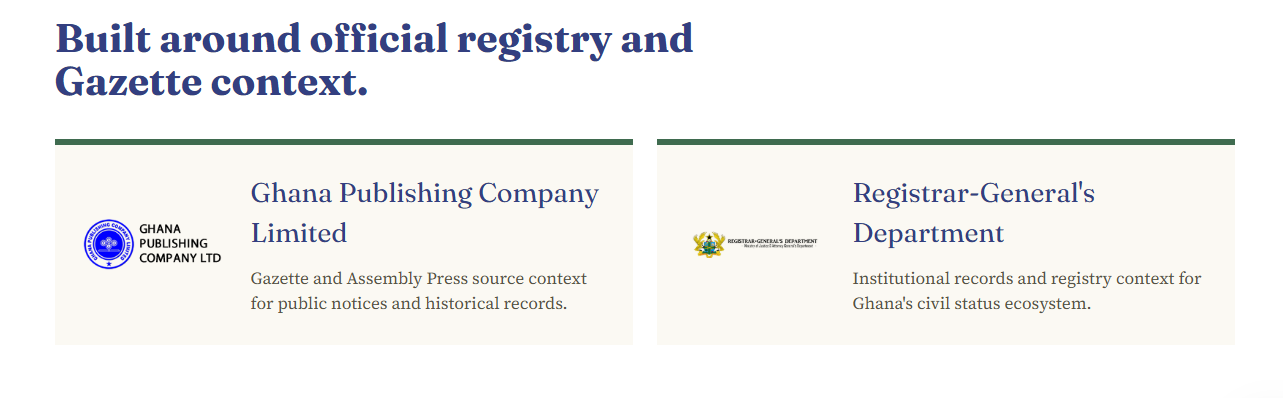
Marrify says users can search using names, spouse names, towns, churches, denominations, certificate numbers and Gazette numbers. Its database also includes marriage officers, licensed venues and Imams, while divorce and annulment records can be linked to the marriages they affect where records are available.
Suddenly, a question that might once have required several conversations or trips to an office can begin with a search.
When “Are You Married?” Can Become a Verifiable Question

This is where Marrify becomes more interesting than another government-adjacent digital service.
Imagine someone preparing to marry and asking their partner a very ordinary question: “Have you been married before?” The answer has always depended heavily on trust. But trust becomes complicated when a person's past marriage has legal, financial, or family consequences.
Ghana's Gender Minister, Agnes Naa Momo Lartey, specifically urged prospective couples to independently verify a partner's marital status rather than relying entirely on what the person says. She also pointed to the value of checking the marriage venue and officiating person before proceeding.
That has implications beyond the wedding ceremony itself. In a society where people can deliberately conceal previous marriages, claim to be divorced when they are not, or simply leave important parts of their relationship history unexplained, accessible records can give people another way to establish the facts before making major decisions.
It does not mean Marrify can tell someone everything about another person's romantic life. Nor should a failed search automatically be interpreted as proof that somebody is single.
The platform itself warns that records are still being uploaded, meaning an absent record may simply not have been added yet.

That caution is important. A digital registry is only as useful as the records inside it, and accuracy matters even more when the information can influence decisions about someone's family life.
What Other African Countries Can Learn From Ghana
There is a bigger lesson here for Africa.
Across the continent, governments have been digitising passports, company registration, taxes, land records, birth certificates and other parts of everyday life.
Marriage records belong in that conversation because marriage is not only a cultural institution; it can create legal rights, financial obligations, inheritance questions and responsibilities involving children.
Marrify's approach also shows why digitisation should go beyond simply scanning old documents and putting them online. The platform is attempting to connect marriage records with divorce records, venues, marriage officers and licensed religious authorities, while creating portals through which institutions can submit or manage records.
That is the more useful idea: not just putting records online, but making the records work together. Other African countries could take the lesson further by building systems that connect marriage, divorce and civil registration while maintaining strong privacy, accuracy and verification safeguards.

The goal should not be to turn people's private lives into public entertainment; it should be to make legally important information accessible when there is a legitimate reason to verify it.
Marrify is still new, and its database is still being built. It will have to prove that records can be kept accurate, updated, and properly sourced as more institutions contribute information.
But the direction is significant. For generations, knowing whether someone was married could mean asking the people around them. Then came registries, certificates, courts and public notices. Ghana is now adding another step: a searchable digital record that can connect pieces of that history in one place.
The technology may be new, but the question behind it is very old: before you build a life with someone, how much should you be able to verify about the life they have already lived?