Larry Ellison: The Man Who Briefly Dethroned Elon Musk as the World’s Richest Man
Larry Ellison briefly overtook Elon Musk as the world’s richest man, a dramatic rise fueled by Oracle’s AI surge and decades of persistence
.jpeg)
On September 10, 2025, financial newsrooms across the world erupted with a headline no one quite expected: Larry Ellison, the 81-year-old co-founder and chief technology officer of Oracle, had leapfrogged Elon Musk to become the world’s richest man.
For a few electrifying hours, Ellison’s fortune swelled to an estimated $401 billion, according to Forbes’ real-time billionaire tracker, eclipsing Musk’s net worth. Bloomberg’s Billionaires Index also recorded a surge, pegging Ellison at roughly $393 billion at intraday highs.
The sudden ascent was fueled by a stunning rally in Oracle’s stock, which skyrocketed after the company reported better-than-expected earnings and unveiled bullish projections for its cloud infrastructure business.
Investors were particularly drawn to Oracle’s rapidly growing backlog of multi-billion-dollar AI contracts, positioning the company as a serious challenger to Amazon, Microsoft, and Google in the cloud wars.
Ellison, who still controls over 40% of Oracle, has always been known for his iron grip on the company he founded in 1977. His wealth is tied almost entirely to its performance.
On September 10, 2025, that tie delivered a shockwave: Ellison’s net worth, as tracked in real-time by Forbes and Bloomberg, surged past $400 billion, briefly eclipsing Elon Musk’s fortune. For the first time in history, the man once dismissed as Silicon Valley’s pirate king; a brash, risk-taking outsider, wore the crown of the world’s richest person.

But this was not just a billionaire reshuffle. Beneath the headlines lay deeper questions: Was this the dawn of a new Oracle era, one driven by AI and cloud dominance? Or was it a temporary market fever destined to cool by the closing bell?
From Bronx Orphan to Silicon Valley Titan
Long before the world came to measure him in billions, Larry Ellison was a child marked by abandonment. Born in 1944 to a single mother in the Bronx, he was handed over to his aunt and uncle in Chicago at just nine months old.
By the time he was a teenager, Ellison had already tasted the sting of feeling unwanted, a wound that would fuel his fierce determination to prove himself.
He dropped out of college, twice, unable to find much meaning in the lecture halls of Illinois and Chicago. But the computer lab spoke a language he understood.
By the early 1970s, while the rest of America was captivated by moon landings and Vietnam headlines, Ellison was quietly mastering databases, the invisible engines that would later drive every major business on earth.
In 1977, with $2,000 and two partners, he co-founded a company initially called Software Development Laboratories. Their big bet was a project for the CIA code-named “Oracle.”
The name stuck. By the 1980s, Oracle was not just a scrappy startup, it was rewriting the rules of enterprise computing, helping corporations store and retrieve data faster than ever before.
Latest Tech News
Decode Africa's Digital Transformation
From Startups to Fintech Hubs - We Cover It All.
Ellison’s rise was never polished. He was notorious for his aggressive tactics, once bragging that Oracle would “crush” its competitors. His appetite for risk mirrored his lifestyle: fast cars, lavish yachts, a mansion modeled after 16th-century Japanese architecture. To some, he was Silicon Valley’s enfant terrible. To others, a visionary who refused to play by anyone else’s script.
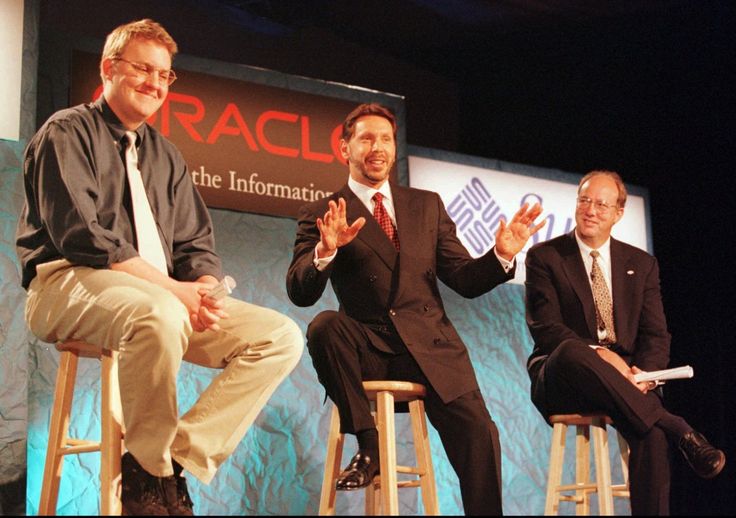
What is indisputable is that the same grit that carried him out of the Bronx shaped Oracle into a global powerhouse. And it is this empire, built over nearly five decades, that gave Ellison the financial ammunition to momentarily dethrone Elon Musk.
Oracle: The Engine of Ellison’s Wealth
Larry Ellison’s fortune has always been more than numbers on a billionaire tracker, it’s a mirror of Oracle’s journey. For decades, the company was known as the dependable workhorse of the enterprise world, powering databases behind the scenes while flashier tech names like Apple, Google, and Tesla dominated headlines. But Ellison was never content with Oracle being a background player.
He saw a storm gathering in the early 2010s: the shift from on-premise software to the cloud. While rivals like Amazon Web Services and Microsoft Azure sprinted ahead, Oracle stumbled at first. Critics declared it too late, too slow, too legacy-bound to compete.

But Ellison, famously combative, doubled down. “We’re in this game to win,” he told investors, pouring billions into building data centers, acquiring startups, and re-engineering Oracle’s technology stack.
Fast forward to 2025, and that gamble seemed to pay off in spectacular fashion. The company announced that its backlog of cloud contracts, much of it tied to AI companies hungry for computing power, had ballooned to unprecedented levels. Suddenly, Oracle was no longer the underdog; it was a central supplier in the AI revolution.
Investors, always looking for the next big growth story, swarmed. Oracle’s stock price spiked by more than 30% in a single day, adding over $100 billion to the company’s market value. For Ellison, who owns more than 40% of the company, that surge translated into a breathtaking $50–60 billion jump in personal wealth almost overnight.

Photo Credit: Pinterest
In that moment, Oracle wasn’t just a tech company. It was the rocket fuel that propelled Ellison past Elon Musk, proving that even in the hyper-competitive world of Silicon Valley, reinvention can turn a once-faded giant into the engine of the world’s richest man.
The Fragile Crown: What Ellison’s Brief Reign Reveals About Billionaire Wealth
Larry Ellison’s sudden leap to the top of the global wealth rankings was a reminder of how precarious modern fortunes really are. In a world where net worth can rise or fall by tens of billions in a single trading session, the title of “world’s richest person” is less a destination than a snapshot in time.
The mechanics are simple but brutal: a billionaire’s wealth is tied to the stock market, and the stock market is tied to perception, of growth, of innovation, of future promise. Oracle’s surge was fueled not just by present profits, but by the story of AI-driven expansion, the belief that Ellison’s company had finally positioned itself as a central player in the next technological revolution. That belief lifted him, for a brief but dazzling moment, above Musk.
Yet the crown slipped as quickly as it appeared. By the close of trading, Musk had edged back ahead, and Ellison returned to second place. But the lesson was clear: billionaire wealth is not carved in stone. It is a reflection of markets, investor moods, and the fragile balance between expectation and reality.
For Ellison, the episode underscored a deeper truth. His fortune may swing with Oracle’s share price, but the legacy of his work, building a company that underpins much of the digital economy, is more enduring than any leaderboard position.
Latest Tech News
Decode Africa's Digital Transformation
From Startups to Fintech Hubs - We Cover It All.
Conclusion
Larry Ellison’s brief overtaking of Elon Musk as the world’s richest man was more than just a headline. It was a story of persistence, reinvention, and the strange volatility of modern capitalism. From his humble beginnings as an orphan in the Bronx to the commanding heights of Silicon Valley, Ellison has spent nearly five decades building a company that quietly powers the backbone of global business.
His rise to the top spot, however fleeting, revealed not just the power of Oracle’s resurgence, but also the fragility of billionaire wealth itself. In a world where fortunes are tied to the roller coaster of the stock market, even the richest person alive may only wear the crown for a day.
But for Larry Ellison, that day mattered. It was vindication for a lifetime of audacious bets, bold reinventions, and a refusal to accept limits. And whether or not he remains at the very top, his story is a reminder that in the ever-shifting sands of global wealth, endurance can be just as powerful as disruption.