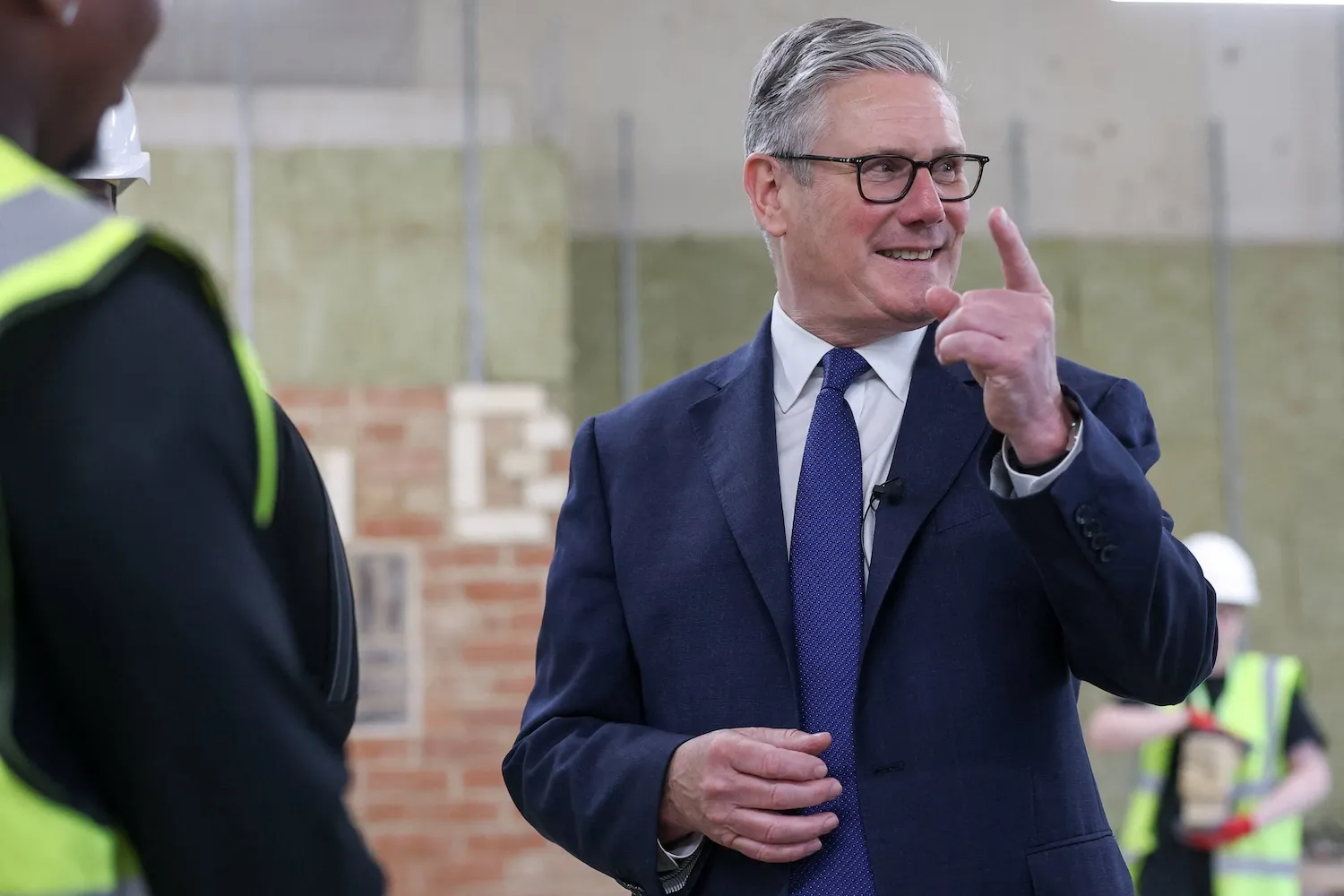
Labour Party in Turmoil: Over 100 MPs Demand Starmer's Resignation

Published 8 hours ago4 minute read
Pelumi Ilesanmi
Pelumi Ilesanmi
Labour Party in Turmoil: Over 100 MPs Demand Starmer's Resignation

The Labour party is grappling with profound internal divisions following the May elections across Great Britain, with Keir Starmer's premiership facing significant challenges and counter-movements. The aftermath of the election results has seen over 80 Labour Members of Parliament publicly calling for Starmer to step down, while simultaneously more than 100 MPs have signed a statement declaring "no time for a leadership contest," highlighting a deeply fractured party landscape.

The opposition to Keir Starmer is multifaceted, driven by a variety of agendas and frustrations within the parliamentary Labour party (PLP). A primary source of discontent stems from the frustration after local elections. Many MPs, still reeling from the poor performance, have openly blamed Starmer. Catherine West, a former Foreign Office minister, echoed this sentiment by daring cabinet ministers to formally challenge Starmer after a heated exchange with the housing secretary. Other MPs like Paulette Hamilton, Ruth Jones, Richard Baker, and Alex Ballinger stated that constituents had lost confidence. A former Starmer supporter criticized his perceived lack of empathy for the local election results and his distance from political grassroots, suggesting this would continue to alienate MPs.

Post-reshuffle resentment also fuels some of the opposition. Several Labour MPs believe that colleagues have been waiting for the right moment to express their dissatisfaction with Starmer's reshuffle from the previous year, particularly after Angela Rayner's resignation. Critics argue that "talented people were sacked," and Starmer made them feel like "they were the problem" instead of acknowledging his own "lack of vision." Catherine West herself was sacked in the September reshuffle, as was Catherine McKinnell, an ally of Wes Streeting. Justin Madders, a former employment minister, is notably a member of the Tribune group, which supports Andy Burnham or a soft-left alternative if Burnham cannot enter Westminster in time.

Two distinct camps are emerging regarding the leadership transition timeline. Wes Streeting supporters are seeking a ‘swift’ resolution. Allies of the health secretary, including Chris Curtis, Jas Athwal, and Joe Morris, have used consistent language about a "swift" leadership transition. This approach would benefit Streeting, given that Andy Burnham is not currently an MP. Streeting reportedly commands "hundreds of supporters" in the PLP. Three ministers who resigned—Alex Davies-Jones, Jess Phillips, and Zubir Ahmed—are also seen as close to Streeting, with Ahmed's resignation letter explicitly calling for an "expedient" transition.

Conversely, Burnham backers are asking for an ‘orderly transition’. Labour MPs supporting Andy Burnham, or a soft-left contender if he doesn't re-enter parliament, advocate for a longer timeline. Figures such as Paula Barker, Louise Haigh, Clive Lewis, Connor Naismith, and Simon Opher believe a more extended period would allow the PLP and unions to thoroughly discuss future Labour policy and vision, providing space for Burnham to contest a byelection. Josh Simons, former director of Labour Together and an MP for Makerfield, also supports a longer timeline for Starmer's departure, claiming the prime minister has lost the country's confidence.

The Socialist Campaign Group, a group of approximately 30 "hard-left" MPs, represents another critical voice. Often seen as the "usual suspects," they consistently criticize Starmer's government's direction. Many from this group were among the first to call for the prime minister's resignation, reportedly hoping for a slower transition to reduce the chances of Blairite Wes Streeting becoming the next prime minister.

In response to the mounting dissent, Keir Starmer has asserted he will not stand down as a formal leadership contest has not been triggered, effectively challenging Wes Streeting to initiate one. A letter coordinated by backbenchers, signed by 103 MPs (including parliamentary private secretaries), conveyed a message of unity and focus: "Last week we had a devastatingly tough set of election results. It shows we have a hard job ahead to win back trust from the electorate... This is no time for a leadership contest." While organizers claimed no No 10 signoff, critics pointed out it was circulated by government whips, questioning its independence.

Starmer's loyalists and cabinet members have publicly rallied around him. MPs like John Slinger, Kevin Bonovia, and Juliet Campbell stressed the need for stability, arguing that a change in leadership or prolonged speculation would damage UK investor confidence and distract from the government's mandate to serve the British people. Pat McFadden, the work and pensions secretary, confirmed no challenges were made in a cabinet meeting, while technology secretary Liz Kendall reiterated Starmer's focus on national challenges and her "full support." However, the effectiveness of this support was debated, with one critical MP calling the letter, signed by less than half of backbenchers, "pathetic." Moreover, the Guardian reported that four senior cabinet ministers—Healey, Home Secretary Shabana Mahmood, Foreign Secretary Yvette Cooper, and Deputy Prime Minister David Lammy—had reportedly spoken to Starmer, with some suggesting he oversee an "orderly transition of power" after crushing election defeats, revealing a more complex internal dialogue than publicly presented.

Loading...
Loading...
Loading...

You may also like...