Crypto Clash in Congress: Senate Unveils Mammoth Bill as Unions & Banks Mobilize Opposition!

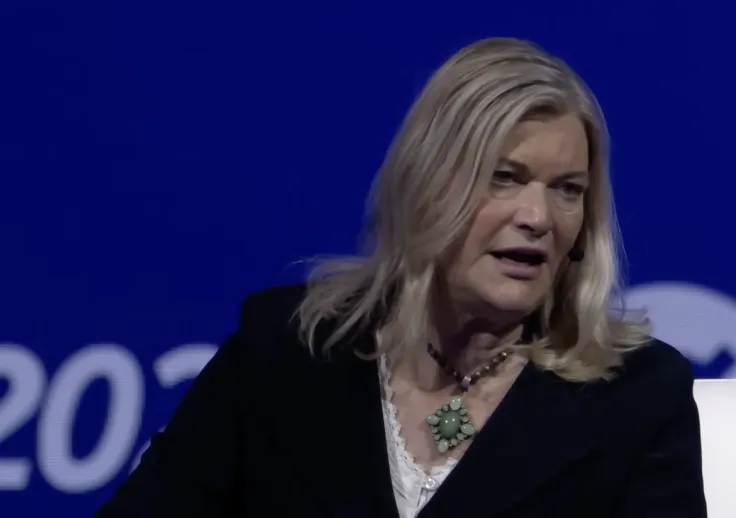
The U.S. Senate is currently deliberating a pivotal cryptocurrency market structure bill, the Digital Asset Market Clarity Act, which has garnered both fervent support from the crypto industry and significant opposition from labor organizations, traditional banks, and a segment of Senate Democrats. The bill, a comprehensive 309-page manager’s amendment, was released by the Senate Banking Committee ahead of a key committee vote, reflecting what Chairman Tim Scott described as "serious, good-faith work across the committee" aimed at delivering certainty, safeguards, and accountability while combating illicit finance and keeping the future of finance in the United States. Senator Cynthia Lummis echoed this, characterizing the text as the product of "nearly a year of bipartisan, blood, sweat, and tears."
However, the proposed legislation faces substantial resistance on several fronts. Five of the nation's largest labor organizations – the AFL-CIO, Service Employees International Union, American Federation of Teachers, National Education Association, and American Federation of State, County and Municipal Employees – have urged the Senate to vote against the bill. They warn that the legislation would expose workers' retirement accounts, including public pensions, to the inherent volatility of digital assets, arguing that it "invites the cryptocurrency industry to take outsized risks" at the expense of working people and retirees. The AFL-CIO specifically highlighted concerns that, "absent sufficient regulation, embedding cryptocurrencies and other digital assets into the real economy will have a destabilizing effect."
A primary point of contention revolves around Section 404, which governs stablecoin yield. This provision, which emerged from three stages of negotiation, bars stablecoin issuers and affiliated digital asset service providers from paying yield on stablecoin balances if that yield is functionally or economically equivalent to bank interest, though activity-based rewards remain permitted. The banking industry, led by the American Bankers Association (ABA), the Bank Policy Institute, and the Independent Community Bankers of America, has vociferously opposed this, arguing that yield-bearing stablecoins function as substitutes for insured deposits, thereby threatening traditional bank funding for mortgages and lending. ABA CEO Rob Nichols cautioned that this provision could "unnecessarily incentivize the flight of bank deposits."
Conversely, the crypto industry largely backs the revised language. Coinbase CEO Brian Armstrong acknowledged that "not everyone got everything they wanted, but they got the must-haves," and expressed the company's efforts to integrate with large global banks. Coinbase Chief Policy Officer Faryar Shirzad dismissed the deposit-flight argument as "a fabrication and wildly overstated," differentiating fully reserved stablecoins from fractionally-reserved bank deposits. Furthermore, Michael Saylor, Strategy Executive Chairman, posted on X that the bill "would unlock the next wave of Digital Capital, Digital Credit, and Digital Equity in the U.S. and globally." Senator Bernie Moreno (R-OH) supported the provision, characterizing the ABA's opposition as the "banking cartel in full panic mode." Research from Galaxy Digital suggested that stablecoin growth could attract trillions in foreign capital into U.S. banking infrastructure, materially exceeding any domestic deposit migration.
Beyond stablecoin yield, the bill's most critical and perhaps existential fault line for the crypto industry lies in Section 604, which pertains to developer protections. This provision, derived from the Blockchain Regulatory Certainty Act (BRCA), aims to clarify that software developers and infrastructure providers who do not custody or control user funds are not to be treated as money transmitters under federal law. Proponents argue this is a "load-bearing wall" for the entire policy objective of the bill, without which developers of non-custodial software face potential criminal liability for simply writing and publishing code. The DeFi Education Fund stated that the BRCA is among the "most important provisions for developers and infrastructure providers."
The consequences of passing a CLARITY Act without robust BRCA protections are described as catastrophic. Past cases, such as the criminal prosecutions of developers behind Tornado Cash and Samourai Wallet, serve as stark warnings, demonstrating
You may also like...
Maddison Blasts Officials: Referees 'Petrified' to Make Key Decisions

Tottenham Hotspur midfielder James Maddison has criticized officials and VAR after being denied a crucial late penalty i...
Cannes Unleashed: Peter Jackson Honored, Jane Fonda Roars, and James Franco Stirs Controversy at Film Fest Kickoff!

Amidst a Cannes Film Festival marked by discussions on AI's impact, a new AI-native studio, Storyverse, launched its inn...
Disney's Star-Studded 2026 Upfronts: Bananas, Kimmel & AHS Steal the Show!

Disney’s annual upfront presentation combined exciting content announcements with Jimmy Kimmel’s return, marked by his c...
Binance's AI Shield: Billion-Dollar Hacker Attacks Foiled by Advanced Security

The cryptocurrency sector faces a structural crisis in retail investor safety, with digital asset fraud surging to $17 b...
Google's Gemini-Powered Android Shatters Apple Divide, Reshaping Mobile Landscape

Google's latest I/O conference revealed a major shift for Android, transforming it into an autonomous agent powered by G...
Crypto Clash in Congress: Senate Unveils Mammoth Bill as Unions & Banks Mobilize Opposition!
The U.S. Senate is actively debating the Digital Asset Market Clarity Act, a critical cryptocurrency market structure bi...
Keir Starmer's Leadership Turmoil: Lifeline or Lost Authority?

Keir Starmer's leadership faces severe challenge following Labour's election losses and internal calls for his resignati...
Shocking Miwani Land Circus: Ghost Figure Behind Auction Plot Exposed

A fierce battle is raging over the 9,394-acre Miwani Sugar Mills property in Kisumu County, which is allegedly being tar...