Khama Unleashes Fury: Ex-Botswana President's Zimbabwe Critique Sparks Regional Outrage
Ian Khama's critique of Zimbabwe's Constitutional Amendment Bill Number 3 (CAB3) highlights the crucial distinction between procedural legality and popular legitimacy. Despite past political disagreements, the author aligns with Khama's stance against constitutional manipulation, emphasizing Botswana's adherence to democratic transitions. The article delves into the controversial processes behind CAB3 and connects it to a broader pattern of African leaders extending their terms through questionable means, arguing that true peace stems from legitimacy, not mere procedural victories.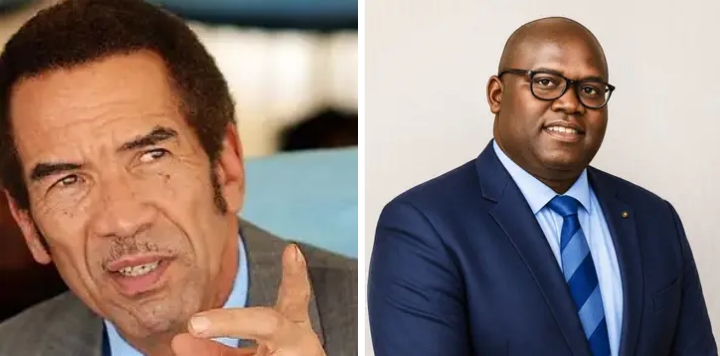
Despite past disagreements with Ian Khama, intellectual honesty demands a re-evaluation of his stance, particularly concerning constitutional integrity. History should not be rewritten simply because circumstances have changed, but rather understood through the lens of consistent truth. Long before Khama's presidency in Botswana, Festus Mogae had already demonstrated a commitment to constitutionalism by thwarting Frederick Chiluba’s attempt to manipulate Zambia’s Constitution for a third term in 2002, a contribution later acknowledged by former South African President Thabo Mbeki. Ironically, this tribute coincided with Zimbabwe’s efforts to manufacture consent around Constitutional Amendment Bill Number 3 (CAB3).
Ian Khama inherited and upheld this constitutional tradition in Botswana. He became Vice President constitutionally in 1998, President constitutionally in 2008, won elections in 2009 and again in 2014, and meticulously left office in 2018 after serving the maximum period permitted by Botswana’s Constitution. There was no continuity project, no constitutional amendments, no appeals for patience, and no manufactured public hearings. While one may disagree with Khama’s politics, he consistently practiced what he preached regarding constitutional adherence.
This background gives weight to Khama's recent remarks, echoing the beliefs of millions of Zimbabweans: CAB3 is unpopular, constitutional vandalism, political trickery, an imposition, and unlikely to survive a referendum. The true issue is not Khama, Botswana, or sovereignty, but why Parliament became a substitute for the people's will. Dereck Goto, a visible defender of CAB3, produced a lengthy rebuttal to Khama, arguing that political parties, traditional leaders, churches, public hearings, and parliamentary debate conferred legitimacy. However, Goto confuses procedure with legitimacy.
Procedure and legitimacy are distinct. Apartheid, UDI, and one-party states all had procedures, and even parts of Zimbabwe’s Patriotic Act, passed through Parliament, were later declared unconstitutional. Parliamentary votes do not automatically equate to legitimacy or constitutionality. Procedures count votes and raised hands from elites; legitimacy counts popular consent and trust from the people. This distinction was starkly evident in the reported meetings between retired generals and President Mnangagwa, where commanders urged a referendum for popular consent, but were met with a procedural response: “Let the process finish. Whoever wins wins. Whoever loses loses.” The issue had devolved from popular will to a numbers game among elites, mirroring Goto's flawed argument.
The process itself for CAB3 remains highly contested. Public hearings nationwide were reportedly marred by ruling party structures controlling microphones and prioritizing selected speakers. In Harare, a lawyer’s phone was confiscated in public. Written petitions, often organized through traditional leaders and party structures, yielded an announced 99.46% support, yet email submissions overwhelmingly opposed the Bill. This transformed feedback into a quantitative plebiscite, where the quality of arguments ceased to matter, only numbers.
Furthermore, Parliament itself had been fundamentally remodelled. Recalls orchestrated by Sengezo Tshabangu altered opposition benches through numerous court cases, shifting the arithmetic by the time CAB3 reached Parliament. Minister Ziyambi Ziyambi openly threatened MPs with expulsion, and businessman Wicknell Chivayo publicly rewarded supporters, promising further appreciation. Beneficiaries essentially voted to extend their own terms. This, we are told, proves democracy, but it merely proves procedure.
Perhaps Khama’s most provocative statement was that oppressors come in all colors. Goto accused him of equating Zimbabwe with Rhodesia, but Khama’s point was moral, not racial. Rhodesia excluded people by race; modern oppression excludes people through institutions captured in the name of democracy. The color and methods change, but the principle of power without accountability remains, eventually resembling itself. Despite years of attacking Ian Khama for his hostility to land reform, his embrace of the MDC, his deportation of Caesar Zvayi, and his alignment with Western narratives, intellectual honesty compels recognition of his consistent constitutional conduct and his current opposition to constitutional manipulation.
The issue is not whether Zimbabweans like Ian Khama, but whether CAB3 would survive a referendum. This is precisely why its authors likely preferred Parliament to the people, as procedures are easier to manage than the pursuit of genuine legitimacy. Khama's statement connects Zimbabwe to a broader pattern of African leaders like Paul Biya (43 years in power), Yoweri Museveni (40 years), and Paul Kagame (26 years), who amend constitutions through