Tinubu, EFCC Clash Over Osun Account Freeze: A Political Firestorm
The EFCC's freezing of Osun State Government accounts has triggered a multifaceted political and legal controversy in Nigeria. President Tinubu's intervention to unfreeze the accounts sparked further debate on the independence of anti-corruption bodies and the rule of law, while the Osun State Government simultaneously launched a N2 billion lawsuit against the EFCC.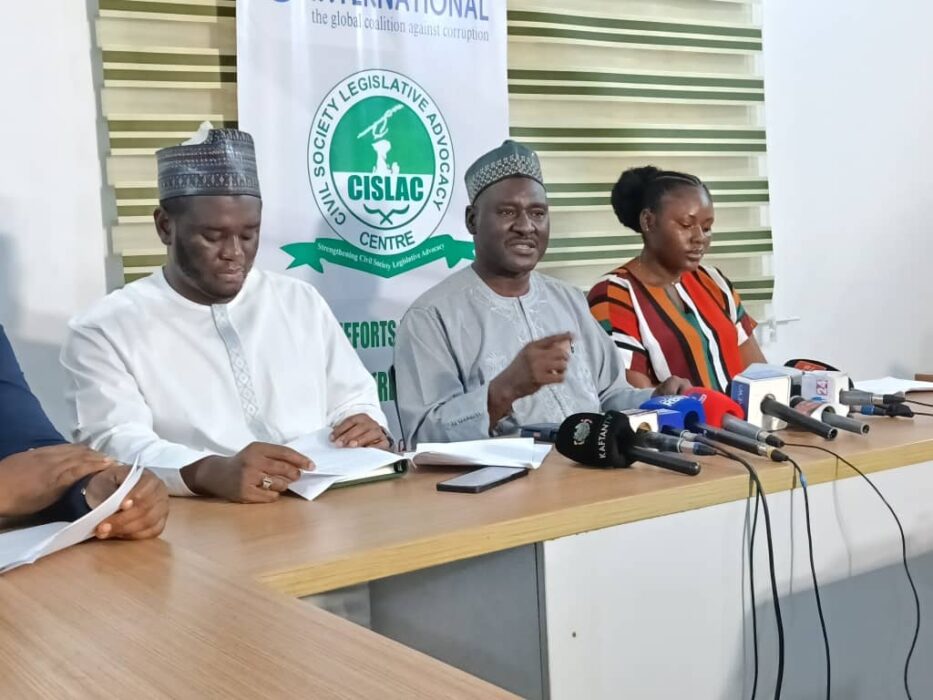
The Economic and Financial Crimes Commission (EFCC) sparked a significant national debate and political controversy by freezing the Osun State Government’s Federal Statutory Allocation Account. This action led to widespread criticism and legal challenges, culminating in President Bola Tinubu’s directive for the EFCC to unfreeze the accounts, a move that itself ignited further discussion regarding the independence of anti-corruption institutions and the rule of law.
The Civil Society Legislative Advocacy Centre (CISLAC) and Transparency International Nigeria initially supported the EFCC's decision, viewing it as a statutory responsibility to protect public resources from potential diversion or misuse. CISLAC referenced previous EFCC interventions, such as the preservation of ₦12 billion during the Edo State governorship election and the restriction of a ₦20 billion Kogi State salary bailout fund in 2021, emphasizing the principle that investigations should not be defeated by the dissipation of funds. However, CISLAC expressed deep concern over President Tinubu’s subsequent directive to the EFCC to withdraw the court order, warning that such presidential intervention could severely undermine the independence of anti-corruption agencies and create a damaging perception of political control. The organization asserted that public money belongs to citizens, not political entities, and any perceived overreach by an anti-corruption agency should be corrected through established legal procedures by the judiciary, not political directives. CISLAC called upon the President to provide policy support, adequate funding, and institutional protection for anti-corruption bodies, rather than intervening in specific investigations or enforcement decisions.
President Tinubu's directive, however, drew sharp criticism from the House of Representatives Minority Caucus, which labeled it a “panicky, belated afterthought” born of “massive public outcry” rather than respect for the rule of law. The Caucus highlighted what it described as deep contradictions within the Federal Government. Specifically, they questioned why the President directed the EFCC to “vacate the order” when an EFCC spokesman, Mr. Wilson Uwujaren, had reportedly stated on national television that the freezing of Osun State’s accounts was carried out “without a valid court order.” This apparent inconsistency led the opposition lawmakers to ask whether the President was unaware of his appointees' actions or if it was an attempt to conceal an illegality. The Minority Caucus further alleged that senior presidential aides had initially defended the EFCC's action, making the President's feigned ignorance insulting to Nigerians. They accused the APC-led Federal Government of a broader pattern of intimidation against the Osun State Government, including withholding statutory allocations, fostering political violence, and misusing federal institutions as a “dress rehearsal” for the 2027 general elections. They warned against any attempt to influence the upcoming governorship election and called on civil society and the international community to hold the government accountable.
The African Democratic Congress (ADC) echoed these concerns, welcoming the reversal but challenging the President’s assertion that the EFCC acted based on a court order. The ADC noted that the EFCC itself had never claimed to possess such an order in its public statements, instead defending its actions on statutory powers and a “preventive mandate.” The party suggested the President was either “misinformed or deliberately misrepresenting the situation,” finding both possibilities deeply disturbing. The ADC argued that the President’s directive directly contradicted claims of institutional independence, proving the Presidency’s ability to whimsically intervene in operational matters based on political considerations. They concluded that the reversal was a reaction to “overwhelming condemnation” from the public, which recognized the account freezing as “an extraordinary abuse of state power meant to influence the outcome of the governorship election.” The ADC also found it “curious and unusual” that the President issued a personal statement rather than communicating through official government channels.
Adding a legal dimension to the controversy, Osun State Governor Ademola Adeleke, along with the Attorney General and Accountant General of the state, filed a N2 billion suit against the EFCC, its Chairman, and First Bank Nigeria Limited. The suit, marked FHC/ABJ/CS/1762/2026, seeks to declare the defendants' actions with respect to the state's Federal Statutory Allocation Account as “unlawful, unconstitutional, ultra vires their powers, null and void.” The plaintiffs posed several specific legal questions to the Federal High Court, including whether the EFCC possessed lawful authority to freeze state accounts without due process or a valid, subsisting court order, and whether First Bank breached its duty of care by acting on an administrative directive without such an order. The suit demands an order to unfreeze the account, perpetual injunctions against future unlawful interference, and N2 billion in “exemplary and aggravated damages.”
Senior Nigerian lawyers expressed divergent views on the legality and timing of the EFCC's action. Francis Amobi Nzelu, a Senior Advocate of Nigeria (SAN), firmly described the freezing of a state’s accounts as unlawful and politically motivated, especially given the state’s responsibilities for paying worker salaries. He noted that the President's directive implied the Presidency was not involved in the initial action. Conversely, Dr. Yemi Omodele, a human rights crusader, acknowledged public concerns but maintained that the EFCC likely presented sufficient evidence to a court to obtain an order, as judges do not grant such directives without reviewing facts. However, Dr. Omodele conceded that the “major issue is not whether the order was rightly or wrongly granted, but the period in which it was obtained and executed,” stressing that the timing during an election period naturally led to political perceptions.
The Accord Party joined the chorus of condemnation, demanding the immediate resignation of the EFCC Chairman for what it called an “unconstitutional” and “overreach” of statutory powers. The party accused the EFCC of “unprecedented partisanship” in the Osun political crisis, stating it had lost confidence in the agency's leadership and called for the President to sack the Chairman if he failed to resign. While commending President Tinubu for his “timely intervention” in unfreezing the accounts, Accord also highlighted alleged attacks, arrests, intimidation, and harassment of its members by suspected All Progressives Congress (APC) supporters, accusing security agencies of failing to act decisively and contributing to the “militarisation of the electoral process.” The party urged all democratic institutions to remain neutral and ensure a free, fair, and credible governorship election in Osun State, describing it as crucial for setting a precedent before the 2027 general elections. They also appealed for the release of detained Accord members and called on voters to support Governor Ademola Adeleke for a second term.
This complex scenario underscores fundamental questions about the separation of powers, the operational independence of anti-corruption agencies, and the integrity of the electoral process in Nigeria. The interplay of legal challenges, political directives, and public outcry highlights the delicate balance required to uphold democratic principles and ensure accountability in governance.