Kenyan Teachers Are Bringing AI Into Classrooms, But Are They Ready for What Comes Next?
Kenya is embracing technology in classrooms, but AI is moving faster than teacher training. What will it take for Kenyan and African schools to prepare teachers for the AI era?
There is something reassuring and self-fulfilling about a teacher standing in front of a classroom, explaining a difficult subject until the light finally comes on in a student's eyes.
Technology can make that lesson more interactive, faster, and sometimes more accessible. But as artificial intelligence begins moving from our phones and offices into classrooms, Kenya is facing a question that is bigger than whether schools should use AI: are teachers being prepared quickly enough to teach in a world that is changing underneath them?
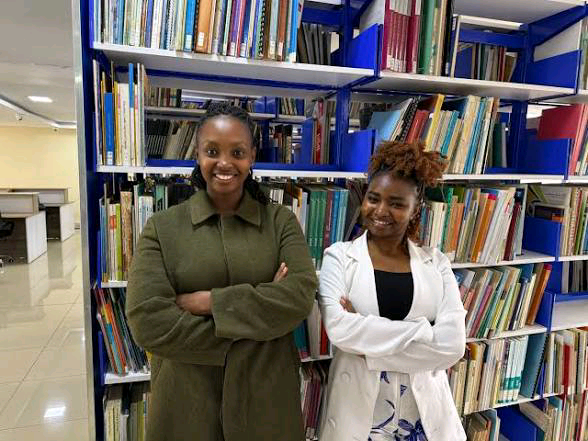
UNESCO recently highlighted two Kenyan teachers, Caroline Ndanu of Daraja Academy in Laikipia County and Maureen Mburu of Buru Buru Girls Secondary School in Nairobi, who are already using technology to support research, learning, and more interactive lessons.
But both also pointed to familiar limitations, including inadequate access to computers and the need for continued teacher training as technology and AI evolve rapidly.
Kenya Cannot Afford to Wait for the Perfect AI Classroom.
The temptation is to make this another argument about whether AI will replace teachers. It probably should not be.
The more immediate question is whether Kenyan teachers can use AI well enough to prepare students for the world those students will enter.
A teacher does not need to become a software engineer, but understanding how AI generates information, where it can be wrong, how to verify its answers, how to protect student data, and how to use it without turning learning into copy-and-paste exercises is becoming increasingly important.
Other education systems are already working through these questions. In England, the government has issued guidance and support materials for schools using AI, while research involving early-adopter schools has examined how institutions are incorporating the technology and the knowledge gaps that remain.
By late 2025, 82% of primary teachers and 78% of secondary teachers surveyed in England said they had used generative AI in their teaching roles.
That does not mean Kenya should copy England. It means the starting gun has already gone off.
Africa Needs Teachers Who Understand AI, Not Classrooms Run by AI
There is a difference between adopting AI and blindly putting AI into schools. Kenya's teachers are right to insist that technology should support education rather than replace the human relationship at its centre.
Caroline Ndanu noted that teachers can make students feel seen and encouraged, while Maureen Mburu pointed to the ability to notice when a student is struggling in a way technology cannot easily replicate. UNESCO's wider “Teachers cannot be coded” campaign makes the same argument: education requires critical thinking, ethical reasoning, emotional intelligence and a sense of belonging.
But protecting the human side of teaching should not become an excuse for avoiding the technological side.
A Kenyan student who graduates into an economy increasingly shaped by AI will need more than the ability to memorise what is written in a textbook. The student will need to question machine-generated information, use digital tools responsibly, understand where technology is useful and recognise where human judgement remains essential.
That means teacher training cannot be an afterthought. Schools need infrastructure, reliable connectivity, access to devices, and practical professional development that lets teachers experiment with AI rather than simply be warned about its dangers. UNESCO itself has developed competency frameworks for teachers and students around the opportunities and risks of AI.
And Kenya is not the only African country facing this question. Across the continent, education systems will have to decide how quickly they can move without widening the gap between students with access to AI-enabled learning and those without.
The irony would be painful: Africa finally gets access to a technology capable of expanding learning, only to discover that the people expected to guide students through it were never given enough opportunity to learn it themselves.
Kenya does not need to build the perfect AI classroom before it starts. It needs to start building the capacity to teach intelligently with the tools already arriving.
Because the future of African education will not be decided only by whether students can access AI. It will also depend on whether their teachers know what to do when they get there.
