Nigeria Keeps Returning to Strikes for the Same Economic Problems, So What Happens When Striking Is No Longer Enough?
Nigeria’s latest workers’ strike raises a bigger question about wages, petrol prices and whether strikes can keep solving problems that repeatedly return.
Nigeria’s workers are on another strike, and by now the announcement almost feels like part of the country’s economic calendar.
Public servants under the Joint National Public Service Negotiating Council began a three-day warning strike starting today, October 2, after the government did not address demands for petrol at ₦500 per litre, a wage award, and negotiations for a new national minimum wage ahead of 2027.
The demands are not difficult to understand: when transport, food, housing and other everyday costs rise, a salary that once looked modest can suddenly become almost decorative.
But there is another question underneath the latest action: how many times can a strike remain the main tool workers have for making government listen?
Nigeria Has Been Here Before
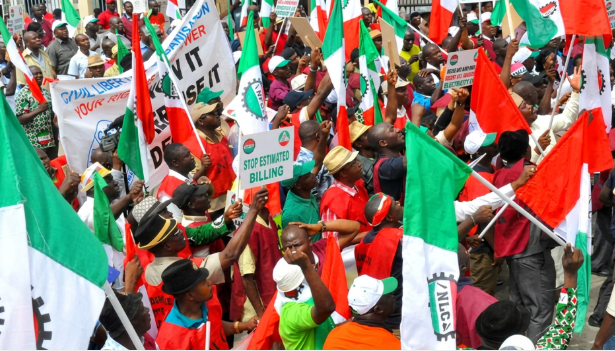
This is not a Tinubu-era invention. Nigerians have watched governments and organised labour repeat versions of this confrontation under different presidents, different petrol prices and different economic circumstances.
In January 2012, under Goodluck Jonathan, the removal of the petrol subsidy more than doubled the pump price and triggered a nationwide strike and protests.
After days of paralysis, Jonathan partially reversed the increase, reducing the price to ₦97 per litre, and labour suspended the strike. The immediate objective was achieved, but the larger subsidy problem did not disappear; fuel-subsidy reform returned repeatedly as a national argument.
Then came Muhammadu Buhari. In May 2016, his government raised petrol prices from ₦86.50 to ₦145, prompting labour opposition and a strike threat. In September 2020, labour again prepared to strike over petrol and electricity price increases, but negotiations produced an agreement and the action was suspended.
Buhari’s administration also saw repeated industrial disputes over education, health, wages and other conditions; in 2019, he signed the law that raised the national minimum wage to ₦30,000.
So, did the strikes solve anything? Sometimes they forced concessions, delayed policies, or brought governments back to negotiations. But they rarely removed the reason workers had to strike in the first place. Fuel prices returned as a problem, wages lost purchasing power, agreements became new points of negotiation, and another strike threat eventually arrived.
When the Minimum Is No Longer Enough
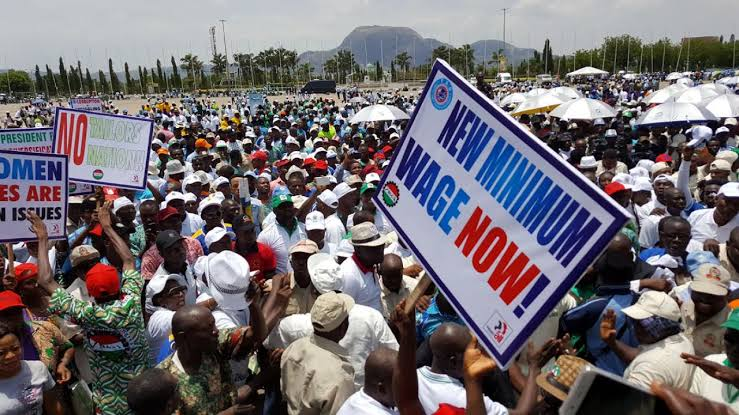
This is where the phrase “minimum wage” starts to sound almost comical.
The minimum is supposed to establish a floor below which wages should not fall. But what happens when the floor is technically higher while the things workers need to buy have climbed even faster?
Nigeria’s current minimum wage of ₦70,000 was signed into law in July 2024 by President Tinubu, after months of negotiations and labour pressure. But a legal wage floor cannot freeze the cost of living.
If transport fares rise, food prices rise, and rent is renewed at a much higher rate, the legal minimum can remain the same while its practical value shrinks.
That is why the present dispute is bigger than whether workers receive another wage increment or not. A wage increment can provide temporary breathing space. A new minimum wage can reset the floor. Neither automatically answers what happens when inflation and essential costs outrun that adjustment again.
And this is not an argument against strikes. A strike is a legitimate tool of organised labour, including in developed economies. Workers have a right to withdraw their labour and use collective action to demand better conditions.
The uncomfortable part is when industrial action becomes the moment the government takes workers’ economic reality seriously instead of one tool within a functioning system of continuous negotiation.
What Happens After the Strike?
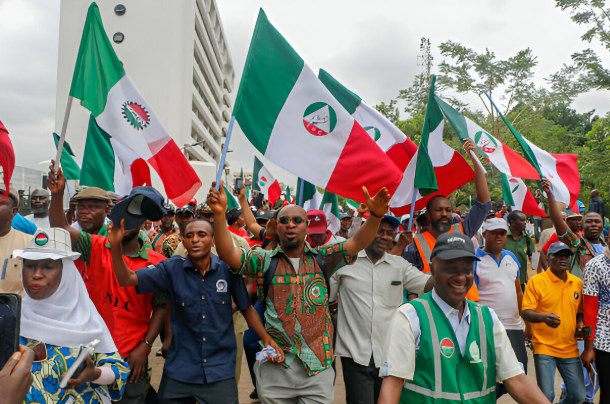
The more uncomfortable question that no one is asking yet is what happens after workers return to their desks.

If the government agrees to a wage increment, what happens six months later? If petrol falls to ₦500, what happens to food, transport and electricity prices that have already adjusted upward?
If a new minimum wage is negotiated for 2027, how long before workers begin asking whether the new figure is enough?
Nigeria needs a wage system that responds more intelligently to economic reality, not one that waits for workers to shut down offices before serious negotiations begin.
It also needs stronger social protection, more predictable economic policy and a clearer relationship between wages and the actual cost of living.
Otherwise, the pattern becomes painfully familiar: prices rise, workers complain, the government negotiates, a strike is threatened, a concession is announced, everyone returns to work, and the clock starts again.
The question is not whether Nigerian workers should strike. They have every right to demand better conditions. The question is whether Nigeria can build an economy in which workers do not have to threaten a shutdown every time their wages stop being enough to take them home.
Because when the minimum wage is only enough to remind you that there is a minimum, something has gone wrong with the meaning of the word “minimum.”