It’s That Time of The Year Again… Did You Actually Achieve Your 2025 Resolutions?
As the year winds down, many are taking a hard look at the goals they set in January. Did 2025 turn out the way you planned, or did it teach you something entirely different?
December is almost gone, it is nine days to the New year and like clockwork, we’re all reflecting on the year that’s almost behind us. Everywhere you look, on social media feeds, group chats, or even in passing conversations, people are thinking about what they intended to do this year, what they actually did, and what they hope to conquer next year and there’s that familiar question hovering in the air:
Did you actually achieve your 2025 resolutions?
It’s a question that’s equal parts motivating and terrifying, depending on how honest you are with yourself.
For many, resolutions start with excitement. January is full of energy and optimism: new goals, better habits, and grand visions of success. Some of us promised to start a fitness routine, save more money, travel to new cities, or finally learn that skill we’d been putting off. Others set career goals: a promotion, a side hustle, or launching a creative project.
But as the months passed, life happened. The daily grind, unexpected challenges, and distractions often got in the way. And now, as 2025 winds down, it’s hard not to feel a twinge of guilt or maybe even relief depending on how things turned out.
The thing is: almost everyone sets goals, but far fewer achieve them in the way they imagined. Research suggests that making resolutions does increase your chances of change, people who make them are significantly more likely to change behavior than those who don’t. But the hard truth is that many resolutions don’t stick unless they’re structured in a way that’s realistic and actionable.
It’s normal to feel that way. Resolutions aren’t just about perfection, they are about progress. In Africa, the context adds extra layers. Many young people juggle multiple responsibilities: work, family expectations, education, and sometimes even side hustles to make ends meet.
Achieving every single goal in a year that had its fair share of ups and downs might have been unrealistic. And that’s okay.
Still, reflecting on what you did accomplish matters. Maybe you didn’t hit every target, but did you learn something new? Did you grow in ways that weren’t on your original list? Perhaps you built better habits, expanded your network, or gained skills that will pay off in the future. Even small wins count, they’re the building blocks of bigger success.
Look around, and you’ll see examples of perseverance and adaptation. African youth-led initiatives flourished in 2025. Startups turned ideas into thriving businesses despite challenges. Creative projects, from music to animation, broke into global conversations. Communities came together to solve problems, proving that achievement isn’t only measured in individual milestones but also in collective progress.
Why resolutions often fall short
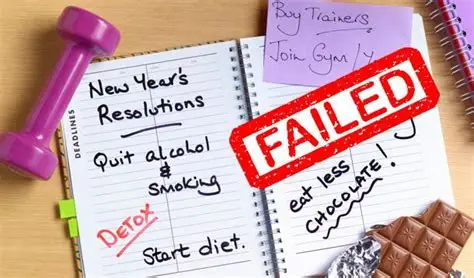
It’s not that ambition is bad. The problem usually isn’t wanting something, it’s how we set out to get it. Goals that are too vague or too broad are hard to hold onto. For example, telling yourself “I’ll be healthier this year” might sound inspiring, but what does that actually mean? Without a measurable plan, it becomes easy to lose track.
Experts recommend focusing on concrete actions rather than abstract desires, turning “be healthier” into “walk 30 minutes five days a week,” for instance, makes your goal tangible and easier to track.
Over time, months blur into each other. The excitement that came with January’s fresh slate fades. By midyear, many of us hit hurdles: unexpected challenges at work, personal setbacks, or simply burnout. And when our plans don’t pan out the way we imagined?
It’s tempting to abandon them altogether. But that doesn’t mean all was lost. It just means we need to look back with clarity and learn how to move forward with better insight.
So, if your resolutions feel like they fell short, don’t be discouraged. Take a moment to reflect honestly, celebrate what went right, and learn from what didn’t. Use these lessons to approach 2026 with clarity and determination. The point isn’t to beat yourself up, it is to equip yourself for the next round.
As the year closes, ask yourself: What did I actually learn? What habits will I carry forward? What can I adjust to make the next year more meaningful? These questions matter far more than crossing items off a checklist. After all, growth often comes in unexpected ways.
Finally, don’t overlook your wins, even if they don’t look like what you envisioned at the start of the year. Maybe you didn’t finish every goal, but perhaps you learned a new skill, changed a habit for the better, strengthened a relationship, or found a new passion along the way. These accomplishments matter just as much as the big targets.

The truth is, resolutions are not a measure of failure, they’re a guide, a tool to help you reflect and evolve. So yes, it’s time to ask yourself: Did you actually achieve your 2025 resolutions?And when you answer honestly, do so with curiosity, not judgment. Because the lessons you take forward will shape your 2026 in ways far beyond any checklist.