Is “Because I Said So” Killing Communication at Home?
“Because I said so” may seem harmless, but it could be quietly damaging communication between parents and children. Here’s why it matters, and what parents can do instead.

It usually starts with something small and almost insignificant.
A child asks a simple question “Why can’t I go?” and the parent, perhaps tired or distracted, responds with the familiar line, “Because I said so.” The conversation ends immediately and on the surface, it feels efficient.
The issue is settled, the authority is clear, and the child complies.
But beneath that brief exchange, something else is quietly happening.
It’s not just the question that disappears in that moment; it’s the child’s curiosity, their confidence to ask again, and sometimes even their sense that their voice matters within the home.
In many African households, that phrase is almost second nature.
It isn’t always rooted in harshness or control. More often, it comes from pressure like long days, financial stress, the mental load of parenting, and the reality that not every situation allows for long explanations.
For many parents, it is simply how they were raised, passed down from one generation to another as a normal part of discipline and structure.
And for a long time, it seemed to work. .
But if we look a little closer, the real question is not whether it worked in the moment, but what it created in the long run.
When Conversation Slowly Disappears
Children are naturally wired to ask questions, not to challenge authority, but to make sense of the world around them. This is because responsive communication plays a key role in a child’s cognitive and emotional development.
So when those questions are repeatedly met with “because I said so,” the lesson they learn is not discipline but silence.
At first, the change is subtle.
They stop asking about rules or decisions because they already expect the outcome. Over time, that silence begins to spread into other areas of their lives. They talk less about school, less about their friendships, and less about their experiences.
Eventually, communication within the home becomes one-directional.
The Thin Line Between Respect and Fear

Respect is deeply valued in African homes, and rightly so.
It shapes behavior, builds discipline, and maintains order within the family. However, there is a quiet but important distinction between respect and fear, and sometimes, the line between the two becomes blurred.

Research shows thatauthoritative parenting where rules are balanced with explanation, leads to healthier emotional outcomes than purely authoritarian approaches.
A child who never questions anything may appear respectful on the outside, but in reality, they may simply be afraid to speak. They have learned that expressing themselves leads to dismissal, so they choose silence instead.
Fear can produce obedience, but it does not create trust. It keeps children in line, but it also keeps them at a distance. Over time, this distance grows into a gap where understanding should have been, making it harder for parents and children to truly connect.
Because real respect is not just about listening, it is also about being able to speak and be heard without fear of being shut down.
The Long-Term Impact That Often Goes Unnoticed
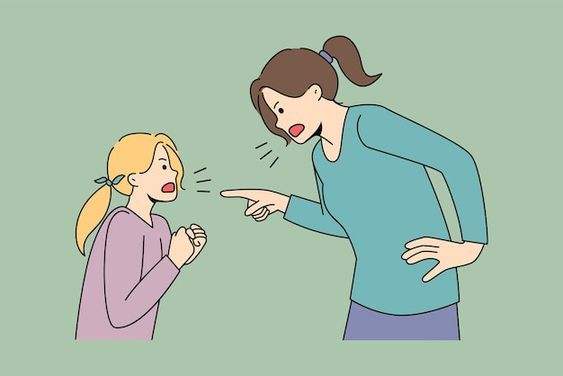
The effects of this pattern do not stay in childhood; they follow children into adolescence and adulthood in ways that are not always obvious at first.
Studies on communication patterns show thatchildren who are not encouraged to express themselves may struggle with confidence and emotional regulation later in life.
Many grow up struggling to express their thoughts clearly, especially in situations that require confidence and openness. Some avoid difficult conversations altogether, choosing silence over the risk of being dismissed. Others become overly dependent on authority, constantly seeking direction instead of trusting their own judgment.
On the other end of the spectrum, some eventually push back—sometimes strongly—once they gain independence, reacting to years of suppressed expression.
Perhaps the most subtle effect, however, is where they begin to seek understanding. When home does not feel like a safe space for conversation, they turn elsewhere—to friends, to social media, or even to strangers for the validation and listening ear they could not find at home.
A Needed Dose of Honesty About Parenting
None of this takes away from the reality that parenting is difficult. It is demanding, unpredictable, and often exhausting, especially in environments where parents are juggling multiple responsibilities at once.
There are moments when quick decisions are necessary, when safety is the priority, and when there simply isn’t time for a detailed explanation.
In those situations, firmness is not just acceptable, it is required.
The concern arises when “because I said so” becomes the default response rather than the occasional one.
When it is used consistently, it shapes not just behavior, but the entire communication culture within the home.
Shifting From Control to Connection

The alternative is not about removing authority or allowing children to challenge every decision. Parents still guide, set boundaries, and make final calls.
What changes is the approach.
A simple explanation, even if brief, can make a significant difference. Saying “You can’t go because it’s not safe at that time,” or “I understand why you want to, but here’s my concern,” keeps the authority intact while also acknowledging the child’s perspective.
At its core, parenting is not just about raising children who follow instructions without question.
It is about raising individuals who can think independently, communicate confidently, and maintain meaningful relationships.
That kind of growth does not happen in an environment where communication is shut down. It develops in spaces where dialogue is encouraged, where questions are welcomed, and where children feel safe enough to express themselves.
The phrase “because I said so” may win in the moment by ending the conversation quickly, but over time, it risks weakening something far more important, the connection between parent and child.
And once that connection begins to fade, rebuilding it requires far more effort than simply preserving it in the first place.
Sometimes, all it takes is one extra sentence to keep that connection alive.