Ibom Air: A Nigerian Aviation Success Story
A grounded commentary on Ibom Air as a Nigerian aviation success story, exploring how the state-owned airline redefines excellence, challenges negative national narratives, and demonstrates what effective public service can look like in Nigeria.
There are moments when a nation desperately needs a win, something tangible, functional, and undeniably excellent, to remind its people that competence is not a myth and that progress is possible even in spaces where mediocrity has become normalized. In recent years, few Nigerian success stories embody this truth as clearly as Ibom Air. While social media feeds overflow with scandal, political drama, and the usual commentary on national dysfunction, a quiet but impressive triumph has been unfolding at 30,000 feet. The story of Ibom Air is not merely the story of an airline; it is a story about what can happen when public service stops being a theoretical ideal and becomes a working reality.
A viral Instagram reel sparked this conversation and made one thing clear: excellence exists in Nigeria and sometimes, it exists where we least expect it. The speaker’s astonishment was almost humorous but deeply relatable. Like many Nigerians, she boarded Ibom Air with the caution of someone used to disappointment. Instead, she found service that rivaled respected airlines across multiple continents, punctuality that has become rare in African skies, and an overall experience that suggested something profound, Nigeria could succeed if it truly wanted to.
Redefining Nigerian Aviation in a Region Where Standards Have Fallen
One of the most compelling aspects of the Ibom Air narrative is how sharply it contrasts with the lived reality of air travel across the African continent. For decades, flying within Africa has been synonymous with delayed flights, inflated ticket prices, inconsistent customer service, and the looming anxiety that the journey might become a lesson in frustration. The aviation sector in many parts of the continent has long struggled with infrastructural decay, poor regulatory enforcement, and a customer service culture that rarely prioritizes dignity or efficiency. Against this view, Ibom Air’s emergence is more than refreshing, it is transformative.

What makes Ibom Air particularly remarkable is not that it performs well “for an African airline,” but that it performs well, period. Passengers consistently speak about timely departures, a rarity in African aviation. The professionalism of the cabin crew, signals a brand philosophy rooted in service, not survival. Even the pilots have become part of the airline’s growing mythology, known for smooth communication, calm leadership, and community-centered presence in the cabin. This level of operational excellence does not happen by accident; it is the product of intentional culture-building within an industry that has too often been abandoned to chaos.
The reel’s comparison of Ibom Air to British Airways’ short-leg flights or even commercial giants like EasyJet and Ryanair is not hyperbole. It is a reflection of lived experience. While European budget airlines recorded billions of euros in revenue last year, often delivering less comfort and sometimes less punctuality, Ibom Air has demonstrated that quality does not always require exorbitant pricing or complex branding. It simply requires an unwavering commitment to standards.
In a country where the narrative of dysfunction has been recycled so often that it seems pre-written, Ibom Air breaks the pattern. Instead of excuse-making, it delivers execution. Instead of the typical African airline story of operational collapse, it offers efficiency. And instead of the familiar blame game between regulators and operators, Ibom Air quietly shows that a Nigerian-run aviation outfit can match—if not surpass—global peers.
The Social Meaning of a Win: Why Excellence Matters in a Country Starved of Hope
Nigeria is not short of challenges, economic strain, insecurity, infrastructure deficits, unemployment, and a national psyche that has grown weary from repeated disappointment. For many citizens, hope has become a luxury that cannot easily be afforded. In this environment, the success of something as unexpected as a state-owned airline carries weight that goes beyond travel. It becomes symbolic.
There is one glaring take here: we cannot keep screaming when there is corruption but go silent when competence appears. A society that consistently amplifies failure but ignores success eventually breeds cynicism. That cynicism then becomes cultural. It shapes how people behave at work, how leaders govern, how institutions function. When excellence is not celebrated, it begins to feel unnecessary. People start to believe that good work will be buried anyway, so why bother? And that belief is far more dangerous than a bad policy, it corrodes progress from within.
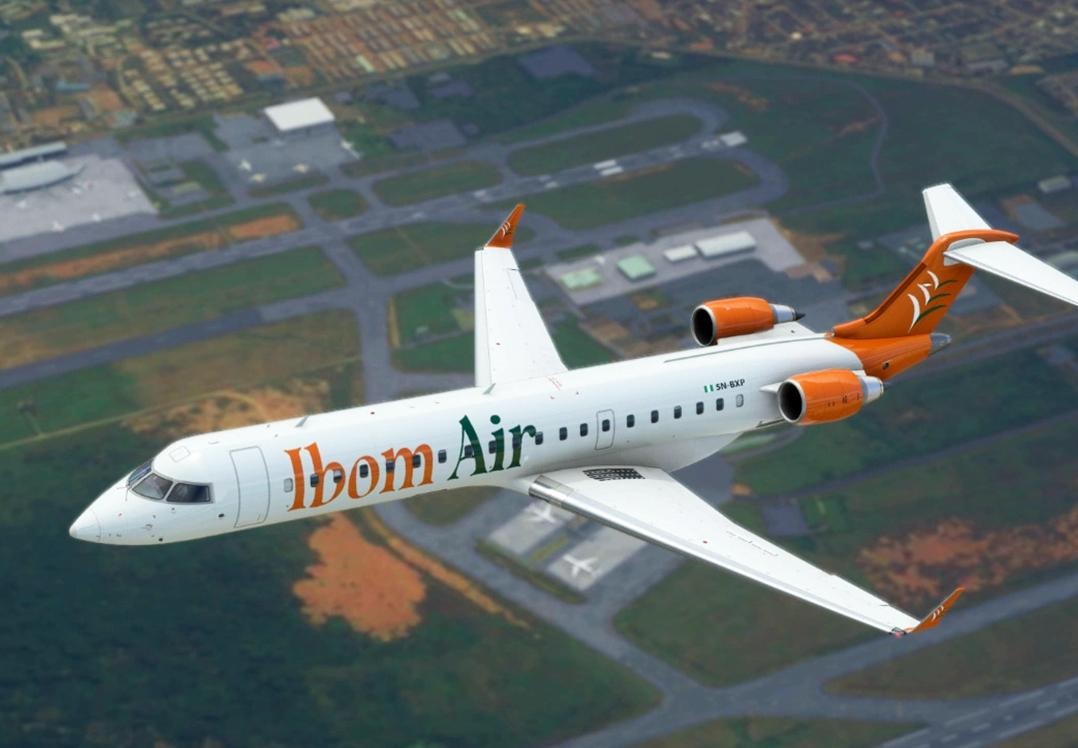
Ibom Air’s success disrupts that cycle. It reminds Nigerians that not everything has collapsed, not every institution is dysfunctional, and not every public project is destined to fail. This matters for national self-esteem. It matters for young people watching from the sidelines, trying to decide whether to stay in the country or seek greener pastures. It matters for civil servants who need models of what effective governance looks like. It matters for investors searching for pockets of reliability in a landscape clouded by risk.
The fact that Ibom Air is owned and operated by the Akwa Ibom State government of Nigeria makes the story even more significant. Public sector excellence is so rare in Nigeria that many citizens have subconsciously accepted a narrative of inevitable institutional decline. Yet here is a state-run enterprise with no chaos, no excuses, no corner-cutting, and no scandal, just a commitment to professionalism. It stands as living proof that the public sector does not have to be a burial ground for ambition. It can be a platform for innovation, efficiency, and national pride.
Ibom Air is not just an airline; it is an argument. It argues that Nigeria is not irredeemable. It argues that competence can exist in government. It argues that systems can work when people are empowered to build them properly. Most importantly, it argues that excellence can be normalized, not treated as an anomaly.
The Future of Ibom Air and the Possibility of a New National Standard
As more Nigerians begin to experience Ibom Air’s service and share their testimonies online, the airline’s reputation grows, not through forced marketing but through organic storytelling. Yet this visibility also carries responsibility. Nigerians are not merely praising an airline; they are investing their hopes into the idea that this model can be replicated across sectors. They want to believe that excellence is scalable.
The real test for Ibom Air will be sustainability. Can it maintain its standards as it expands its routes, increases its fleet, and navigates the complexities of regional travel? Can it avoid the political interference that has historically derailed many state-run enterprises? Can it resist the temptation to dilute quality in exchange for rapid expansion? These are questions that time will answer.
But even now, one truth remains: Ibom Air represents what Nigeria could be if competence became policy instead of an exception. If public office became a place for service, not survival. If leaders realized that a functioning system is the greatest legacy one can leave behind. And if the media, influencers, and everyday citizens gave as much attention to national achievements as they give to national scandals.
The closing question one must confront honestly is: why do wins like this fly under the radar while chaos dominates the headlines? The answer lies in cultural conditioning. Nigerians have learned to expect disappointment, and anything outside that expectation feels almost unreal. But this mindset must evolve. For Nigeria to transform, the country must learn to celebrate good news loudly, consistently, and unapologetically. Positive reinforcement is not mere flattery; it shapes national consciousness.
Ibom Air deserves that recognition. Not because it is perfect, but because it is proof, proof that discipline works, proof that public service can be dignified, proof that Nigerians can build world-class institutions, and proof that not every story about the country has to be a tragedy. As long as airlines like Ibom Air continue to rise above the clouds of national pessimism, they offer the one thing Nigeria needs most: a glimpse of what is possible.