Hyundai and Kia's EV Nightmare: 14 Models Recalled for Fire Risk, Owners Urged to Park Outside
Hyundai and Kia have recalled 14 EVs, including the Ioniq 5, EV6, and EV9, over a battery defect that could trigger fires. Affected owners are advised to park outdoors and limit charging to 80% until battery replacements are completed.
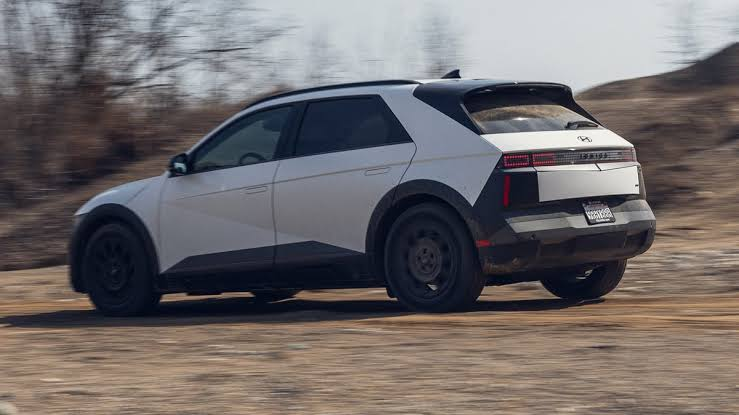
Hyundai and Kia are initiating a recall affectinga total of 14 electric vehicles (EVs)due to a significant battery defect that poses a fire risk. This recall specifically impacts six 2023–2024 Hyundai Ioniq 5s, seven 2022–2024 Kia EV6s, and one 2024 Kia EV9.
Owners of these select vehicles are being advised to take extra precautions, including parking their vehicles outdoors and limiting battery charging to 80 percent, until a permanent fix can be implemented.
While the news of a fire risk can be alarming, especially for EV owners, it's important to note that EV fires are generally rare and often less frequent than those involving gasoline-powered vehicles, typically stemming from manufacturing defects.
The root cause of this particular recall is attributed to battery supplier SK On, which produced a small batch of lithium-ion cells with a misaligned electrode. Over time, this misalignment can lead to an internal short circuit within the battery cell.
Such a short circuit has the potential to cause a fire, even when the EV is powered off, making the defect particularly dangerous. The delay in identifying these defective cells, considering the affected vehicles span several model years, remains unclear.
An internal short circuit in lithium-ion batteries can trigger a hazardous condition known as thermal runaway. In this process, the battery rapidly discharges its stored energy into itself, leading to a rapid and uncontrolled buildup of heat.
With sufficient stored energy and additional heat generated as the cell's internal chemicals break down, including the release of oxygen, which can intensify the reaction, temperatures can escalate to levels capable of melting plastics or igniting a fire.
Unlike typical 12-volt lead-acid batteries, this phenomenon can occur in lithium-ion cells even without active charging or discharging, highlighting the severity of such a defect. This issue is exceedingly rare in EVs, generally requiring either a manufacturing defect that creates an internal short or physical damage that pierces the cell, or, less commonly, an electrical short from damaged high-voltage battery pack wiring.
As a temporary measure to mitigate the fire risk until a permanent solution is available, Hyundai and Kia are urging affected owners to limit their vehicle's battery charge to no more than 80 percent. This recommendation is directly linked to the principle of stored energy.
By reducing the maximum state of charge, the amount of energy available within the cell to dump into itself during an internal short circuit is decreased. This helps to significantly reduce, though not entirely eliminate, the risk of thermal runaway and potential fire.
The permanent resolution for the affected Hyundai and Kia EVs involves replacing the entire high-voltage battery pack. While technically possible to replace individual cells, this process is labour-intensive and challenging to properly reseal, potentially introducing new risks.
Replacing the entire pack is a more efficient and reliable solution as it is akin to swapping an entire engine in an internal combustion vehicle facing a major engine recall rather than rebuilding it piece by piece. This approach ensures a faster repair and minimizes the chances of introducing additional errors during the service.
While sourcing complete battery packs may take some time, the recall is already in effect. Remedy notices are scheduled to be dispatched to owners on August 7 for the Kia EV6s and EV9, and on August 31 for the Hyundai Ioniq 5s. Given the small number of vehicles involved, owners are advised to proactively check if their specific vehicle's VIN is part of the recall.
This can be done by performing a VIN search on Hyundai's and Kia's official recall websites or the National Highway Traffic Safety Administration (NHTSA) website. In the interim, owners of affected vehicles must adhere to the safety guidelines: parking outdoors and maintaining a charge level of 80 percent or less.
Latest Tech News
Decode Africa's Digital Transformation
From Startups to Fintech Hubs - We Cover It All.
Both manufacturers have also confirmed they will provide rental vehicles under their recall reimbursement plans for owners who do not feel safe driving their recalled EV.