Historic Peril: Europe's Wildfires Unearth WWI and WWII Bombs
Europe's summer wildfires and droughts are unearthing unexploded World War I and World War II ordnance and military relics, posing a deadly new threat. Experts link this alarming trend to climate change, as environmental shifts disturb dormant historical remnants across the continent, from France to Germany and Belgium.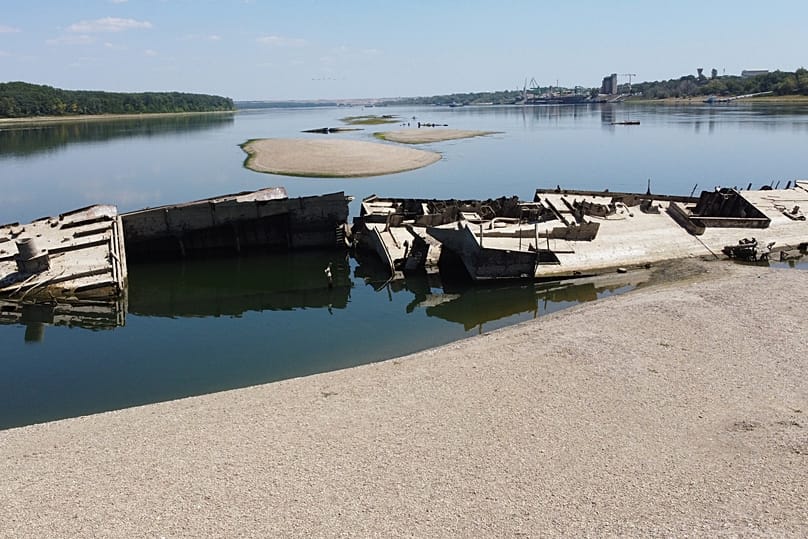
Devastating wildfires and severe droughts across Europe this summer have brought to light a perilous and unexpected threat: unexploded ordnance and other military relics from World War I and World War II. As vast expanses of land in western Europe have been consumed by fires amid scorching temperatures, firefighters have had to contend with the additional danger of exploding shells, with detonations reported in France, Germany, Belgium, and the Netherlands.
Experts attribute this alarming phenomenon to climate change. Sarah Njeri, a peace and conflict scholar at London’s School of Oriental and African Studies, notes that “Climate change is now doing the work of unburying and reactivating what was previously stable.” This suggests that the environmental shifts are disturbing dormant remnants of past conflicts, making them hazardous once more.
Several instances highlight this growing danger. A significant fire near Bordeaux in southwestern France uncovered a hoard of what is believed to be World War II-era ammunition. In eastern Belgium, specifically in the province of Liège, local governor Hervé Jamar confirmed that emergency services are adapting their protocols due to munitions buried in fire-affected areas, with “a few sporadic detonations” already observed. The High Fens area, spanning across the border into Germany from Liège, has experienced particularly fierce fires. This region is historically significant as the site of the Battle of the Bulge, one of WWII’s bloodiest engagements, where German forces launched a major offensive against Allied troops in December 1944.
Beyond unexploded ordnance from wildfires, widespread droughts across Europe have also revealed various military vehicles and weapons. Shrinking river levels have exposed hidden German warships, a Wehrmacht motorbike, and even a bomb. An Associated Press report from August 2026 documented the wreckage of a WWII German warship visible in front of Djerdap II, a large dam on the Danube River between Romania and Serbia, near Prahovo. Christina Greene, a researcher at the University of Arizona, emphasizes how “the legacy of war keeps creeping up” due to climate change, forcing societies to “relive the legacies of war and conflict in a way that we haven't had to deal with in a while in certain places.” This unprecedented exposure of historical war relics poses significant challenges for contemporary European societies, underscoring the long-term, unforeseen consequences of past conflicts combined with present environmental crises.