Explosive Growth: Sasol Shares Leap Nearly 120% as Oil Market Fuels Massive Turnaround!
Sasol's shares have soared by nearly 120% in 2026, making it a top-performing emerging-market stock outside Asia. This rally is propelled by higher oil and chemicals prices linked to the Middle East conflict, coupled with the company's unique coal-based fuel production and significant debt reduction efforts. Sasol is now closer to restarting dividends after years of financial turnaround.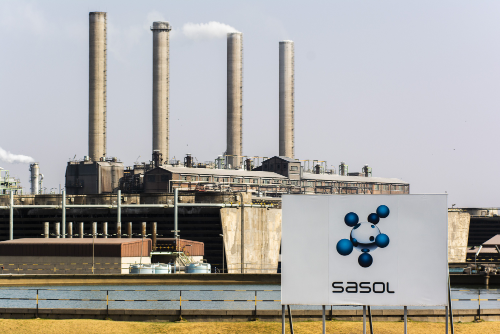
Sasol, the South African fuels and chemicals producer, has delivered an impressive dollar return of almost 120% in 2026, positioning it as one of the best-performing emerging-market stocks outside Asia. This substantial gain follows a 45% advance in 2025, setting the company's shares on course for their strongest annual performance since at least 1991. The shares traded around R231.60 recently, having climbed over 43% since the start of the second quarter, in stark contrast to a 1.9% decline in South Africa’s benchmark index.
The rally in Sasol’s shares is primarily driven by elevated oil and chemicals prices, a direct consequence of the ongoing conflict in the Middle East. Sasol has uniquely benefited from this environment due to its substantial fuel production being based on coal rather than crude oil. Its Secunda complex plays a critical role, converting coal into synthetic fuels and chemicals, thereby reducing the company's exposure to the higher crude costs that conventional refiners typically face. Furthermore, production at Secunda has shown marked improvement, with output exceeding 7.2 million tonnes in the year ended June 30 and operating reliability on the rise.
This current period of robust share gains marks a significant reversal for Sasol, which had previously grappled with years of debt pressure and project complications. Between June 2022 and April 2025, Sasol shares experienced a substantial loss of approximately 85% of their value. In response, the company implemented stringent cost-cutting measures, enhanced its operational efficiency, and diligently worked to reduce its debt burden. Net debt, excluding leases, saw an 11% reduction, falling to $3.3 billion in the year ended June 30 from $3.7 billion a year prior. Concurrently, adjusted earnings before interest, tax, depreciation, and amortisation (EBITDA) rose by 17% to R61 billion, with higher pricing linked to the Middle East conflict contributing an additional $150 million to $200 million to adjusted EBITDA during the year.
Sasol's Southern African business has also demonstrated improved financial resilience, achieving an oil breakeven price of approximately $49 a barrel, a notable decrease from $63 a barrel in the preceding year on a comparable basis. This enhanced efficiency provides the company with greater flexibility to generate cash flow, especially when oil prices ascend. Looking ahead, Sasol has set a target of reducing net debt to below $3 billion before considering the reinstatement of dividends, under a policy that would distribute 30% of free cash flow.
Despite the strong performance, analysts remain divided on the extent of potential upside. SBG Securities analyst Adrian Hammond projects a R450 price target, suggesting potential for almost another doubling from current levels, while HSBC’s Sriharsha Pappu maintains a buy rating with a R260 target. Bloomberg-tracked analysts show a consensus with 4 buy ratings, 5 holds, and 2 sell-equivalent recommendations, averaging a target of R238.01. The primary risk factor identified by experts is a potential decline in oil prices, which could diminish the earnings support that has been instrumental in driving the recent rally. The company enters the current period with a strengthened balance sheet, lower debt, higher production, and a reduced operating breakeven, positioning it differently from its past struggles. The unique structure of its South African business, converting coal into fuel at Secunda, means its main feedstock cost is not directly tied to crude prices, allowing for potentially wider margins when global oil prices are high. However, coal costs, plant reliability, the rand's performance, and chemicals prices also influence earnings. The question for investors is how much of this progress is already factored into the share price, and whether sustained high oil prices can further accelerate debt reduction and lead to dividend payments.