Heritage Over Hype: How St Louis Sugar Built a Brand Without Advertising
From your childhood breakfast to tea-time rituals, St Louis Sugar has remained a staple. Read about the secret behind its lasting relevance.
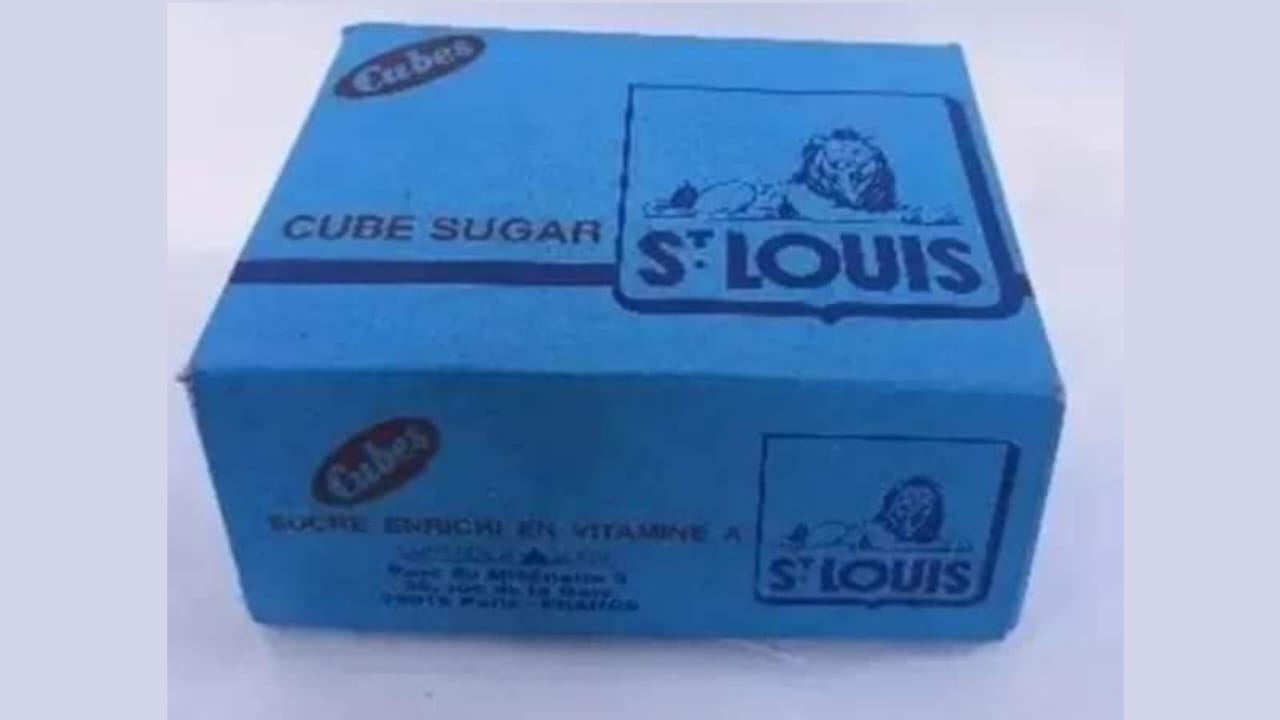
We all know the sugar.
The one your mum warned you to take “only two cubes” from when drinking garri. The one she counted before leaving the house, as if it were federal reserve property. That tiny blue-and-white box that lived on top of the fridge beside Peak milk; guarded, rationed, respected.
Somehow, without billboards screaming its name or catchy jingles fighting for attention, St Louis Sugar became a household landmark. A quiet constant. A product that never had to introduce itself because it was already part of your memory long before you learned how to spell “cube.”
Part of its power lies in what it didn’t do. No sudden rebrand. No “new look, same great taste” campaign. No noisy relaunch. St Louis stayed almost exactly the same, like that quiet neighbour who never talks but somehow knows everything happening on the street.
While other brands fought for visibility, St Louis leaned into invisibility. It didn’t beg to be chosen; it simply was chosen. Mothers trusted it, restaurants trusted it, and roadside tea sellers—people who measure survival in teaspoons—trusted it.
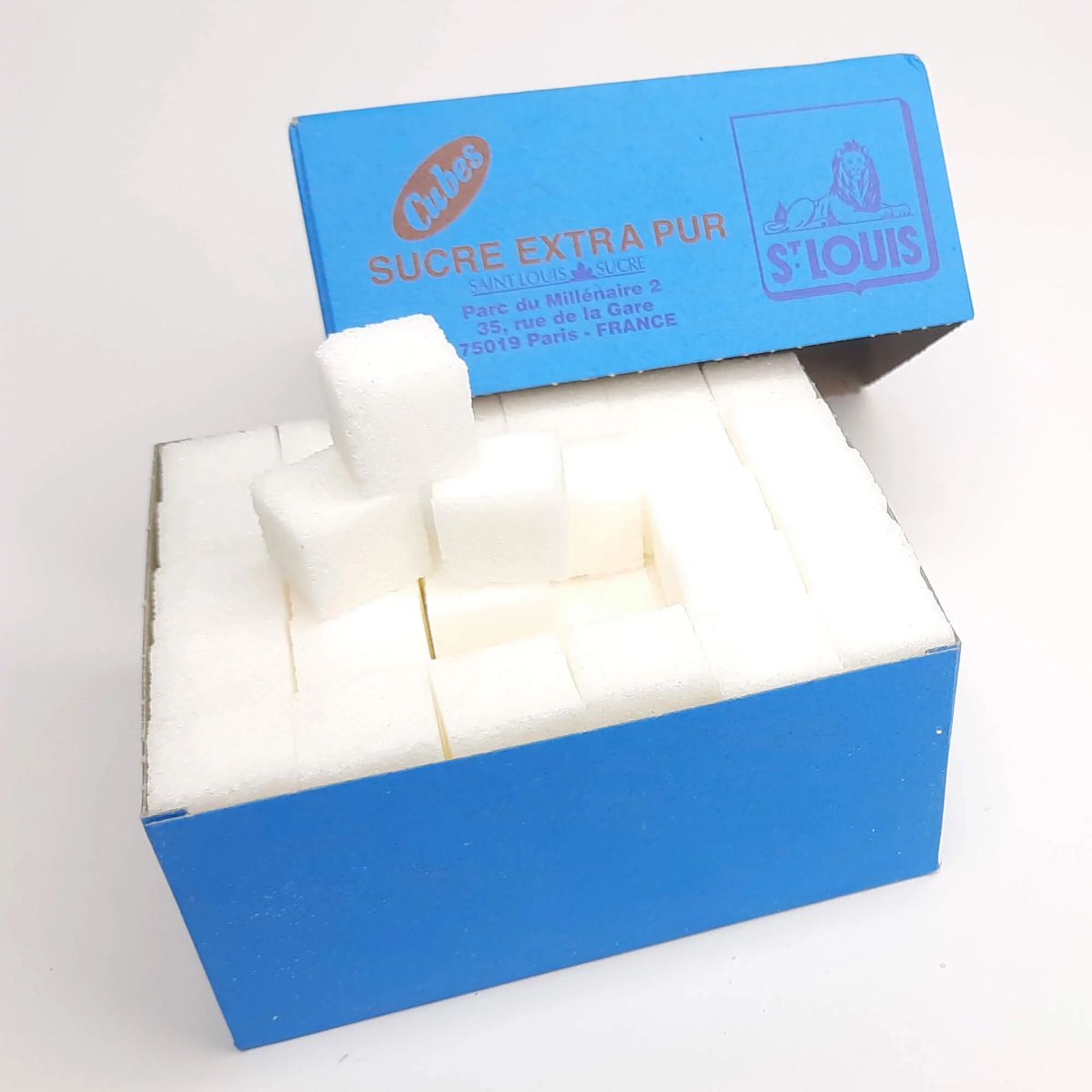
In a country where brands often come and go like political promises, St Louis survived by doing the one thing most brands are terrified of: nothing loud. No marketing circus and no identity crisis, just consistency, almost to the point of stubbornness.
That stubborn consistency turned the blue box into something bigger than packaging. It became a symbol of stability in a chaotic economy and an unpredictable market. Even as new sugar brands emerged with flashier designs and aggressive promotions, St Louis held its ground by whispering something simple and powerful in the background: you can trust me.
But the story of St Louis isn’t just emotional or nostalgic. Beneath the memories and quiet branding, there’s a more technical layer: what’s actually inside that box, how it differs from local alternatives like Dangote, and how policy and pricing shaped their paths.
What’s Inside the Sugar – And Why It Shapes Price, Quality, and Policy
To most Nigerians, sugar is sugar—small bright crystals in a spoon. But what looks identical on the table can be very different at the farm, in the factory, and in the oven. Commercial sugar comes mainly from two crops: sugar cane and sugar beet, and that difference sits at the heart of the St Louis versus Dangote story.
Sugar cane is a tall grass whose stalks store sugar. It grows above ground in warm, tropical regions, exposed to sunlight and air; climates like Nigeria, Brazil, and other developing countries. Sugar beet, by contrast, is a root crop. It grows underground, in the dark, and its thick, fleshy root typically contains about 16–20% natural sugar (sucrose). It is cultivated mostly in colder regions, particularly across Europe.
Manufacturers choose between cane and beet largely based on geography and policy. In Europe, most producers rely on beet sugar for two main reasons:
The climate supports large-scale beet farming at relatively low cost.
European Union (EU) trade and agricultural policies discourage heavy use of imported cane by imposing tariffs, while actively promoting beet cultivation to protect local farmers and processors.
A limited quota allows some cane sugar from selected developing countries to enter duty-free, partly to support those economies. This arrangement lets companies like Saint Louis Sucre import cane and market certain products as cane sugar.
But even with this window, EU rules have made life tough for cane refiners. In 2015, Saint Louis Sucre announced plans to scale back cane-refining operations because cane had become less competitive than beet. A key factor is processing: cane typically needs two refining stages, while beet usually needs only one, making beet cheaper and simpler to process.
These climate and policy choices shape global consumption. In Europe, an estimated 80–85% of sugar comes from beet, with cane making up only 15–20%. Globally, it’s almost the opposite: around 80% of the world’s sugar is produced from cane, and most of the remaining 20% from beet.
This context clarifies the likely composition of the brands on Nigerian shelves. St Louis Sugar, though deeply Nigerian in memory, is not Nigerian in origin. It’s manufactured in France and imported into Nigeria by the Milan Group, an Indian family-owned business. Given its European base, St Louis is very likely made from sugar beet.
Dangote Sugar, on the other hand, is firmly rooted in cane. The company refines sugar in Nigeria and secures much of its raw material from Savannah Sugar, its subsidiary that operates cane plantations in Kogi State. Other local brands, including BUA, also rely on cane grown in Nigerian or regional fields.

So does this cane-versus-beet difference change anything for the average person? For most households sweetening tea, garri, pap, or custard, the difference is basically invisible. In everyday use, “sugar is sugar” feels true. You stir, it dissolves, it’s sweet—end of story.
Because regular consumers can’t easily tell beet from cane in taste or appearance, many beet-sugar producers don’t bother to label the source crop.
Cane-sugar producers, however, often emphasise it boldly with phrases like “pure cane sugar” or “100% cane sugar,” partly because cane is seen as requiring more work to refine and carrying a certain prestige. A rule of thumb in the industry is simple: if a pack doesn’t proudly say “cane,” there’s a decent chance it’s beet-based or at least beet-influenced.
The distinction becomes much more important for professionals: bakers, pastry chefs, and confectionery manufacturers. Under high heat, cane sugar generally caramelises smoothly, yielding a rich golden-brown colour, while beet sugar is more likely to burn and turn very dark or blackish.
Texture also shifts: products made with beet sugar often have a coarser feel, whereas those made with cane sugar tend to be smoother and more spongy. In the confectionery world, cane-based products are usually considered superior, especially when judged on caramelisation and texture.
Beyond the kitchen, government policy and pricing shape what ends up in your shopping bag. In Nigeria, the choice between St Louis and Dangote often collapses to one basic question: how much can I afford? Since most people don’t taste a big difference, price and trust drive most decisions.
Here, the Nigerian government plays a decisive role. To encourage local refining and cut dependence on imported finished sugar, policy is structured like this:
Imported refined sugar attracts a tariff of about 35%.
Raw sugar imported for local refining is charged a much lower tariff of around 5%.
Local refiners enjoy a five-year tax holiday.
These incentives make locally refined sugar significantly cheaper than imported refined brands. At the time of the original analysis, a 500 g pack of St Louis sold for around ₦370, while a similar 500 g pack of Dangote cost about ₦250. That pricing gap is policy in action: tariffs and tax breaks giving local, cane-based sugar a clear advantage.
As a result, cane sugar dominates Nigeria’s sugar landscape. Beet-based sugar, like what likely sits in St Louis cubes, has a relatively small share, reflecting both Nigeria’s climate (which favours cane) and policy (which favours local refining).
The Future of Sugar: Imports, Policy, and Market Dynamics
But this structure isn’t frozen. An embargo on European sugar exports was scheduled to be lifted in October of the year under review, meaning more competitively priced European beet sugar could become available for export.
If that cheaper European beet sugar—backed by large-scale production and EU support, starts flowing into West Africa, it could become attractive for regional refiners. Europe’s proximity keeps shipping costs reasonable, and as long as factories can handle any technical adjustments needed to work more with beet, the economics may favour increased beet usage. How far this goes will depend on two things:
1. Whether Nigerian refineries are technically ready to adapt, and
2. Whether the government maintains, tightens, or relaxes its protective policies.
If restrictions are relaxed, Nigeria might see more beet-based sugar in its market, reshaping the balance between imported and local brands. But even in that scenario, one thing is clear: chemistry and policy may change the cost and composition of sugar, yet brands like St Louis also rely on something far less tangible, and far more powerful: memory, ritual, and quiet trust.
Sweet Consistency: Memory, Packaging, and Competing Without Advertising
This is where St Louis becomes most fascinating, not just as a product, but as a case study in branding. While competitors chase attention with new looks, promos, and influencers, St Louis has built its power on three pillars: unchanged packaging, deep memory, and almost total silence in advertising.
From a strategist’s view, St Louis is a masterclass in consistency-driven brand equity. The blue-and-white box has barely changed in decades. No dramatic redesign, no seasonal editions, no rotation of fonts and colours. In an environment where many FMCG brands regularly refresh their look, St Louis does the opposite, and wins.
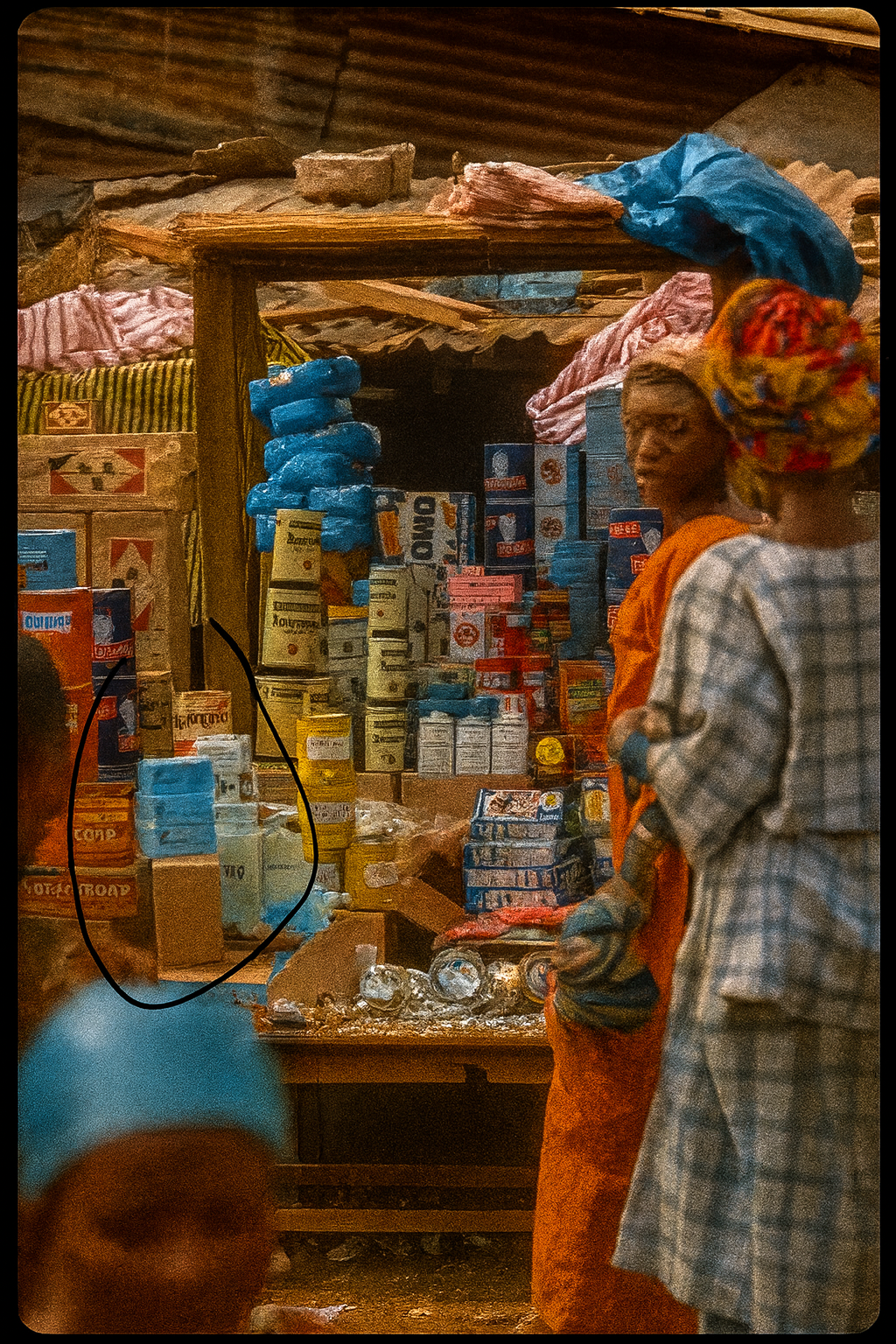
Why does that work? Because in markets like Nigeria, where product quality can be hit-or-miss, visual consistency becomes a shortcut for trust. When you see the same familiar box, year after year, your brain reads it as: this is safe, this is stable, this is what we’ve always used. The packaging stops being just a container and becomes a promise. What you’re buying today feels like the same sugar your mother used when you were a child.
This also reduces cognitive load. The shopper doesn’t have to “re-learn” the product every few years. The box is instantly recognisable on a crowded shelf. It taps into nostalgia too. Choosing St Louis isn’t only about taste; it’s about the feeling of continuity; pouring the same cubes into tea or garri that you remember seeing in your childhood kitchen.
In many ways, St Louis turns what could be seen as a weakness, non-evolving packaging, into a competitive edge. In a market filled with brands trying to outdo one another through new looks and noisy campaigns, St Louis quietly signals: we’ve been here long enough that we don’t need to prove ourselves anymore. That’s not laziness; it’s positioning.
Then there’s loyalty. St Louis doesn’t depend primarily on transactional loyalty (discounts, promos, buy-two-get-one-free). It thrives on experiential loyalty; loyalty built from repeated, positive experiences over time. Nigerians don’t just buy St Louis because of price; they buy it because it feels right. It’s the sugar of home, boarding house, tea sellers at the junction. Every interaction over the years strengthens the emotional bond.
This bond also fuels brand inertia. Once a household trusts a product, switching—especially for something as basic as sugar—feels risky and unnecessary, even if rivals are slightly cheaper or flashier. That inertia is one of St Louis’ strongest shields.
Crucially, all of this happens with almost no visible advertising. No TV campaigns dominating prime time. No influencer hype on Instagram or TikTok. No celebrity chef partnerships. Instead, St Louis relies on organic advocacy and cultural embedding. Mothers recommend it to daughters. Grandmothers use it when guests arrive. Tea vendors adopt it because their customers recognise and request it. Each satisfied user becomes an unpaid brand ambassador.
From a market perspective, this is strategic minimalism. High ad spend can buy attention, but it doesn’t always buy loyalty. St Louis has spent decades investing in product reliability, distribution, and quiet consistency, then allowed memory and habit to do the heavy lifting. It competes by appearing not to compete, occupying the role of the calm, established elder in a room full of shouting newcomers.
St. Louis Sugar: When Heritage Outshines Advertising
In a world where brands spend millions on campaigns, influencer tie-ups, and flashy packaging, St. Louis Sugar Cubes operates in near silence.

Yet, it continues to dominate the cube sugar market in Nigeria and across Africa. How does a brand stay relevant for decades without constant reinvention.
1. Consistency of Identity
The sky-blue box adorned with the lion emblem has remained unchanged for generations. This visual consistency creates instant recognition on store shelves, making St. Louis Sugar a brand that consumers spot and trust without needing a second glance. In marketing, we often underestimate the power of visual continuity; here, it’s a masterstroke.
2. Cultural Entrenchment
St. Louis isn’t just sugar, it’s part of family rituals, breakfast tables, and nostalgic memories. For many, it evokes the comforting aroma of freshly prepared ogi (pap) or tea time with loved ones. By embedding itself into daily life, the brand becomes more than a product; it becomes a cultural touchstone.
3. Trust and Quality Assurance
Consistency in quality is priceless. Consumers know that St. Louis Sugar dissolves perfectly, tastes reliably sweet, and never disappoints. This trust, earned over decades, is a form of marketing that no advertisement can replicate. In essence, the product itself is the campaign.
4. Minimalist Marketing
Ironically, the absence of aggressive advertising has become a marketing tool. Silence communicates confidence. A brand that doesn’t chase trends or gimmicks signals that it doesn’t need to, its reputation speaks for itself. This is what marketing experts call “brand audacity”; an unapologetic belief in the product’s intrinsic value.
5. First-Mover Advantage
Being one of the earliest cube sugar brands in the market gave St. Louis a foothold that competitors are still trying to catch up with. First impressions matter, and in this case, the original sugar sets the standard against which all others are measured.
The Lesson for Marketers
Some might call St. Louis “arrogant” for resisting reinvention, but what it demonstrates is the power of brand heritage. In a cluttered market, heritage, consistency, and trust can outperform campaigns, social media blitzes, and flashy promotions. It’s a reminder that the strongest marketing sometimes comes from standing still while others chase trends.
The emotional connection is real; and it’s a marketer’s dream: a product that’s not just consumed, but remembered, cherished, and passed down.