He built a blood-saving device in Nigeria. What happened to Ovadje's medical invention?
In 1989, Nigerian military doctor Otu Oviemo Ovadje developed a device that could recover and reuse a patient's lost blood. This is the story behind his invention and what became of it.

In an emergency, a patient who loses a large amount of blood may need an urgent blood transfusion before or during surgery. But what happens when there is no blood available?
In the 90’s, this was a serious problem in Nigerian hospitals, particularly in emergencies involving severe internal bleeding.
Finding compatible donor blood could take time, and for patients who needed immediate treatment, that delay could be fatal.
This was the problem that troubled Nigerian military doctor Otu Oviemo Ovadje. He wanted to find a way for doctors to save patients who were losing blood internally, even when donor blood was not readily available.
The medical problem behind the invention
One of the medical conditions that informed Ovadje's work was ruptured ectopic pregnancy.
This occurs when a pregnancy develops outside the uterus, commonly in a fallopian tube. If the tube ruptures, it can cause severe internal bleeding and require emergency surgery.
In an interview with THISDAY in 2016, Ovadje recalled watching a woman who had been rushed to Island Maternity in Lagos die because her bleeding could not be stopped. He said the experience strengthened his determination to find a solution.
His idea was to recover blood that had collected inside a patient's body, filter it and return it to the same person.
This process is known asautotransfusion. Although the technique already existed in medicine, Ovadje wanted to develop a device that could make it easier to use in hospitals with limited resources.
How Ovadje developed the EAT-SET
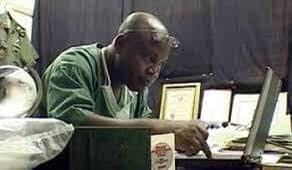
Ovadje began developing the Emergency AutoTransfusion Set, or EAT-SET, in 1989 at the Military Hospital in Ikoyi, Lagos. He was a medical doctor in the Nigerian Army, specialising in anaesthesia.
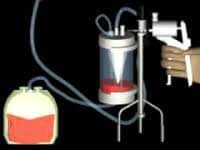
The device was designed to collect blood from a patient's body cavity during surgery, filter it and direct it into a reservoir before returning it to the patient's bloodstream.
Unlike equipment that depended on an electric pump, the EAT-SET used pressure within the patient's body to draw blood into the device. This meant it could operate without a constant electricity supply.
History
Rewind the Stories that Made Africa, Africa
A Journey Through Time, Narrated with Insight.
It was described as a portable unit measuring approximately 65 centimetres, fitted with a tube and filtration system.
The device could not be used in every case of internal bleeding. The recovered blood had to be suitable for reinfusion, as contaminated blood could put the patient at risk.
According to theWorld Intellectual Property Organization (WIPO), Ovadje started the project with about ₦18,000, equivalent to approximately $120 at the time.

The Nigerian government provided research facilities, while the United Nations Development Programme (UNDP) supported its research, development and testing. The World Health Organization (WHO) served as the executing agency.
From a Nigerian military hospital to international recognition
The EAT-SET underwent initial clinical trials in Geneva in 1996 under WHO guidance. It was also tested in three Nigerian hospitals.
Ovadje received the Gold Medal Award from WIPO and the Organisation of African Unity in 1995 for his contribution to African scientific innovation.
In 2000, he received the WHO Sasakawa Health Prize in recognition of his work.
The invention also receivedpatent protection in nine African countries, while its name was trademarked in nine countries.
The attempt to turn EAT-SET into a business
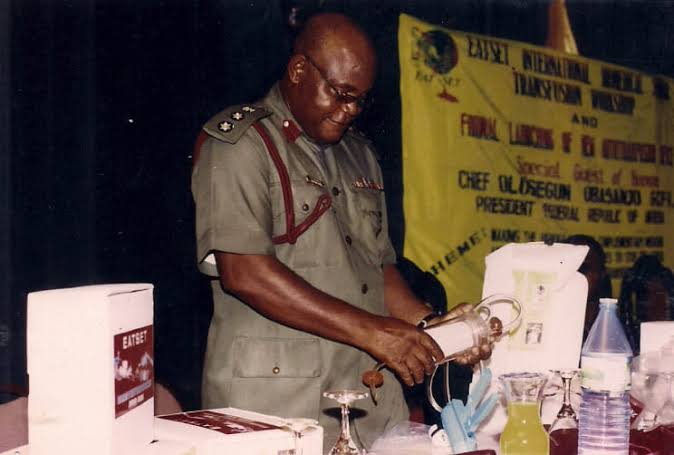
EAT-SET Industries was established in April 2001 to commercialise the invention. The first 200 units were manufactured in Germany by BERCO Industries and supplied to hospitals for clinical trials.
The WIPO representatives also witnessed the device being used at Lagos University Teaching Hospital and Ayinke Hospital.
The company later established a factory in Calabar, Cross River State. Completed around 2002 or 2003, the facility was intended to manufacture EAT-SET devices and syringes.
History
Rewind the Stories that Made Africa, Africa
A Journey Through Time, Narrated with Insight.
However, production faced difficulties.
Ovadje explained that the imported European equipment was expensive and required a reliable electricity supply. Frequent power interruptions forced the company to depend on generators, with diesel costs reaching about ₦1 million monthly.
He said the factory was still functioning in 2016, although it was not operating at full capacity. More than 3,000 EAT-SET units remained in Calabar, while the device was also being manufactured in India.
The support from UNDP and WHO had covered research and development, not the commercial investment required to manufacture and distribute the device on a larger scale.
Where is Ovadje now?
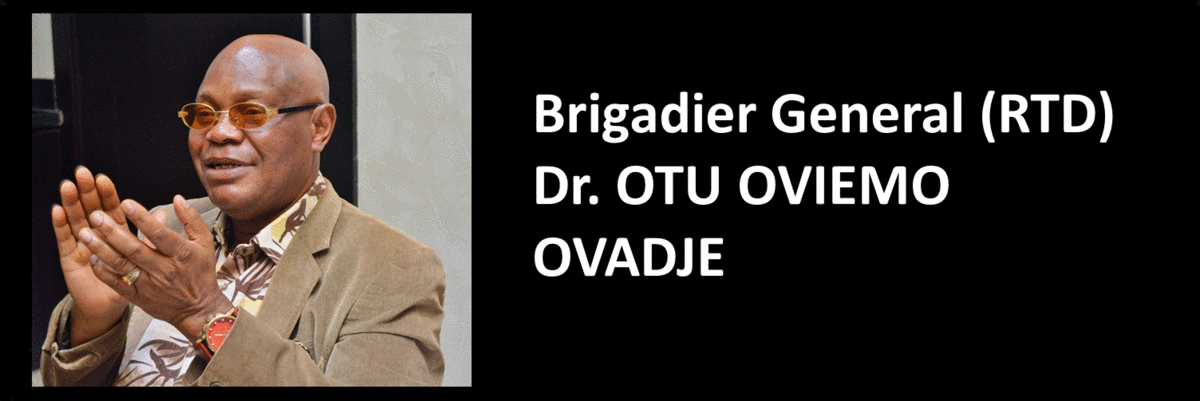
Ovadje is now a retired Nigerian Army brigadier general.
Profiled by Vanguard in 2024, although there is little publicly available information about his more recent activities or the current operations of EAT-SET Industries.
The device remains a notable example of a medical invention developed by a Nigerian military doctor to address a practical problem in healthcare, with the potential to make blood recovery and transfusion more accessible in hospitals with limited resources.