Ghanaians Outraged as Utility Tariffs Skyrocket, Opposition Cries 'Broken Promise'
Ghana's Public Utilities Regulatory Commission's latest tariff increases for electricity and water have sparked widespread condemnation from industries, traders, and parliamentarians. Critics argue the hikes are unjustified, citing utility providers' inefficiencies and a contradiction with the government's claims of economic improvement. Stakeholders demand transparency, accountability, and a focus on operational reforms over burdening consumers.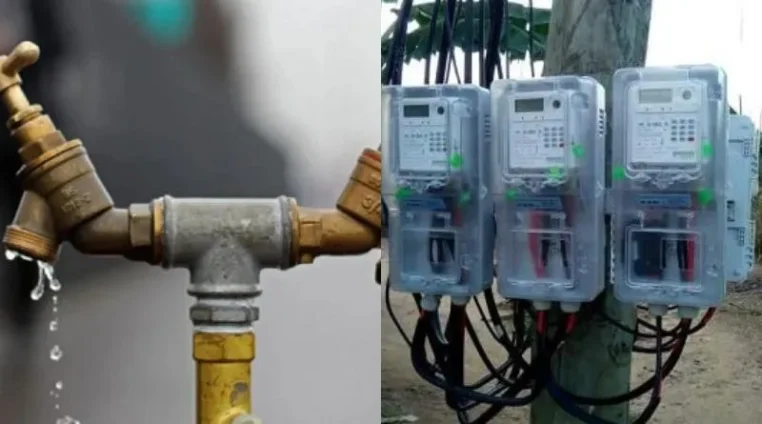
The Public Utilities Regulatory Commission (PURC) has announced its latest adjustment to utility tariffs, effective July 1, 2026, triggering widespread opposition from major stakeholders including the Association of Ghana Industries (AGI), the Ghana Union of Traders' Associations (GUTA), and the Minority in Parliament. These groups contend that the tariff hikes, which include a 3.49% increase for electricity and a 0.85% increase for water, are unjustified and place undue burden on both consumers and businesses.
Tsonam Cleanse Akpeloo, Dean of the Greater Accra Regional Branch of AGI, questioned the rationale behind the increment, arguing that utility providers like the Electricity Company of Ghana (ECG) and Ghana Water Limited should primarily address their internal inefficiencies rather than passing costs to consumers. He pointed out that operational losses, including technical, commercial, and distribution losses, constitute approximately 30% of the challenges faced by these companies. Akpeloo criticized the practice of easily transferring these losses to the general public, deeming it unfair, especially to manufacturers who rely heavily on electricity for their operations.
The AGI Dean further emphasized that electricity costs account for about 30% of total production costs for many manufacturers, making any tariff increase a significant concern. He warned that the cumulative effect of multiple tariff adjustments since January 2025 is creating enormous pressure on businesses, which require long-term planning and cost predictability. Additionally, Akpeloo expressed concern that these hikes could undermine the government's flagship 24-hour economy initiative, as increased electricity costs discourage continuous operation, especially at night when electricity is a critical input.
Clement Boateng, President of GUTA, echoed the AGI's sentiments, attributing the financial difficulties of utility providers directly to their operational inefficiencies. He cited specific figures, noting that Ghana Water Company records operational losses of between 51% and 52%, while the electricity sector experiences losses of around 32%. Mr. Boateng explained that these substantial losses stem from issues such as theft, illegal connections, and wastage within the distribution systems, insisting that these challenges must be tackled before resorting to tariff increases. He argued that improved management and efficiency measures would not only boost revenue mobilization but also alleviate the financial strain on businesses and households.
The Minority in Parliament, through Deputy Ranking on the Energy Committee Collins Adomako-Mensah, strongly criticized the adjustments as a “broken promise” by the government. Adomako-Mensah highlighted that despite promises to reduce utility costs, Ghanaians are now paying 26.82% more for electricity compared to when President Mahama took office. He detailed a consistent cycle of quarterly tariff increases since January 2025, with notable increments of 14.75% in Q2 2025, 2.45% in Q3 2025, 1.15% in Q4 2025, and 9.8% in Q1 2026, followed by a 4.81% reduction in Q2 2026, and the latest 3.49% increase in Q3 2026.
Adomako-Mensah further questioned the government's economic narrative, which often points to an appreciating cedi (by nearly 40%), declining inflation, and lower interest rates as signs of recovery. He argued that if these economic gains were genuine, they should translate into a lower cost of living and, specifically, lower utility tariffs for citizens. Given the electricity sector's heavy reliance on thermal generation, which uses imported crude oil and natural gas priced in foreign currency, a stronger cedi should significantly reduce import costs. The Minority demanded clear and transparent explanations for why tariffs continue to rise despite these purported macroeconomic improvements, challenging the consistency of the government's claims.
The Minority stressed that Ghanaians deserve full transparency regarding the factors and calculations used by PURC for tariff adjustments, moving beyond broad economic headlines. They held President Mahama and the NDC government accountable for the tariff regime, asserting that they appointed PURC's leadership and set the policy environment. Adomako-Mensah criticized the inconsistency of celebrating a 4.81% reduction in April 2026 while remaining silent on the subsequent 3.49% increase in July 2026. Moreover, the Minority called on PURC to ensure that any future tariff adjustments are linked to verifiable improvements in service quality, specifically addressing issues like prepaid meter depletion, persistent power outages, and alleged billing irregularities by ECG. They also warned that public concerns over utility costs would be a significant factor in the 2028 elections, urging civil society organizations and other stakeholders to demand transparent and evidence-based regulation.
The Public Utilities Regulatory Commission (PURC) stated that these adjustments are part of its quarterly tariff review mechanism, intended to reflect changes in key operational factors such as the exchange rate between the Ghana cedi and the US dollar, inflation, the electricity generation mix, and the cost of fuel, particularly natural gas. The Commission's stated aim is to maintain the real value of tariffs, ensure the financial viability of utility companies, and support reliable service delivery, while also considering the impact on consumers. However, GUTA's President, Clement Boateng, argued that the extent of cedi depreciation (around 4.18% between April and May) cited by PURC was “insignificant” and did not justify the magnitude of the increase. He maintained that the real issue remains the deep-seated operational inefficiencies within the utility providers themselves.
The unified front of industrial associations, traders, and parliamentary opposition underscores a broad consensus: utility providers must prioritize internal efficiency improvements and loss reduction measures over consistently burdening consumers with tariff hikes. The call for transparency, accountability, and a direct link between tariff adjustments and tangible service quality improvements reflects a growing demand for a more sustainable and equitable approach to utility pricing in Ghana.