Ghana's GoldBod Under Fire: IMF Cautions, Probe Demanded Amidst Loss Claims!
Ghana's Domestic Gold Purchase Programme and GoldBod face calls for a broad parliamentary probe into alleged losses, with James Agalga demanding a review from 2021 onwards. While GoldBod defends its financial performance and proponents cite significant economic stability benefits, the IMF warns of substantial costs to the Bank of Ghana's balance sheet, underscoring the need for greater transparency.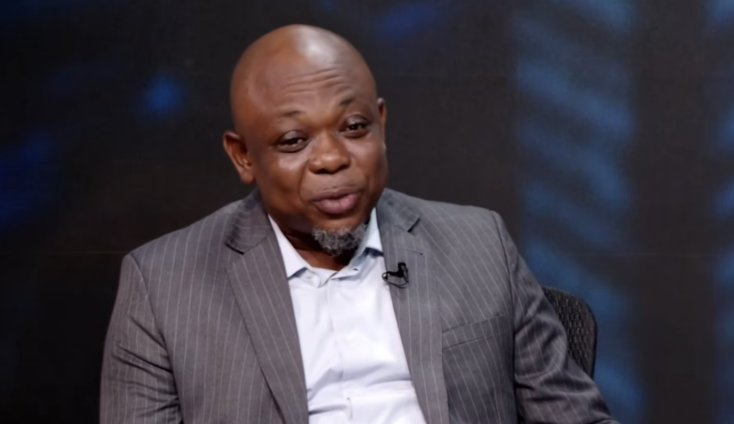
Ghana's Domestic Gold Purchase Programme (DGPP) and the operations of the Ghana Gold Board (GoldBod) are at the center of a burgeoning parliamentary debate, with calls for a comprehensive investigation into alleged financial losses and a defense of the program's role in the nation's economic stability.
Incoming Majority Leader James Agalga is spearheading demands for a broader parliamentary probe into the DGPP, arguing that any investigation limited solely to GoldBod's operations in 2025 would be insufficient and provide an incomplete picture. Agalga, the Builsa North MP, insists that Parliament must examine the program from its inception in 2021, tracing its origins and gold purchasing methods under previous administrations. He emphasized that a probe restricted to 2025 would be particularly problematic given that a crucial agreement between the then Precious Minerals Marketing Company (PMMC) and the Bank of Ghana (BoG), dating back to 2023, remains in force. He stated that failing to consider the entire history would constitute a "grave disservice to the people of this country." Agalga seeks to establish how costs associated with gold purchases were managed initially and whether current practices mirror those of the past. Specifically, he questioned if PMMC purchased dore gold in 2021 using forex bureau rates instead of the Bank of Ghana rates, which could have led to significant losses and cost differentials that need to be accounted for.
Defending GoldBod, Agalga stated that the entity has not incurred losses but has, on the contrary, made a substantial surplus, reportedly exceeding 4 billion, a fact he says is captured in the Auditor-General’s 2025 report which contained no adverse findings against GoldBod. He reviewed documents, including the Auditor-General’s report and the PMMC-BoG agreement, asserting that GoldBod is an agent of the Bank of Ghana, and therefore, the principal (BoG) should bear associated costs such as security, insurance, assay, and smelting. GoldBod's chief executive, Sammy Gyamfi, corroborated this, stating GoldBod had raised nearly $839 million in advances for purchases between March and May, and rejecting claims of funding shortfalls, clarifying that funding is based on creditworthiness, security, and risk assessments. GoldBod's statement on Monday confirmed its gold-purchasing operations remained fully funded and operational, with tighter controls introduced from August 1st.
Despite these defenses, reports of significant losses persist. The International Monetary Fund (IMF) indicated that the DGPP was associated with losses of approximately GH¢22 billion, equivalent to US$1.7 billion, in 2025. Agalga himself cited an IMF report mentioning $400 million lost through the DGPP previously. The People’s Alliance for Governance and Accountability (PAGA) also highlighted a reported $1.7 billion loss, demanding a detailed explanation and accountability from officials involved, rejecting the argument that national interest justifies financial indiscipline. GoldBod's gold suppliers, however, reported funding delays of up to three weeks, with the Chamber of Gold Buyers suggesting this might be due to GoldBod's recent decoupling from the Bank of Ghana and funding operations from its own balance sheet. Additionally, GoldBod's $75 million foreign exchange auction to commercial banks was paused due to concerns from the Bank of Ghana, which viewed it as inconsistent with its operating framework.
However, proponents of the DGPP, including Agalga and Outgoing Majority Leader Mahama Ayariga, argue that what are termed 'losses' are, in fact, necessary costs incurred for significant economic benefits. They credit the DGPP for creating GH¢13 billion in reserves (up from GH¢8 billion in 1.5 years), stabilizing the cedi, reducing inflation to single digits, and improving Ghana's economic standing to the eighth or ninth strongest economy in Africa, surpassing Ivory Coast. Ayariga maintained that these costs were an inevitable consequence of deliberately expanding gold purchases to strengthen the country's foreign exchange position, and accused critics of not considering the broader economic impact.
The IMF Resident Representative in Ghana, Dr. Adrian Alter, acknowledged gold's crucial role in Ghana's recovery but cautioned about the DGPP's costs and risks. He confirmed the program generated significant losses for the central bank, contributing to the deterioration of BoG's balance sheet, whose equity stood at about 7% at the end of 2025 due to factors including the DGPP and the Domestic Debt Exchange Programme (DDEP). Dr. Alter called for stronger governance, transparency, and reporting in the DGPP, and urged against the central bank's involvement in quasi-fiscal activities, which could weaken its balance sheet and hinder its ability to maintain price stability. He noted the positive step of transferring gold purchasing and selling functions from the BoG to GoldBod, separating these activities from the central bank’s core mandate.
Agalga has backed an early parliamentary probe, suggesting either an ad hoc committee or the Public Accounts Committee, leaving the choice to the Speaker. He believes many answers already exist in documents like the Auditor-General’s 2025 report, the PMMC-BoG agreement (and its addendum), and the IMF report. Nevertheless, he advocates for a probe to address the Minority's concerns and ensure transparency, reiterating his demand that the investigation's scope must be expanded beyond 2025 to avoid suppressing any issues. He also wants Parliament to assess the overall dividends Ghana has reaped from the program, including currency stability and declining inflation, and to investigate why the Bank of Ghana absorbed costs related to using forex bureau rates. Agalga emphasized the urgency for a thorough investigation to bring all issues to the forefront, guiding the people of Ghana with proper findings and resolving any doubts.