Migrant Crisis Erupts: Germany and Italy Lock Horns Over Rescue Ships

A long-standing dispute over private migrant rescue operations in the Mediterranean has reignited following Italy's detention of the German rescue ship Sea-Watch 5. This incident highlights deep divisions between Italy and German NGOs, involving issues of maritime law, humanitarian aid, state funding, and political disagreement over migrant returns and the role of the Libyan coastguard.
Pelumi Ilesanmi
Pelumi IlesanmiGlobal1 hour ago6 minute read
Migrant Crisis Erupts: Germany and Italy Lock Horns Over Rescue Ships

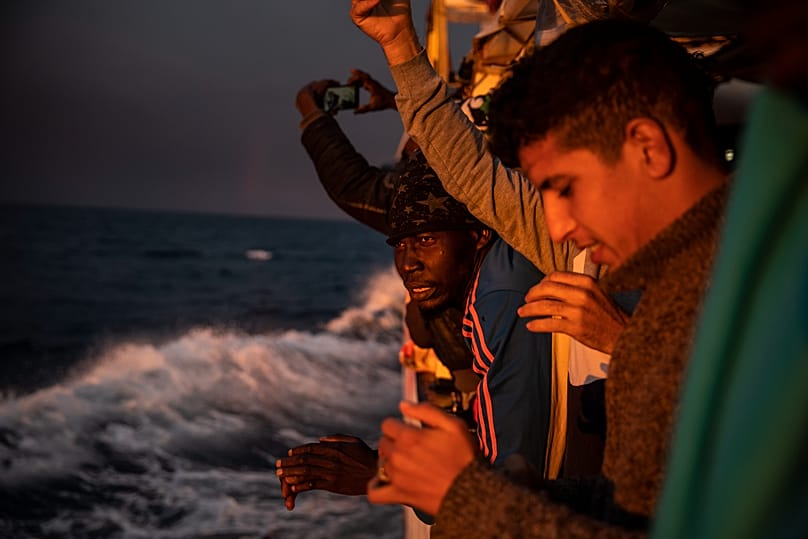
The recent detention of the German rescue ship Sea-Watch 5 in Italy has intensified a long-standing dispute concerning the operations of private vessels involved in migrant rescues in the Mediterranean Sea. Italian authorities imposed a 45-day detention and a €7,500 fine on the German organization last weekend. The incident occurred on August 13 when the Sea-Watch 5 rescued six individuals and, according to Sea-Watch, documented the deaths of eight others after encountering an unidentified armed boat. The Italian Interior Ministry cited the vessel's failure to inform the Libyan coastguard about the rescue operation as the reason for the detention. Sea-Watch plans to appeal the decision, arguing that the Italian Maritime Rescue Coordination Centre never instructed them to inform Libyan actors, despite the Libyan coastguard being present and communicating with the crew after the rescue.

This case is the latest in a decade-long conflict between Italy and German sea rescue organizations. Critics, including politicians from Germany's CDU/CSU and AfD parties, accuse NGOs of encouraging dangerous crossings and indirectly aiding people-smuggling networks. These organizations vehemently deny such claims, asserting that their primary role is to save lives on one of the world's deadliest migration routes. A core disagreement revolves around the destination of rescued individuals; NGOs typically transport them to European ports, refusing to return them to Libya, which the United Nations deems unsafe for migrants.

The history of this dispute dates back over ten years. Sea-Watch itself was established in 2015, shortly after Italy concluded its extensive naval search-and-rescue mission, Mare Nostrum, in October 2014, which was replaced by the more limited EU border operation Triton. German civilian sea rescue gained significant international attention in 2019 when Carola Rackete, captain of the Sea-Watch 3, docked in Lampedusa with dozens of rescued migrants despite denied permission. Following Giorgia Meloni's appointment as prime minister in October 2022, Italy has progressively tightened regulations on private rescue vessels. The 2023 'Piantedosi decree' mandates that rescue ships proceed to an assigned port without delay after a rescue, a policy criticized by NGOs for often assigning distant ports that prevent ships from remaining in search-and-rescue zones. Further tightening in December 2024 extended liability for repeated violations beyond captains to shipowners and operators. Sea-Watch reports that Italian authorities have detained civilian rescue ships 44 times since 2023, resulting in over 960 cumulative days out of operation.

Several organizations, including Sea-Watch, Sea-Eye, SOS Humanity, and RESQSHIP, operate vessels in the central Mediterranean. United4Rescue, a charity founded in 2019, raises and distributes donations, supporting ships like Sea-Watch 5 and Humanity 1. In 2025, Sea-Watch's income, almost entirely from donations, amounted to approximately €13.5 million from nearly 59,200 supporters. United4Rescue raised around €1.5 million in 2024. Until 2025, the German state also provided funding, with the Bundestag approving €8 million for 2023-2026 in 2022. However, the new foreign minister, Johann Wadephul (CDU), halted this funding in spring 2025, arguing it was outside his ministry's purview. Other European organizations active in the region include the Franco-German SOS Méditerranée (Ocean Viking), the Spanish Proactiva Open Arms, and the Italian Mediterranea Saving Humans (Mare Jonio). Despite this, the Italian Interior Ministry states that German organizations have rescued over half of all migrants brought to Italy by private ships since October 2022.

The debate extends to whether rescue ships encourage crossings. German Chancellor Friedrich Merz argues that sea rescue should be a state responsibility, not for private entities. Foreign Minister Johann Wadephul previously suggested in 2023 that rescue organizations unintentionally assist people-smuggling networks, advocating against German tax money supporting such activities. The AfD goes further, labeling them "NGO smugglers" and demanding an end to all state support. Rescue organizations, however, strongly refute the "pull factor" theory. SOS Humanity managing director Till Rummenhohl cites academic studies finding no evidence that rescue ships increase migration. Frontex executive director Hans Leijtens has also stated he has seen no evidence of such a factor.

Political divisions within Germany are evident, particularly between the conservative CDU/CSU and its coalition partner, the Social Democrats (SPD). In April, 128 MPs from the SPD, Greens, and Left parties called for a state-funded EU sea rescue program and greater protection for civilian organizations. Green MP Jamila Schäfer emphasizes sea rescue as a "humanitarian duty." Clara Bünger, the Left's spokesperson on domestic and refugee policy, criticized both Italy and Germany for hypocrisy, condemning the punishment of life-savers while cooperating with Libyan actors accused of human rights violations. The CDU/CSU, by contrast, supports the cessation of federal funding, with Günter Krings, deputy leader of the CDU/CSU parliamentary group, defending Italy's right to enforce its laws on NGO vessels. The far-right AfD views civilian rescue operations as part of the problem, advocating for Italy's refusal to accept migrants picked up by "German smuggler ships."

This strained situation is further complicated by disputes over migrant returns. Since new EU migration and asylum rules took effect in June, Germany has sought to return "Dublin cases" to Italy, which is deemed responsible for their initial EU entry. Italy has consistently resisted such transfers, rejecting around 80,000 requests from European countries since 2023 due to pressure on its reception system. Since the new EU rules, Italy has not accepted a single migrant return from Germany. Deputy Prime Minister Matteo Salvini declared Italy would continue to refuse transfers as long as German NGO ships operate in the Mediterranean, bringing migrants to Italy. Interior Minister Matteo Piantedosi has also called for Germany to compensate Italy for migrants brought ashore by German rescue organizations, asserting that NGOs create a "pull factor" for irregular migration. Approximately 22,500 migrants, over half of those brought ashore by private rescue vessels since October 2022, have been rescued by German organizations, according to the Italian Interior Ministry. Piantedosi and German Interior Minister Alexander Dobrindt are scheduled to meet to address these issues.

Another significant point of contention is the role of the Libyan coastguard. Libya established its own search-and-rescue region in the central Mediterranean in 2018, leading Italy to recognize its coordination centre as the authority for rescues within that area. Italian regulations mandate cooperation with these coordinating authorities, with non-compliance potentially leading to sanctions. However, Sea-Watch and other rescue organizations challenge this cooperation, citing Libya's unsafety for rescued individuals and serious allegations of human rights abuses against Libyan authorities. Human rights groups, including Human Rights Watch, have called on the EU to cease cooperation with Libyan authorities on migration control. NGOs have also stopped communicating with Tripoli's rescue coordination centre, arguing it legitimizes authorities they accuse of endangering migrants and rescue crews. The Italian government, however, maintains that its approach, including cooperation with Libya and Tunisia, is contributing to a reduction in irregular migration across the Mediterranean, as evidenced by falling arrival numbers.

Loading...