Ghana's GoldBod Scandal Unravels: Billions in Losses, Calls for BoG Governor's Ouster Amid Forex Allegations
Former Finance Minister Dr Mohammed Amin Adam and the NPP are demanding full accountability for Ghana's gold trading programme losses. Citing discrepancies in official figures and questioning GoldBod's reported surplus, Dr Adam calls for reconciliation, transparency, and a parliamentary inquiry into how the nation lost money during a gold market boom.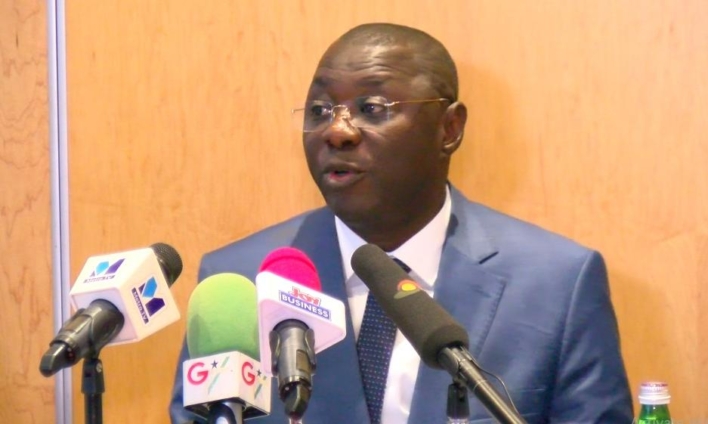
Former Finance Minister Dr Mohammed Amin Adam, representing the New Patriotic Party (NPP) and Member of Parliament for Karaga, has emphatically reiterated the party’s demand for comprehensive disclosure and accountability concerning the significant reported losses associated with Ghana’s gold trading programme. Addressing a press conference, Dr Amin Adam highlighted that the NPP's concerns are rooted in critical financial documents, including figures from the International Monetary Fund’s Country Report 2026/212, the audited 2025 accounts of the Bank of Ghana, the Ghana Gold Board (GoldBod), and data officially published by various state institutions.
Dr Amin Adam stressed that the NPP is seeking factual answers and supporting documentation, not engaging in political attacks, particularly as many of the requested documents are already in existence and legally mandated to be public. A primary point of contention is the stark discrepancy between the approximately GH¢22 billion economic cost of the programme as cited by the IMF, and the GH¢9.05 billion loss reported by the Bank of Ghana. He called for an immediate and formal reconciliation of these divergent figures by all institutions involved. Specifically, he demanded a signed reconciliation from the Bank of Ghana, GoldBod, and the Finance Ministry that explicitly connects the GH¢22 billion, GH¢9.05 billion, and GH¢5.45 billion figures.
The former Finance Minister also critically challenged GoldBod’s reported GH¢5.45 billion surplus for 2025. He argued that GH¢4.54 billion (representing 81.7 percent) of this amount was, in fact, a government capital injection credited to GoldBod’s books on December 30, 2025, just one day before the financial year concluded. Dr Amin Adam stated that standard public sector and international accounting rules dictate that owner capital is not revenue, a fact further supported by GoldBod’s own statements describing the amount as “revolving trade capital.” He questioned the credibility of GoldBod’s surplus, asserting, “It cannot be capital when that is convenient and revenue when there is something to celebrate.” Furthermore, he noted that of the remaining GH¢909.9 million, approximately GH¢827 million constituted fee income, largely service charges paid to GoldBod by the Bank of Ghana for the same gold purchase operations. He concluded that almost all of GoldBod’s 'real income' was a commission derived from a programme that ultimately cost the country GH¢22 billion, questioning how a gold buying operator could report a surplus while its funding institution recorded a major loss. He insisted on GoldBod’s 2025 accounts being restated to exclude the GH¢4.54 billion capital injection from its revenue.
Dr Amin Adam further demanded the disclosure of the identities of foreign buyers of Ghana’s gold, along with the specific discounts and other commercial terms governing these transactions. This information, he argued, is crucial given the substantial increase in international gold prices during 2025. He pointed out that gold prices surged by 62.9 percent that year, yet the IMF estimated the programme lost approximately 17 percent of the value of the raw gold sold by the Bank of Ghana. He starkly observed, “Ghana bought gold, sold gold, and lost money, in the best gold market in 50 years.” He identified several factors contributing to these losses: differences in exchange rates (BoG advanced cedis at the official interbank rate, while GoldBod paid miners at higher forex bureau rates), discounts granted to foreign buyers (Ghana sold gold below the world average), and cumulative transaction fees (0.5 percent service fee and 0.258 percent assay fee). The IMF, he noted, estimated these combined costs at 14.5 percent of the programme’s value in 2025, suggesting Ghana was operating a gold trading system nearly three times more expensive than necessary.
In a related concern, Dr Amin Adam called for the immediate removal of the Governor of the Bank of Ghana from the Board of GoldBod, citing a clear conflict of interest. He deemed it inappropriate for the Governor to serve on the board of an institution operating a programme financed by the Bank of Ghana, especially when the central bank itself was reporting losses from the same programme. He questioned the independence of oversight when the Bank of Ghana was both a financier and an entity negatively affected by the programme's financial performance. He also demanded clarity on the legal basis for GoldBod’s fees, the agreement governing the use of Bank of Ghana funds for the programme, and the statutory quarterly reports required under the Ghana Gold Board Act.
Moreover, Dr Amin Adam disputed claims that Ghana’s gold purchase programme was responsible for a significant increase in the country’s foreign exchange reserves. Citing Bank of Ghana data, he revealed that gold contributed only US$60.9 million, a mere 1.3 percent, to a total US$4.716 billion increase in reserves. He further highlighted a concerning 39 percent decline in Ghana’s actual gold holdings, from 30.5 tonnes to 18.6 tonnes. He argued that the small increase in reserves attributed to gold came from world price appreciation rather than an increase in physical gold holdings by Ghana. He pointed out that other sources, such as remittances (US$7.79 billion), cocoa earnings (US$3.86 billion), crude oil exports (US$2.62 billion), and foreign direct investment (US$2.61 billion), contributed significantly more. Dr Amin Adam concluded that the programme effectively operated as a foreign exchange intervention, not a reserve-building programme, a function not prescribed by the legislation establishing GoldBod. He further questioned GoldBod’s legal mandate to conduct foreign exchange trading and auctions, stating that the Ghana Gold Board Act grants no such authority and GoldBod holds no license from the Bank of Ghana for forex trading, calling for the central bank to explain under what authority these activities were occurring.
The NPP fully supports a comprehensive parliamentary inquiry into the gold purchase programme, noting that the Speaker of Parliament has already admitted a motion for such an investigation. While welcoming the Bank of Ghana’s decision to cease pre-financing gold purchases from July 1, 2026, Dr Amin Adam emphatically stressed that future corrections do not absolve the need for a thorough explanation and accounting of what transpired during 2025. He concluded, “The correction is welcome. The accounting is still owed, and we will keep asking for it until the people of Ghana are given it.”