Ghana's Galamsey War Escalates: Experts Demand Emergency Action and Tougher Stance Against Illegal Mining
Ghana's fight against illegal mining, or galamsey, is at a critical juncture, with experts warning of its potential collapse and emerging public health crisis. Environmental and health specialists urge immediate, coordinated action to combat widespread pollution and address the severe health risks, particularly before the upcoming election cycle.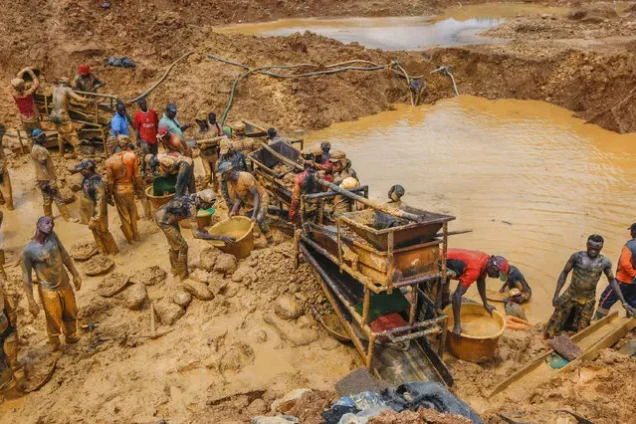
Daryl Bosu of A Rocha Ghana and Dr. Emmanuel Oppong of the Paediatric Society of Ghana have issued urgent warnings regarding Ghana's illegal mining crisis, popularly known as galamsey. Bosu cautioned that the fight against galamsey risks collapsing if decisive action isn't taken within the year, especially given impending political activities. Dr. Oppong, on the other hand, strongly advocated for declaring galamsey a public health emergency, emphasizing its insidious and far-reaching health consequences. Both experts underscore the critical need for a sustained, coordinated national response to halt the widespread environmental destruction and escalating health risks.
The existing efforts to combat galamsey are significantly hampered by several systemic issues. Daryl Bosu highlighted a critical lack of coordination and involvement from local police, observing that illegal mining often proceeds openly in communities while officers focus on routine duties. He criticized the National Anti-Illegal Mining Operations Secretariat (NAIMOS) for being left to lead the fight alone with inadequate resources, leading to constrained operations. Furthermore, Bosu asserted that enforcement efforts are misdirected, primarily targeting local miners who are often victims of circumstance, rather than the true financiers and organizers. He noted that despite legal provisions in Act 995 that allow for the prosecution of facilitators, these measures are not being fully applied, and intelligence services are reportedly hindered from pursuing known kingpins.
The environmental impact of galamsey is devastating, leading to widespread pollution of water bodies, degradation of farmlands, and destruction of vital forest reserves. This environmental crisis has direct and severe repercussions on public health. Dr. Emmanuel Oppong warned that toxic substances like mercury, arsenic, and lead, frequently used in illegal mining, contaminate water sources and enter the food chain. This exposure poses significant risks, particularly to vulnerable groups such as pregnant women and children. Frontline health workers have anecdotally observed alarming trends, including an increase in premature births and congenital abnormalities among newborns in galamsey-affected areas. Major health facilities are also reporting rising cases of chronic kidney disease, liver complications, and dialysis dependence, even among younger patients. Dr. Oppong stressed that galamsey is quietly developing into a major public health crisis comparable in scale to the COVID-19 pandemic, albeit with more insidious long-term effects.
In response to these escalating concerns, various institutions are backing calls for more aggressive and strategic interventions. The Christian Council of Ghana (CCG) has unequivocally condemned the wanton destruction caused by galamsey, declaring environmental protection a fundamental civic and moral responsibility. The CCG announced its Environmental Care and Cleanliness (ECC) Programme to support state efforts in combating environmental degradation. Dr. Oppong urged for a coordinated national response akin to Ghana’s successful COVID-19 strategy, which would involve real-time environmental monitoring, comprehensive public education campaigns, and decisive policy actions to mobilize resources across government institutions and stakeholders. Daryl Bosu further advocated for intelligence-led operations to identify and prosecute the financiers and masterminds behind illegal mining networks, emphasizing the need to track financial transactions and equipment supply chains without political interference. He also pointed out that economic hardship compels some community members into galamsey, suggesting a need for broader socio-economic considerations in the fight.
Both Bosu and Oppong reinforced the urgency of the situation, highlighting that Ghana has a narrow window—approximately eight months—to effectively address galamsey before the upcoming election cycle diverts attention and resources. Past successes in curbing illegal mining were not sustained, leading to miners returning with "much more impunity." The experts collectively implore the government to act decisively, utilize all available legal and intelligence resources, and ensure a long-term commitment to ending galamsey, warning that failure to do so this year could lead to an irreversible collapse of the fight.