Ghana's Environmental Catastrophe: Rivers Die as Poison Spreads Across Nation
Ghana faces a critical paradox where economic growth indicators rise while illegal mining, or 'galamsey', catastrophically poisons its rivers and environment. This illicit activity is causing a biochemical assault with severe health, water security, and export risks, deeply compromising the nation's future. The widespread contamination underscores an urgent need for genuine political will to halt the intergenerational toxic debt being accrued.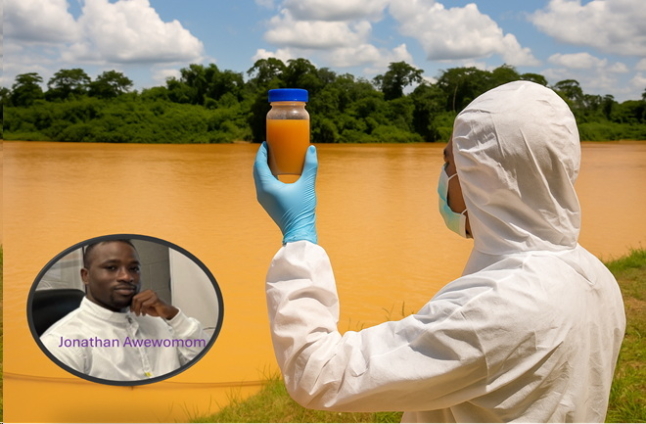
Ghana faces a profound paradox: while macroeconomic indicators show upward trends, with stable growth projections and robust gold exports, the nation's ecological foundations are collapsing due to illegal mining, known as 'galamsey'. The once-clear rivers like the Pra, Ankobra, Offin, and Birim now run brown, signaling a quiet environmental betrayal overshadowed by economic optics. The debate over galamsey's destructiveness is long over; the urgent question now is whether Ghana has normalized this environmental degradation or if the efforts to combat it have been compromised.
Galamsey is far more than an illegal activity; it constitutes a severe biochemical assault on the Republic. The mercury used in gold amalgamation transforms into methylmercury in aquatic systems, bioaccumulating in fish and, subsequently, in the human food chain, affecting families far from mining sites. Arsenic and lead, released from disturbed soils, persist in dust and crops for decades. Cyanide spills infiltrate streams and groundwater, causing acute cellular respiration failure and chronic disruption of thyroid and neurological functions. These are not mere rhetorical claims but toxicological facts. Chronic exposure to these contaminants is directly linked to kidney disease, neurodevelopmental impairment, cardiovascular dysfunction, and cancer. Children in mining belts are not only losing access to clean rivers but also facing a loss of cognitive potential, while fetuses exposed to these toxins carry risks that transcend generations. Contaminated soils remain silent reservoirs of risk even after excavators leave. An economy thriving on a poisoned food chain is not resilient; it is a collapse deferred.
Water, the lifeblood of any nation, is under severe siege in Ghana. Water treatment plants are increasingly forced to shut down or intensify chemical usage due to the extreme turbidity and heavy metal contamination originating from upstream illegal mining. This leads to escalating purification costs, higher tariffs for households and industries, and municipalities queuing for tanker deliveries when primary water sources are choked with silt. The Ghana Water Company allocates hundreds of millions of cedis annually for treatment chemicals, a cost directly proportional to the degradation of raw water sources. The estimated cost for reclaiming polluted rivers runs into hundreds of millions of dollars, with each delay compounding the expense. While economic indicators might reflect gold export revenue, they critically fail to capture the rising national water insecurity. When clean water becomes more expensive due to sacrificed rivers, it signifies environmental debt servicing, not genuine growth.
The uncomfortable truth is that galamsey's impact does not remain confined to rural enclaves; it propagates throughout the nation. Cassava grown near contaminated soils reaches urban markets, fish from polluted rivers appear in restaurants and supermarkets, and heavy metal-rich dust settles on crops, roofs, and wells. Cyanide residues infiltrate food chains. Consequently, families in affluent urban areas like East Legon are not insulated from pits in Atiwa, nor are ministers dining in Accra separated from mercury used upstream in the Western Region. There is no gated community that can filter methylmercury at the kitchen door; galamsey affects everyone.
Ghana's global reputation, heavily reliant on gold and cocoa exports, faces significant risks. Cadmium in cocoa, mercury in crops, and arsenic in soils introduce compliance challenges in increasingly stringent export markets, particularly within the European Union, which mandates tighter contaminant limits and rigorous traceability. This can lead to rejections, discounts, and erosion of profit margins. Failure to guarantee clean produce, bullion, and water inputs will not only result in environmental degradation but also trade friction, increased compliance costs, and long-term reputational damage. Celebrating export volumes today while undermining the very trust that sustains these markets is a precarious strategy.
The critical governance question revolves around who truly protects the mining pits. Excavators do not spontaneously appear in forest reserves; they are imported, cleared, and transported. Mercury and cyanide do not cross borders or obtain permits on their own. Despite repeated operations like 'Vanguard' and 'Halt,' and public destruction of excavators, pits reopen, and dredges return. The recurring collapse of enforcement cycles leaves citizens questioning whether this signifies failure or active accommodation. Allegations of seized machines disappearing, security tip-offs, and financiers being insulated from prosecution suggest that galamsey is not merely illegal mining but a profound form of institutional corrosion. Genuine political will demands the prosecution of both the manual laborer and the boardroom financier, tracing money trails, publishing names, and eliminating protection offered by proximity to power. Without such resolute action, the fight against galamsey remains mere theatre.
Manufacturing industries also bear the brunt of environmental instability. Polluted water significantly increases treatment costs for beverage producers, pharmaceutical manufacturers, and food processors. Pharmaceutical companies risk compromising Good Manufacturing Practice standards due to deteriorating raw water quality. Cocoa processors face elevated testing burdens, and breweries experience downtime. These increased costs inevitably ripple into consumer prices, impacting essential goods like sachet water, paracetamol, bread, and soap. This leads to higher inflation, often attributed solely to exchange rates, obscuring the root cause in sediment-laden rivers and cyanide-laced runoff. Sustainable industrialization cannot thrive on unstable environmental foundations.
The losses incurred are staggering and already recorded: thousands of hectares degraded, forest reserves scarred, rivers rendered almost untreatable, miners buried in pit collapses, security officers ambushed, and billions lost in uncollected royalties and smuggling. Beyond human metrics, the ecological toll is extensive: amphibian populations decline, fish bioaccumulate toxins, soil microbes crucial for nutrient cycling are suppressed by heavy metals, and plants record contamination in their tissues. This weakening of ecosystem resilience, signaled by disappearing frogs and faltering fish populations, indicates the fraying of natural safety nets.
Galamsey is accumulating an intergenerational toxic debt. Mercury in sediments persists for decades, while arsenic and lead do not degrade but merely shift forms. Cyanide complexes linger in tailings. The epigenetic changes linked to toxic exposures may echo beyond a single generation. Economic growth figures capture quarterly output but fail to account for reduced IQ from early-life exposure, lifelong kidney disease, or soil productivity lost for generations. The most tragic export of galamsey might not be gold, but the diminishment of human potential across generations.
Ultimately, Ghana celebrates macroeconomic stability while neglecting microecological collapse. The nation focuses on fiscal consolidation while sediment consolidates in riverbeds. It attracts investors while simultaneously undermining the environmental certainty those investors require. A nation cannot indefinitely mine its aquifers, poison its soils, and destabilize its ecosystems without incurring a compounding price. To definitively end galamsey, what is fundamentally required is unwavering political will and national honesty, as highlighted by Research Scientist Jonathan Awewomom.