Ghana's Fiscal Firestorm: Critics Slam 'Kwashiorkor' Mid-Year Budget as Economic Woes Mount
Ghana's 2026 Mid-Year Budget Review has ignited a fierce parliamentary debate, with the Majority hailing economic recovery and stability under the Mahama administration, while the Minority dismisses the report as an "empty" and "uninspiring" document lacking practical solutions for ordinary citizens. The stark contrast in perspectives highlights ongoing disagreements over the nation's economic management and future direction.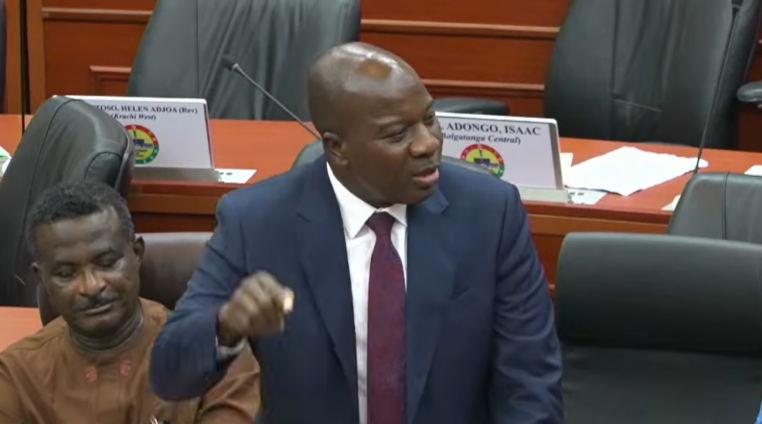
Ghana's 2026 Mid-Year Budget Review, presented by Finance Minister Dr. Cassiel Ato Forson to Parliament on Thursday, sparked immediate and sharply divided reactions from the nation's political leaders. While the Majority lauded the presentation as a testament to Ghana's economic turnaround, the Minority vehemently dismissed it as "empty" and "uninspiring," accusing the government of failing to address the realities faced by ordinary Ghanaians.
Finance Minister Dr. Cassiel Ato Forson, supported by Majority Leader Mahama Ayariga, painted an optimistic picture of Ghana's economic health. Dr. Forson asserted that the economy was on a steady path to recovery, attributing the improvements to "prudent economic management" and "superior economic management" under the Mahama administration, rather than external factors. He highlighted Ghana's return to economic stability, which has reportedly restored investor confidence, although the government is not rushing back to the international capital market for borrowing. The 2026 budget, he noted, is on track, having met its targets for the first half of the year and progressing towards an end-year primary surplus target of 1.5% of GDP. Key macroeconomic indicators showed significant improvement, including a stabilized cedi and a reduced policy rate of 14% in July, which he claimed was creating opportunities for businesses to access cheaper credit and expand. Majority Leader Ayariga echoed these sentiments, proclaiming, "Clearly, Ghana is working again," and pledged parliamentary support for legislative measures arising from the budget review. Dr. Forson also reflected on the 2022 economic crisis, describing it as a consequence of poor policy choices, reckless spending, and excessive borrowing by the previous administration, cautioning against a return to such conditions.
However, the opposition unleashed a barrage of criticism against the budget review. Ranking Member on Parliament’s Finance Committee, Dr. Mohammed Amin Adam, and Minority Leader Alexander Afenyo-Markin, both lambasted the document as lacking substance and failing to offer meaningful solutions. Dr. Amin Adam described the budget as "empty," "bone without meat," and a "kwashiorkor budget," arguing that it contained "only burns and no meat" and was heavy on rhetoric but light on delivery. He accused the Finance Minister of engaging in propaganda, claiming that the government's own data contradicted its projections of success and exposed its inability to fulfill promises. The Minority insisted that after 18 months in office since 2025, the government continued to engage in a "blame game" against its predecessors instead of delivering on campaign commitments, asserting that Ghanaians voted for action, not excuses.
Minority Leader Alexander Afenyo-Markin further escalated the critique, branding the budget as "uninspiring" and "full of English with empty promises." He questioned the government's spending priorities and its management of vital sectors, arguing that the true measure of a Finance Minister lies in the impact of policies on citizens' lives, not just expenditure figures. Afenyo-Markin pointed out inconsistencies in government figures, citing a discrepancy in funds released for the Agric Minister (GH¢1.6 billion vs. GH¢1.1 billion). He vehemently criticized the lack of policy announcements for the struggling cocoa sector, stating that Ghana's four million cocoa farmers were "suffering and wailing" under Dr. Forson's supervision. The Minority also highlighted the government's alleged disregard for their earlier warnings regarding the Gold-for-Reserves programme, where charges were initially 15% before the IMF reportedly compelled a reduction to 9%. He claimed that this policy had already resulted in significant financial losses of GH¢9.6 billion, and noted the Bank of Ghana's recent withdrawal from the programme, lamenting it was "too late."
Afenyo-Markin also challenged the government's allocation of GH¢42 million for the 24-hour market initiative while "abandoned Agenda 111" hospitals remained uncompleted, questioning the logic of prioritizing market expansion over healthcare infrastructure. He alleged that district assemblies were being forced to use their own allocations to fund the 24-hour economy program. Furthermore, he claimed that government payments had disproportionately benefited party members, and that initiatives like "Nkoko Nkitinkiti" had become politicized. Beyond economic matters, Afenyo-Markin accused the government of "persecution" of opposition figures, citing cases like Bernard Antwi Boasiako ("Chairman Wontumi") and Kamila Al-Hassan as "political prisoners." He criticized the government's record on job creation, the cancellation of the 1D1F initiative without alternatives, increased electricity tariffs hindering business, and public sector job losses. Despite the sweeping criticisms, Afenyo-Markin did acknowledge one positive: the Finance Minister's "patriotic" recognition of digitalisation reforms introduced by the previous NPP administration in government payments, though he quickly added that the government "can do better" and needed to deliver more tangible results for the suffering populace. The Minority concluded by asserting they would continue to scrutinize government expenditure and demand accountability, predicting political consequences for the administration if it failed to address citizens’ concerns.