When Did Nigeria’s Vice-President Become a Symbol of Religious Balance?
Why do Nigerians expect religious balance on presidential tickets when the Constitution does not require it? The debate raises questions about representation, competence and same-faith tickets.
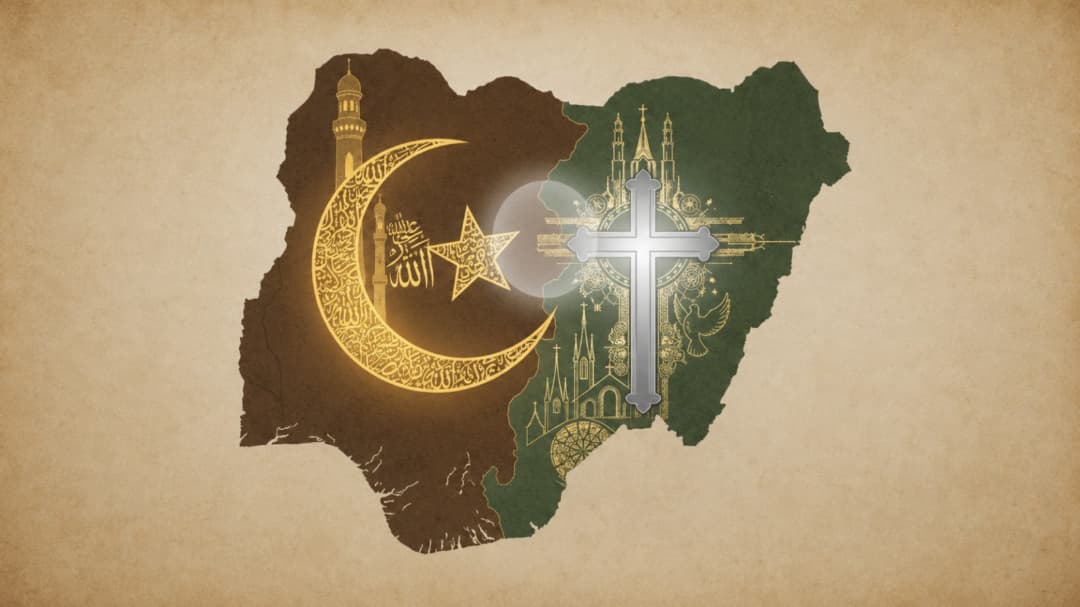
There is a phrase we use in politics that sounds simple but carries a lot of weight: “our own.”
Depending on who is speaking, it can mean someone from our state, region, ethnic group, party or religion.
If someone from our side is in the room where decisions are made, we feel that we have not been forgotten.
That is why we’d rarely see a presidential ticket as just two people asking for votes, instead we start counting; North or South? Christian or Muslim? Who is represented, and who is not?
Governor Abdullahi Sule’s comment this week brings that habit of thinking into focus.
Speaking on Channels Television’s Politics Today on Tuesday, July 21, the Nasarawa State governorsaid he believed Nigeria would one day elect a president and vice-president who are both Christians.
He was responding to criticism from Rabiu Kwankwaso, the Nigeria Democratic Congress vice-presidential candidate, over political and religious representation ahead of the 2027 election.
Sule argued that the Constitution requires inclusiveness and federal character but does not demand religious balancing on a presidential ticket.
He is right about that narrow point. The1999 Constitution promotes federal character and national integration, but it does not say that a Muslim presidential candidate must choose a Christian running mate or vice versa.
Somewhere along the way, Nigerians have come to expect it.
How Did an Expectation Become an Unwritten Rule?
There was no single moment when religious balancing became the rule. It developed through repeated political practice and the fear of exclusion.
Since Nigeria returned to civilian rule in 1999, Obasanjo ran with Atiku, Yar’Adua with Jonathan, Jonathan with Sambo and Buhari with Osinbajo. Each winning ticket placed a Christian on one side of the presidency and a Muslim on the other.
The pattern became so consistent that many Nigerians began to see it as an obligation, even though it was never written into the Constitution.
But same-faith tickets are not new to Nigerian politics.
In 1993, Moshood Abiola and Babagana Kingibe ran on a Muslim-Muslim ticket. The election was annulled before they could take office. More than three decades later, Bola Tinubu and Kashim Shettima ran on another Muslim-Muslim ticket and won the 2023 election.
The two tickets emerged under very different political circumstances. Abiola had built broad support across religious and regional lines, while the 2023 election came after years of insecurity, religious tension and growing fears of political exclusion.
Religion has never been the only consideration. Region, ethnicity, party loyalty and voting strength have always mattered too. Sometimes those calculations make religious identity less important. Sometimes they bring it to the centre.
What Does Religious Balance Really Give Us?
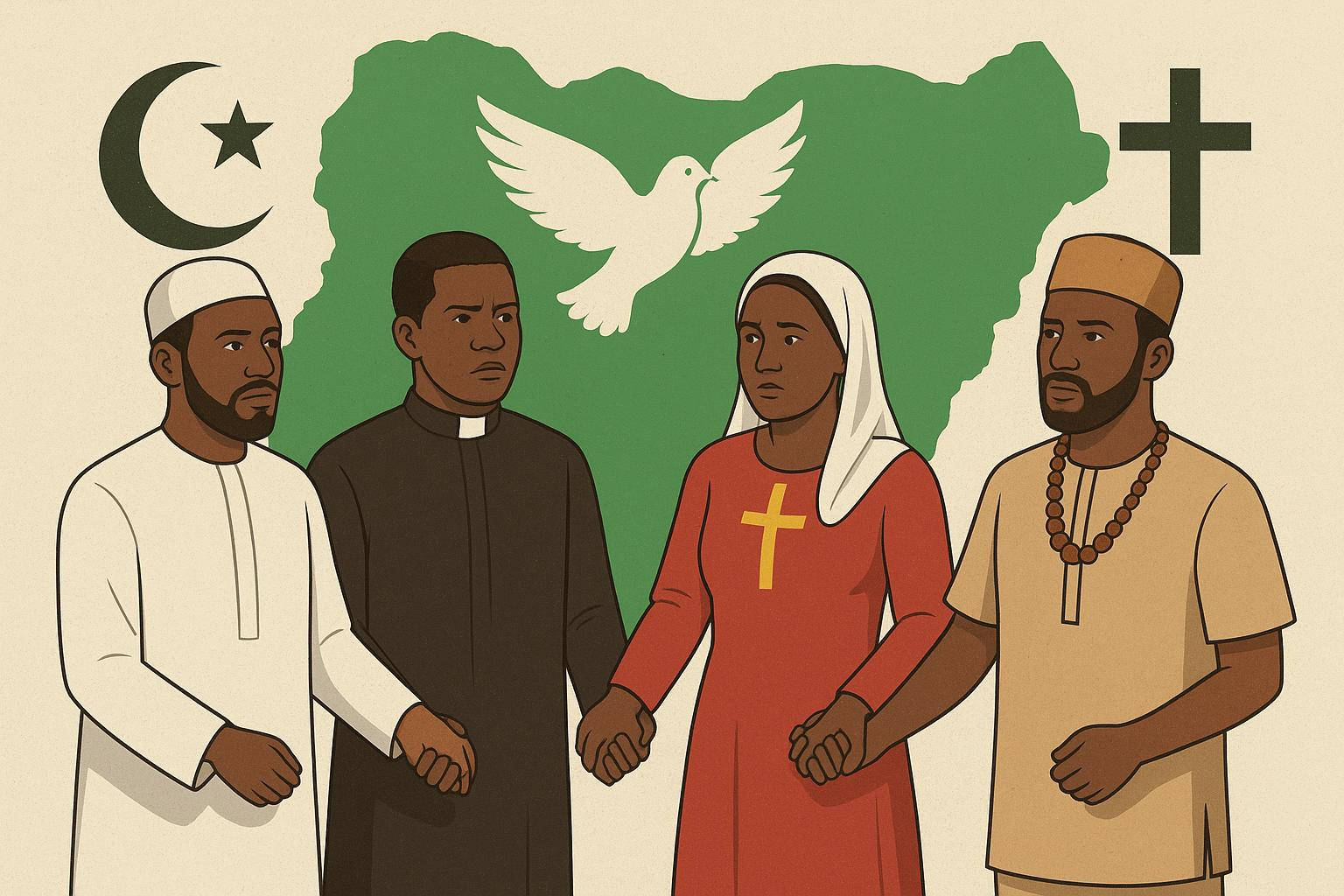
When Tinubu chose Shettima in 2022, theChristian Association of Nigeria criticised the decision, arguing that religious balance mattered for unity and representation.

Shettima defended the ticket, saying Nigerians were prepared to choose competence over what he called “primordial sentiments.”
For those who opposed the ticket, the absence of a Christian was about what the decision communicated. For those who supported it, demanding religious balance risked allowing identity to override competence.
One side asks: Is someone like us in the room? The other asks: Does someone need to be like us to represent us?
There is also a third question: does having “our own” as vice-president provide meaningful representation or only the appearance of inclusion?
A Christian vice-president does not automatically protect Christian interests. A Muslim vice-president does not necessarily speak for every Muslim. Identity may provide reassurance, but reassurance is not the same as influence.
Could a Christian-Christian Ticket Win?
The Constitution already allows it and the question is whether the political circumstances of an election could make Nigerians comfortable enough to vote for it.
The success of Tinubu and Shettima does not necessarily mean religious balancing no longer matters. It may simply show that other calculations can sometimes outweigh it.
Perhaps a Christian-Christian ticket will win because Nigerians become less concerned about religious balance. Perhaps the candidates will be strong enough to make competence, region or party loyalty more important.
Or perhaps we will continue to look at every ticket through the same old question of who is “our own.”
If a Christian-Christian ticket eventually wins Nigeria’s presidency, the most interesting part may not be that it happened.
It will be why Nigerians were willing to vote for it.