Ghana's Economic Tightrope: IMF Warns of Debt Risks as BoG Faces Pressure
Ghana's performance under its IMF bailout is broadly satisfactory, with economic growth, lower inflation, and improved debt trajectory. However, the IMF advises caution on monetary easing and highlights significant risks from the Gold-for-Reserves program's substantial losses and Ghana's rising debt burden. Continued structural reforms, transparency, and fiscal discipline are crucial for sustainable stability.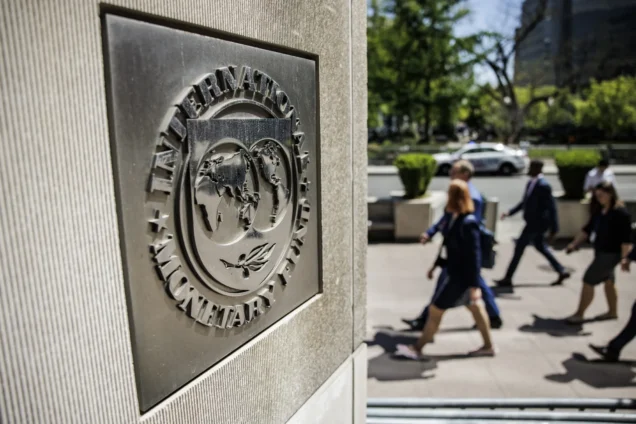
Ghana has demonstrated broadly satisfactory performance under its International Monetary Fund (IMF) bailout programme, successfully meeting all quantitative performance criteria and indicative targets for the fifth review. While some delays have been noted in implementing complex structural reforms, the nation has made significant strides across several key areas, indicating a positive trajectory for its economic stabilization efforts.
The Ghanaian economy has shown robust growth, exceeding expectations through September 2025, primarily propelled by strong performance in the services and agriculture sectors. Inflation has successfully been brought within the Bank of Ghana’s (BoG) target range, and the external sector has seen considerable strengthening, bolstered by vigorous gold and cocoa exports. Furthermore, the country's international reserves accumulation has surpassed the Extended Credit Facility (ECF) targets, the Cedi has appreciated, and Ghana’s debt trajectory has notably improved.
In fiscal management, Ghana has achieved substantial headway in its public debt restructuring. This includes signing bilateral debt relief agreements with numerous members of Ghana’s Official Creditor Committee and finalizing several Agreements in Principle with other external commercial creditors. Authorities have also intensified engagement with remaining external commercial creditors to ensure a restructuring consistent with programme parameters and comparability of treatment. Ghana is on track to achieve a primary surplus of 1.5% of GDP by year-end 2025, with the 2026 budget aligning with fiscal programme objectives and a new fiscal responsibility framework, while prudently accommodating developmental and security needs. These efforts are underpinned by enhanced revenue mobilization and expenditure rationalization, incorporating safeguards for vulnerable groups.
Monetary policy has seen cautious easing, with the IMF advising the Bank of Ghana to prioritize data in any further policy rate adjustments, advocating for a gradual approach. Since January 2025, the BoG has already cut the policy rate by 9.0 percentage points to 18.0%. In collaboration with the IMF, a new structured foreign exchange operations framework has been developed and implemented to intermediate FX flows, smooth excessive market volatility, and accumulate international reserves. Decisive steps have also been taken to safeguard financial stability, including restructuring and reforming state-owned banks, addressing gaps in the crisis management and resolution framework, and pursuing a multi-pronged strategy to reduce non-performing loans.
Progress has been made in strengthening Ghana’s governance and public sector efficiency, as highlighted in the recently published Governance Diagnostic Assessment report. However, continuous efforts are emphasized to improve transparency and oversight, particularly regarding public disclosure requirements and the management of State-Owned Enterprises (SOEs) within the critical gold, cocoa, and energy sectors. Ambitious structural reforms are deemed essential to foster an environment conducive to private sector investment, enhance governance and transparency, ultimately boosting the economy’s potential and underpinning sustainable job creation.
Despite these advancements, Ghana faces significant financial challenges. The country currently holds the fourth-highest debt to the IMF in Africa, with an exposure of Special Drawing Rights (SDR) 2.85 billion (equivalent to US$4.13 billion) as of December 22, 2025. This indebtedness is set to increase following a recent US$365 million tranche from its 2022 bailout package. IMF loans, while providing temporary relief, inherently increase a country’s overall debt and often come with conditions that can constrain financial flexibility. Ghana’s public debt rose by GH¢71.6 billion in the third quarter of 2025, pushing the total debt stock to GH¢684.6 billion (US$55.1 billion) as of September 2025.
A major concern flagged by the IMF is the Bank of Ghana’s Gold-for-Reserves (G4R) programme, which recorded losses of US$214 million by the end of Q3 2025. These losses are primarily attributed to trading shortfalls under the artisanal and small-scale mining (ASM) doré gold transactions and off-takers’ fees linked to GoldBod operations. The IMF warns of “significant downside risks” arising from the rapidly expanding scale of the G4R programme, particularly since the creation of GoldBod. This expansion exposes Ghana to heightened vulnerabilities such as pricing gaps, execution challenges, service charges, and off-taker discounts. Such a trend could exert pressure on the Bank of Ghana’s balance sheet and undermine monetary policy credibility if losses are absorbed or the programme is indirectly financed. Furthermore, a programme of this magnitude introduces governance and market distortion risks, especially if operations lack transparency, potentially crowding out private sector activity and sustaining parallel market behaviors. Stronger transparency, reporting, and controls are imperative to mitigate operational lapses and prevent further financial leakages. Additionally, the now-discontinued Gold-for-Oil component of the Domestic Gold Purchase Programme incurred losses of $128 million in 2024.
Looking ahead, while Ghana’s macroeconomic outlook has improved, the IMF cautions about significant downside risks. These mainly stem from a potential deterioration of the external environment, especially due to commodity price volatility, and confidence effects resulting from policy and reform slippages. Delays in completing Ghana’s comprehensive debt restructuring also pose inherent risks, alongside the ongoing fiscal risks presented by State-Owned Enterprises. Sustaining fiscal discipline will require continued efforts in revenue administration, improved public financial management, and enhanced oversight of SOEs.