Ghana's Digital Future Unveiled by Sam George: 5G Rollout, Cheaper Data, and E-Wallet Plans
Ghana is undergoing a comprehensive digital transformation led by Minister Samuel Nartey George, focusing on making digital services more affordable and accessible. Key initiatives include significant price cuts in broadband, 5G spectrum deployment, nationwide 4G upgrades, digitization of public records, and robust cybersecurity measures to empower citizens and businesses.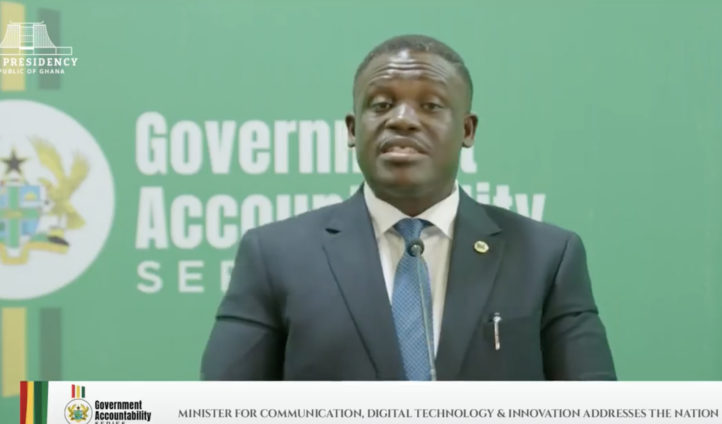
Ghana is undergoing a profound digital transformation, spearheaded by the Communications, Digital Technology and Innovations Minister, Samuel Nartey George. Speaking at the Government Accountability Series at Jubilee House in Accra on Monday, September 7, 2026, Minister George highlighted a series of tangible outcomes and future initiatives aimed at modernizing public administration, enhancing digital connectivity, strengthening cybersecurity, and ensuring equitable access to digital services across the nation. The government's commitment to measuring progress by concrete results, rather than mere promises, underpins this extensive agenda.
A significant focus of the Ministry has been on making digital connectivity more affordable and accessible for Ghanaian households and businesses. Through direct engagements with telecommunications operators, the government has secured substantial price reductions and improved data value. Notably, MTN has drastically cut the price of its 100 Mbps unlimited fibre broadband package by 70 percent, from GH¢987 to GH¢299 a month. This intervention also saw MTN introduce new 300 Mbps and 500 Mbps broadband packages to cater to diverse connectivity needs. Furthermore, engagements with mobile network operators resulted in MTN increasing data volumes by 15 percent, while Telecel and AirtelTigo each boosted theirs by 10 percent. These efforts ensure that families and enterprises are now receiving more data, both on mobile and fixed lines, for less money than they paid previously, demonstrating the Ministry's role in advocating for consumers.
In terms of telecommunications infrastructure and regulatory reforms, Minister George outlined several key initiatives to be delivered by the end of the year. The National Communications Authority (NCA) is set to complete the assignment of 5G spectrum and commence deployment, marking a crucial step towards faster mobile connectivity. The NCA will also launch its online licensing and payment portal, finalize a critical road-excavation coordination framework, and introduce cost-recovery penalties to address damage to telecommunications infrastructure. An emergency telecommunications framework will be established, and mandatory network-quality upgrades are being enforced, with the Minister stressing that poor network quality will no longer be tolerated. A framework for customer remedies and sanctions against operators failing to meet service standards is also being prepared to protect consumers.
Addressing the digital divide, the government is actively working to upgrade ageing 2G and 3G mobile infrastructure in rural communities to 4G-capable networks. Minister George emphasized that basic mobile signals are no longer sufficient, as essential services like mobile money, digital agriculture, e-learning, and telemedicine increasingly rely on reliable broadband connectivity. The Ministry, in collaboration with the NCA, the Ghana Investment Fund for Electronic Communications (GIFEC), and mobile network operators, is upgrading masts and providing the necessary fibre and microwave backhaul. New rural sites are now required to be built 4G-ready, and the retirement of legacy-only equipment is being accelerated. A constituency-level mapping exercise guides new deployments and identifies existing infrastructure requiring technological upgrades, ensuring rural Ghana benefits fully from the digital economy without undue delay.
Modernizing public administration is another cornerstone of Ghana's digital agenda. A contract was signed on August 13, 2026, to digitize 3.5 million public records held by the Ghana Public Records and Archives Administration Department. This move aims to transition public administration away from paper-based systems, thereby improving the efficiency, security, and accessibility of government records. Additionally, the government is advancing plans for a National Data Exchange Hub to enhance information sharing among public institutions and strengthen Ghana’s digital public infrastructure. This initiative, part of the US$50 million Ghana Digital Acceleration Project (GDAP) supported by the World Bank, also funds last-mile connectivity and the modernization of National Data Centres in Accra and Kumasi. These projects are currently at the international review stage and are expected to improve interoperability and the efficient delivery of digital government services.
Further digital identity and service initiatives include the pilot of an Electronic Document Wallet in the fourth quarter of 2026. This wallet will enable citizens and businesses to digitally store and verify government-issued credentials, reducing reliance on physical documents. The National Information Technology Agency (NITA) has also institutionalized a Technical Clearance Framework to screen government IT investments, preventing duplication and ensuring conformity before public funds are committed. NITA will also launch TechnicalClearance.GOV and establish the Government Digital Assurance Programme to provide a single view of the security and reliability of digital services.
Cybersecurity and data governance are paramount in this digital transformation. The Cyber Security Authority’s CERT-GH responded to 3,363 cybersecurity incidents between January and June 2026, underscoring the growing importance of robust digital security systems. Vulnerability assessments have been completed for 25 Critical Information Infrastructure institutions. Significant capacity building efforts include licensing/accrediting 479 Cybersecurity Service Providers, 116 Establishments, and 2,685 Professionals. Over 84,000 children and young people, 427 university ICT leaders, and approximately 8,800 citizens received cybersecurity awareness training. The newly operationalized Ghana Cybersecurity Industry Forum has attracted over 300 registered members, while the Data Protection Commission reported a substantial increase in regulatory activity and newly registered data controllers. Legislative reforms are also underway, with reviews of 15 ICT legislations and stakeholder consultations on 10 priority Bills completed. The Legislative Instrument on SIM registration has passed Parliament, paving the way for biometrically verified SIM registration before the end of 2026. The Cyber Security Authority will operationalize the Cybersecurity Fund and open regional offices, and the government will finalize the National Artificial Intelligence Delivery Framework.
Minister George reiterated the government’s commitment to continued engagement with telecommunications operators on data value, the cost of digital services, pay-television prices, and the protection of telecommunications infrastructure. He stressed that the measures collectively aim to ensure Ghana’s expanding digital economy is supported by reliable networks, secure digital services, and stronger protection for consumers, asserting that