Ghana Leads the World in Digital Cocoa Traceability: A Breakthrough for Agricultural Sustainability
Ghana has become a global leader in digital cocoa traceability, combining technology, sustainability, and export competitiveness to strengthen its cocoa sector and serve as a model for Africa.

Ghana, long recognized as one of the world’s top cocoa producers, has introduced acutting-edge digital traceability system that tracks cocoa beans from individual farms all the way to international markets. This technological innovation enhancestransparency, promotes sustainability, and improves farmers’ earnings, while strengthening Ghana’s competitiveness in global trade.
Historically, Ghana’s cocoa sector faced challenges such as illegal farming practices, low productivity, and exploitative supply chains. The adoption of digital traceability systems now allows each cocoa bean to be traced from farm to export, ensuring accountability and boosting the credibility of Ghanaian cocoa in international markets.
At the heart of this innovation is the Ghana Cocoa Traceability System (GCTS), developed by theGhana Cocoa Board (COCOBOD). This system connects farmers, cooperatives, licensed buying companies, processors, exporters, and international buyers. Each cocoa farm is digitally mapped, creating a detailed profile that includes ownership information and location.
Every cocoa batch receives a unique digital identifier linking it to a specific farm and farmer, and mobile tools enable farmers and field agents to report harvests, update records, and access guidance. The data is stored securely, ensuring transparency and traceability throughout the supply chain.
This setup enables buyers to verify the origin and ethical standards of cocoa shipments, meeting international compliance standards such as the European Union Deforestation Regulation.
The system has strengthened Ghana’s position in global trade. European buyers increasingly demand deforestation-free, ethically sourced, and sustainable cocoa, and Ghana’s digital traceability allows exporters to provide verified proof automatically, reducing compliance risks and delays. Companies like Barry Callebaut and Mars Inc. are investing in traceable cocoa programs to secure ethically sourced supply.
The system also directly benefits smallholder farmers, who make up the majority of cocoa producers. Previously, payments were often delayed or inaccurate due to opaque supply chains. Now, farmers receive timely and fair compensation, giving them greater control over their production records. Data insights also help farmers make informed decisions regarding fertilizer use, labour allocation, and harvest timing, which improves yields and income. Pilot programs have already shown that farmers gain measurable benefits from understanding their farm sizes and output levels.
Beyond payment accuracy and record keeping, the digital cocoa traceability system has created a platform for farmer empowerment and knowledge sharing. Farmers now have access to real-time information on weather patterns, pest outbreaks, and best agronomic practices via mobile apps, which allows them to plan planting, harvesting, and fertilizer application more effectively. Community workshops and digital training programs, often supported by international development partners, provide hands-on guidance on sustainable farming, farm mapping, and data entry into the traceability system.
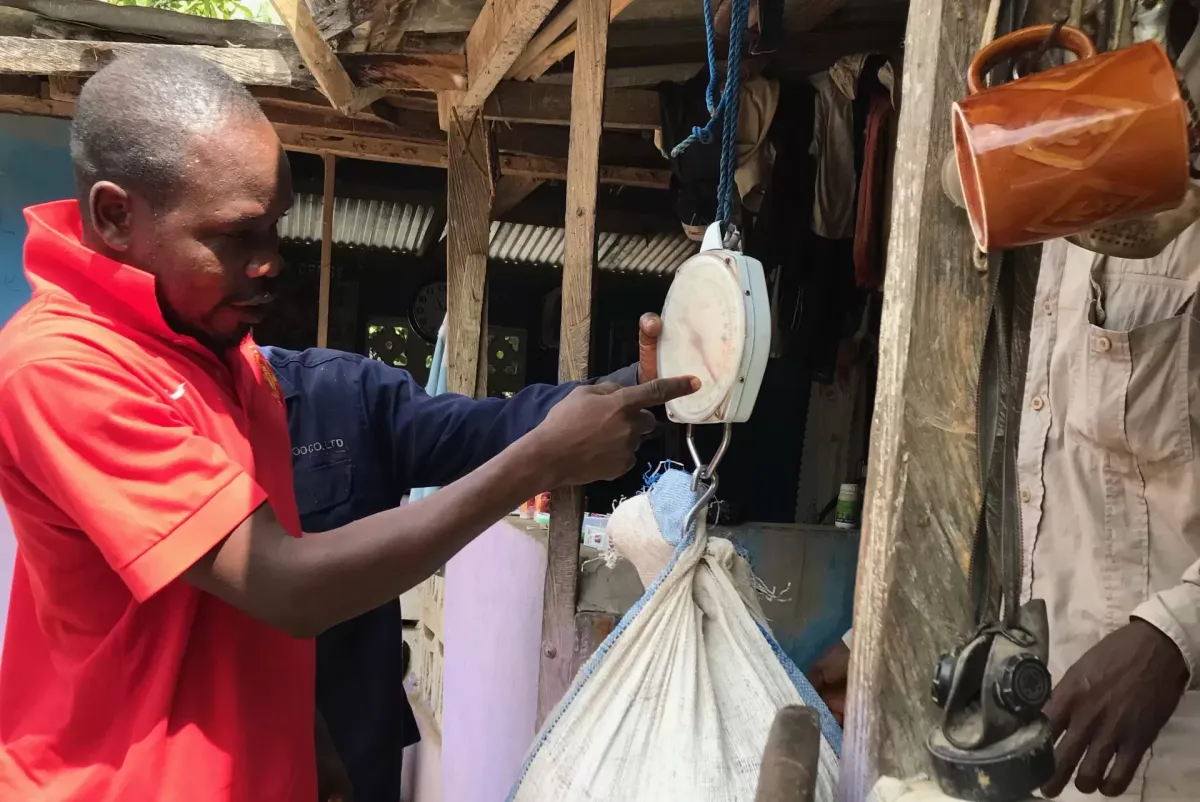
This dual approach, combining digital tools with capacity-building initiatives, has not only increased productivity but also encouraged younger generations to see cocoa farming as a viable and technologically advanced career. Early adopters report improved crop yields, reduced losses from pests and disease, and a stronger sense of participation in the global cocoa economy.
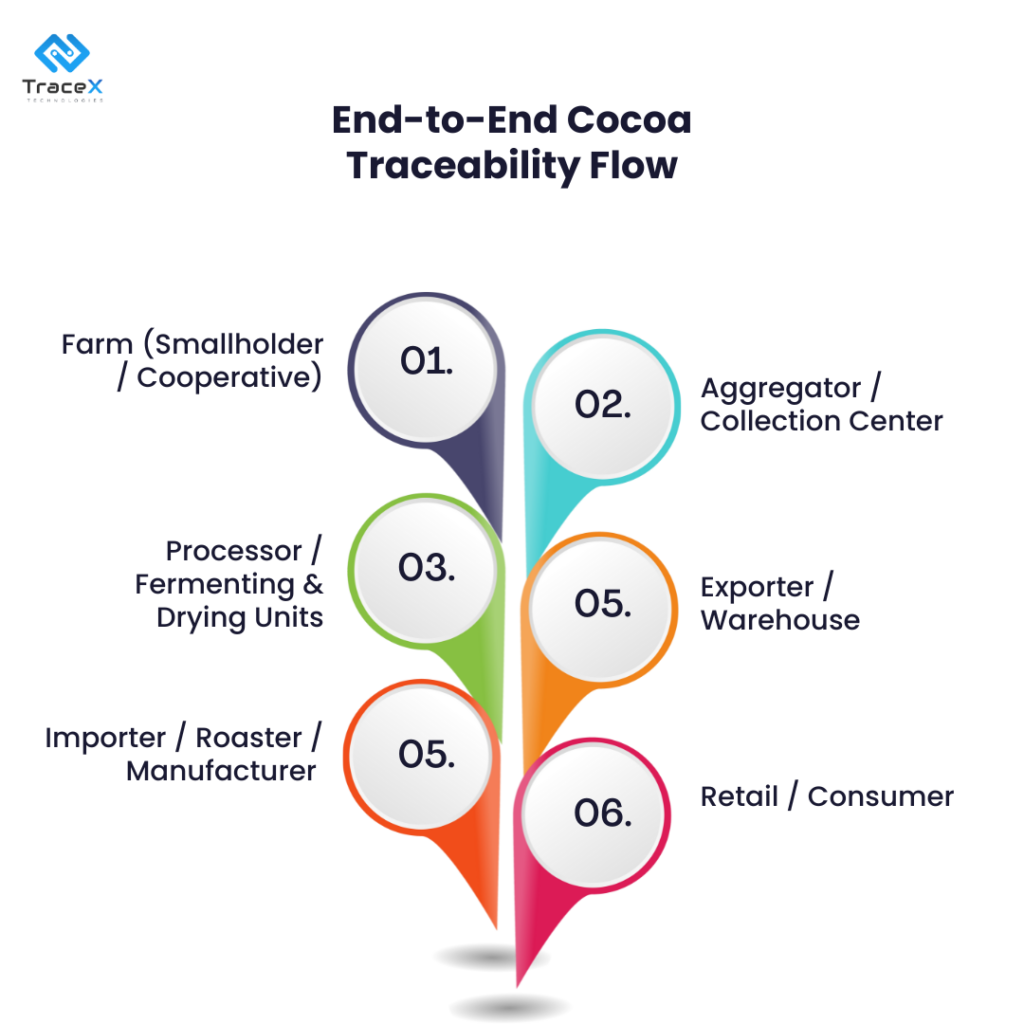
By connecting local farmers directly with national and international stakeholders, the system fosters transparency, accountability, and a shared responsibility for sustainable production and environmental stewardship.
Sustainability is central to the traceability initiative. By tying cocoa data to specific geographic locations, authorities can monitor where farms are located relative to protected forests and detect potential deforestation early. This creates an incentive for farmers to adopt climate‑smart and biodiversity‑friendly practices, such as agroforestry and soil conservation.
The traceability system also supports broader environmental goals. For example, programs funded by the European Union (EU) and German development partners are assisting with climate‑smart farming training, reforestation efforts, and improved soil health practices across cocoa communities.
Ghana’s approach began with pilot programs and has since expanded rapidly towards national coverage. Initial trials in key cocoa‑producing districts like Assin Fosu helped demonstrate the system’s value, mapping tens of thousands of farms and training farmers and supply‑chain officials on how to use digital tools.
Today, the focus is on scaling up to reach all cocoa regions, with continued investment in technology, training, and connectivity. The government, industry partners, and international development agencies are collaborating to ensure that traceability becomes a standard practice rather than an isolated innovation.
Despite its successes, Ghana’s traceability initiative still faces challenges. Many rural areas suffer from limited internet access and electricity, making digital tools harder to use. Additionally, older farmers may require more training to adopt new technologies effectively.
There are also costs associated with maintaining and expanding digital systems, which must be balanced with the need to keep cocoa farming accessible and profitable for smallholders. However, government support and international partnerships are helping to lower these barriers, and the long‑term economic benefits are expected to outweigh the initial investment.

Ghana’s experience provides a model for other African countries producing cocoa, coffee, shea, and other commodities. By integrating technology into agriculture, nations can improve transparency, ensure sustainability, and increase market access. Ghana’s digital traceability initiative demonstrates how innovation and traditional agriculture can work hand-in-hand to drive economic growth, environmental protection, and international trade success.