From Madagascar to 21 African Markets: How Hassanein Hiridjee Built AXIAN
One risky telecom bet in Madagascar became a 21-country African empire. Hassanein Hiridjee built AXIAN around the everyday needs of millions.
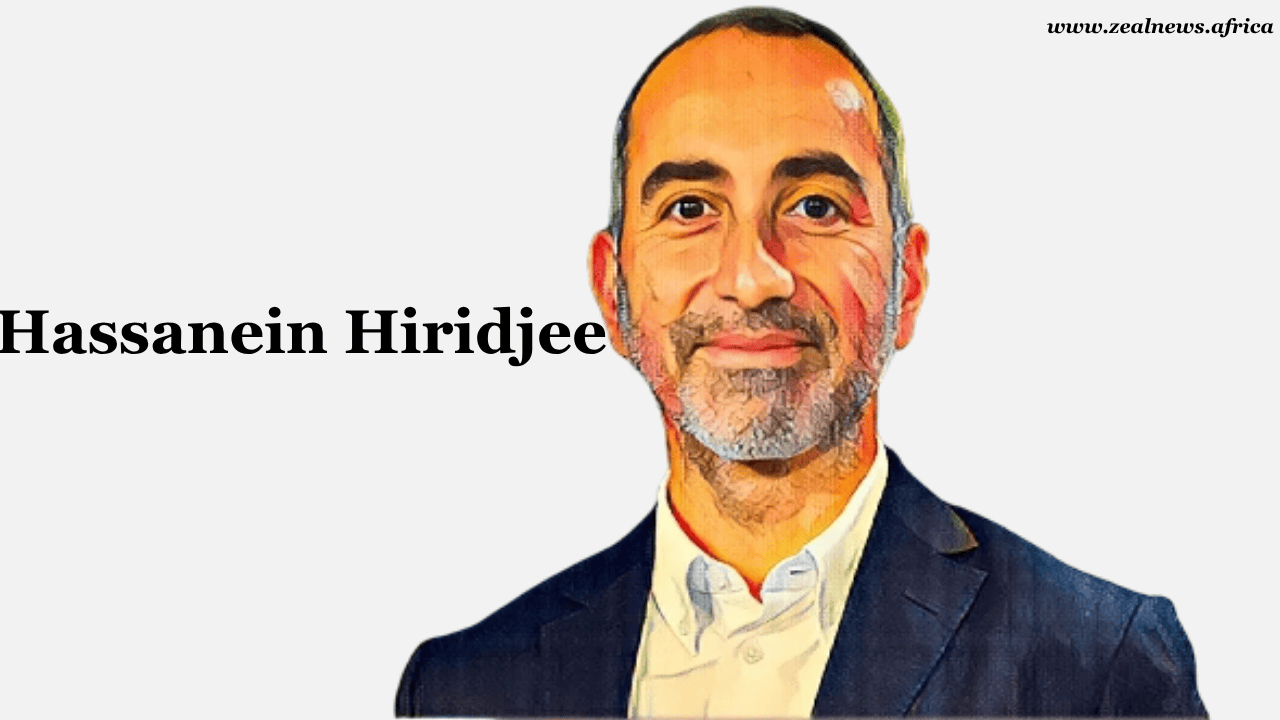
"Let's cut the bullshit."
That was exactly how Hassanein Hiridjee interrupted the usual Africa conference talk in Nairobi this May.
While speakers around him were talking about the continent's potential, its young population and its endless opportunities, Hiridjee wanted something more practical: reliable electricity, predictable taxes, clear regulations and access to capital.
It is a fitting way to introduce the man behind AXIAN.
Over roughly a decade, Hiridjee has taken a business rooted in Madagascar and expanded it across 21 countries, with interests in telecommunications, energy, financial services, digital banking and real estate. AXIAN now has about 44 million telecom customers and projected group-wide 2025 revenue of around $3 billion.
But the interesting thing is where Hiridjee keeps choosing to put his money.
It started with a telecom company he knew little about
Hiridjee did not begin as a telecom executive.
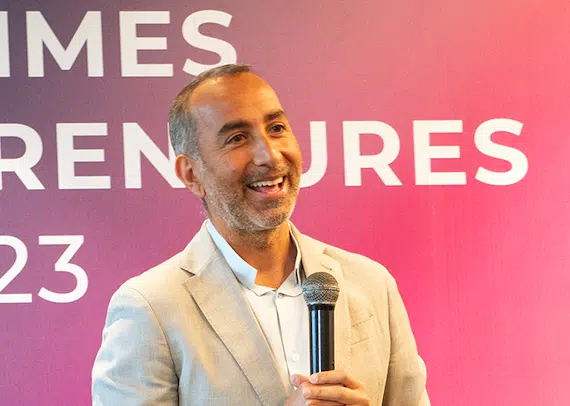
In 2004, he led a consortium that took over Télécom Malagasy, the country's struggling state-owned operator. At the time, he had no background in telecommunications.
That bet eventually became Telma, one of the strongest businesses inside AXIAN.
In 2019, AXIAN acquired Togocom, Togo's state-owned telecom operator. Today, AXIAN says its telecom business has grown from about three million customers a decade ago to 44 million.
That growth also explains why telecom remains central to the group. Connectivity gives AXIAN an enormous customer base that can then support other services, from mobile money to digital banking.
Then he started buying the things around the phone
A person with a phone also needs somewhere to charge it. They may need to send money, borrow money, pay a bill or buy something online.
So AXIAN moved into those businesses too.
Its energy operations include WeLight, which provides solar home systems, as well as larger renewable-energy projects. The group now operates more than 200 megawatts of renewable electricity, according to recent reporting.
Its financial-services operations extend from mobile money and microcredit into conventional banking.
Then came Jumia.
AXIAN became a strategic shareholder in the African e-commerce company in 2025. Hiridjee joined Jumia's Supervisory Board in September that year andwas formally elected by shareholders in May 2026.
But the clearest example of what this strategy looks like on the ground may be MVola.

In Madagascar, the service has become the country's first fully digital bank. Customers can use the wallet to pay bills, send money to relatives and even top up a WeLight solar meter. That matters in places where mobile-phone use has expanded much faster than physical financial infrastructure, where ATMs may be nonexistent and roads can become impassable during the rainy season.
These are not simply separate businesses on an acquisition list. They are services that can fit into the same person's daily life.
The bet is getting bigger and so is the risk
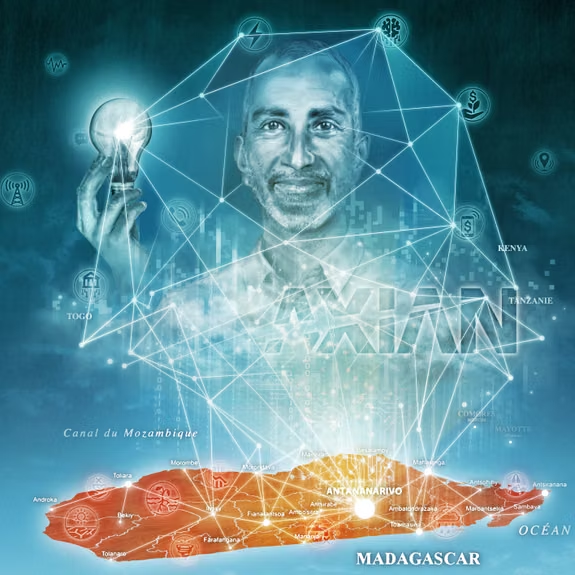
There is nothing small about financing this expansion.
AXIAN raised a $420 million bond in 2022 and followed that with another bond of up to $600 million in 2025.
That does not automatically make the strategy dangerous. S&P Global Ratings has said AXIAN has been able to limit its reliance on debt despite its acquisition programme, helped by the profitability of businesses it has bought and improved.
But running businesses across 21 markets comes with complications.
The group has to deal with different currencies, regulators, political environments and consumer markets. A telecom strategy that works in Madagascar may need to look very different in Tanzania or Togo. Energy projects bring their own financing and infrastructure challenges.
And acquisitions only work if the businesses actually improve after they are bought.
So far, Hiridjee's record gives him room to keep making the argument. But the size of AXIAN means the consequences of getting a major decision wrong are also much larger than they were when the business was concentrated in Madagascar.
He is building more than a telecom empire
Hiridjee has also invested in initiatives aimed at developing young African entrepreneurs and technology talent. His Fondation H supports contemporary African art, while other projects focus on education, skills and entrepreneurship.
He has argued that Africa does not only need giant companies. It also needs smaller businesses that create jobs, pay taxes and build local economies.
His preferred comparison was simple: Africa needs its “unicorns,” but it also needs “gazelles.”
That may explain the broader direction of AXIAN better than any list of acquisitions.
Hiridjee is betting on the infrastructure that allows ordinary economic life to happen — a phone that connects, a payment that goes through, electricity that stays on, a bank account that works and a marketplace where people can trade.
He started with one difficult telecom investment in Madagascar.
Now he has 21 markets to build across and the thing is how far he can take the same basic idea to find the everyday problems that millions of Africans still face, and build businesses around solving them.