Flashback: America's Most Popular Jobs from a Century Ago
The Roaring Twenties, a period of immense prosperity in the U.S., saw the emergence of the modern weekend and a unique job market. This article explores five common occupations of the era, including bricklayers, domestic servants, lumberjacks, salespersons, and typists, revealing how economic expansion and societal changes shaped the American workforce a century ago.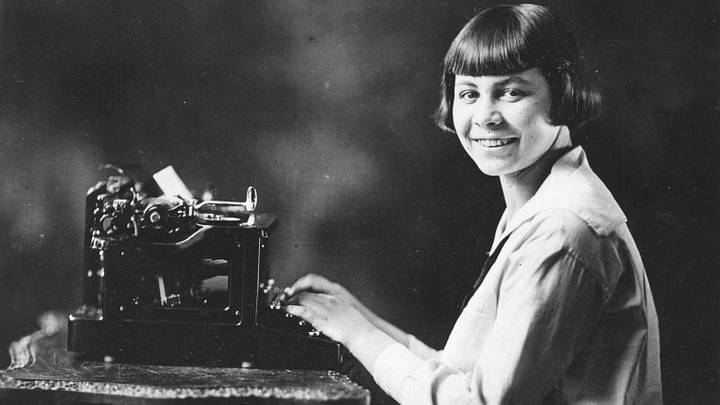
The Roaring Twenties marked a transformative period in American history, characterized by significant economic prosperity and societal shifts. This era also saw the genesis of what many consider the modern weekend, initiated in May 1926 by industrialist Henry Ford, who granted his workers Saturdays and Sundays off. While this period of affluence would eventually culminate in the Wall Street Crash of 1929, it fostered a unique employment landscape. Here, we delve into five of the most prevalent occupations that defined the American workforce a century ago.
One of the most in-demand professions was that of the Bricklayer. The 1920s witnessed an unprecedented expansion of the United States' infrastructure and a boom in building construction for diverse purposes. This created a massive need for manual labor, making bricklaying a cornerstone occupation, as bricks were fundamental materials in these new structures. A pivotal innovation during this time was the advent of brickmaking machines, capable of producing up to 12,000 bricks daily. This increased availability of bricks, in turn, fueled a greater demand for skilled workers to construct the desired buildings.
Domestic Service remained a common occupation, particularly for women, encompassing roles such as housekeepers and maids. Although this sector had seen a decline since the First World War, it continued to be a frequent employment path. However, as the decade progressed, the demand for domestic servants began to outstrip the supply of individuals willing to enter the profession. This shift was largely influenced by the emergence of other flourishing lines of work, such as office and retail jobs, which gained prominence with the expansion of the business world. Consequently, there was a diminished interest in roles that traditionally involved living with employers.
The Lumberjack was another extremely common job a hundred years ago, driven by the extensive utilization of America's forests for producing paper, furniture, houses, and fuel. These workers, responsible for felling trees, were known by the term "lumberjack," a Canadian appellation that became widely adopted across North America. Lumberjacks often forged strong bonds and a profound sense of community, as evidenced by surviving photographs that depict their close-knit working relationships. They would relocate wherever trees were abundant and there was a corresponding market demand for timber.
The economic boom of the 1920s significantly boosted the retail sector, making the Salesperson a very common occupation for both men and women. The burgeoning number of businesses sought to entice consumers to purchase goods, leading to a widespread increase in sales roles. This era also saw the evolution of the traveling salesperson, who journeyed from place to place, endeavoring to convince people to buy various items. Concurrently, there was a major expansion of workers fulfilling the more traditional role of selling goods within physical shops.
Finally, the Typist emerged as an increasingly important role, intrinsically linked to the expanding business world and the growing need for efficient administrative support. As companies scaled up operations and generated more paperwork, skilled typists became essential for preparing documents, correspondence, and records with precision and speed. This occupation offered new opportunities, particularly for women, in burgeoning office environments across the nation.